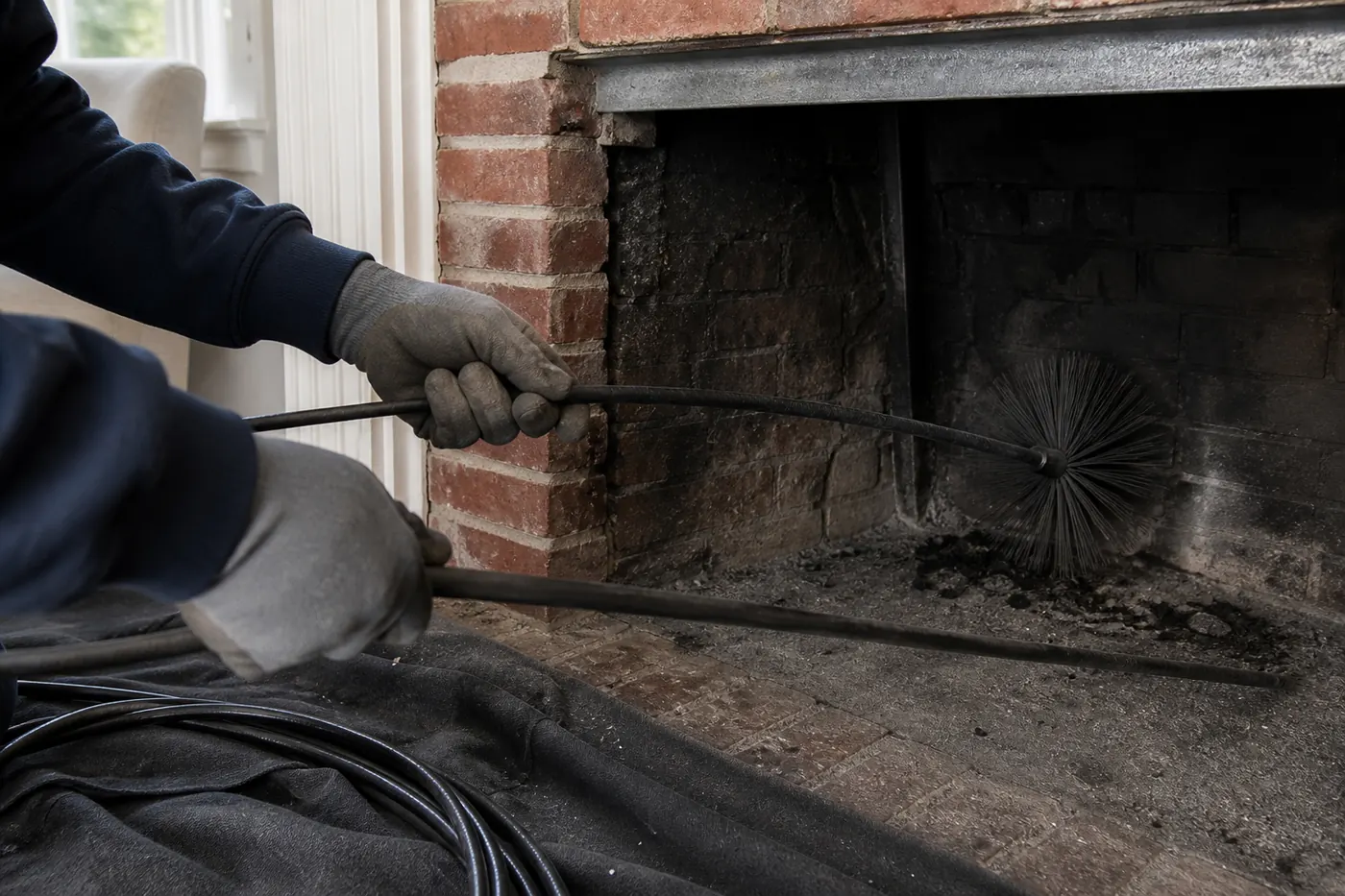
Have your chimney inspected once a year, and swept whenever the inspection shows deposits that need removing. NFPA 211 recommends a yearly inspection, and for many wood-burning homes that visit ends in a cleaning. In Boston, a standard single-flue cleaning with a Level 1 inspection is $299 flat.
Why the answer is not simply once a year
A calendar is a good habit, but chimneys do not read calendars. Two houses on the same street can need completely different schedules. One burns a cord of wood a winter in an old open fireplace. The other lights a handful of fires on holidays.
What really decides it is how much deposit has built up and what it is made of. Soot is a loose, powdery layer. Creosote can be flaky, tarry or glazed, and it is flammable. Heavier deposits make cleaning more urgent, and glazed creosote is harder to remove. Our guide to the stages of creosote explains the difference.
So think of annual service as a baseline for inspection, with sweeping done when the findings call for it.
A Level 1 inspection is the routine check for a chimney that is used the same way it always has been. It covers the parts a technician can reach and see without taking anything apart. If you change fuel, install a new stove, or the chimney has been through a fire or a storm, a deeper inspection may be needed, and the technician will explain why before you pay for it.
How your fuel and habits change the schedule
Use this as a starting point, not a rule.
| How you use the chimney | A sensible starting point |
|---|---|
| Wood burned weekly through the winter | Inspect every year, expect to sweep most years |
| Wood burned a few times a season | Inspect every year, sweep when deposits show |
| Wood stove or insert used as heat | Inspect every year, sweep often since stoves can build deposits quickly |
| Gas fireplace or vented gas appliance | Inspect every year, clean the unit and vent as needed |
| Fireplace not used at all | Inspect every year anyway, since animals and water can still get in |
Fuel quality matters as much as quantity. Wet or unseasoned wood, smoldering low fires and an overly closed air supply all leave more deposit per hour of burning. Keeping a rough note of how many fires you burn, and what wood you use, helps the technician advise you.
If you are not sure how heavy your own use is, the inspection photos settle it. A light, dusty film means you can likely wait. A thick, shiny or tar-like coating means do not. Ask the technician to point out the difference on your own flue so you can recognize it later.
Signs you should not wait for the calendar
Call sooner if you notice any of these.
- A strong smoky or campfire smell in the house, especially in damp weather.
- Smoke entering the room when you light a fire.
- Black, flaky debris falling into the firebox.
- Fires that are hard to start or burn poorly.
- A visible tar or glaze on the damper or smoke shelf.
- Birds or animals heard in the chimney.
Cold, damp weather makes a dirty chimney smell worse, so a faint odor in humid summer weather is a hint that deposits are sitting in the flue. It is a reason to book, not an emergency.
If you see flames, heavy smoke or a roaring sound in the chimney, that is a chimney fire. Leave the house and call 911. Do not try to put it out yourself.
When in the year to book in Boston
Autumn is the busiest season, because everyone remembers the chimney at the first cold snap. Booking earlier gives you a wider choice of days and time to fix anything that turns up before you need the fire.
- Spring or early summer works well. You can clean away a winter's deposits, since acidic soot left sitting through humid weather can corrode metal parts and cause odors.
- Late summer is a good window to catch repairs before the heating season.
- Fall still works, but expect to wait.
Whatever month you pick, avoid lighting the first fire of the season before the chimney has been looked at, since that is when a blocked or damaged flue does the most harm.
When a chimney gets dirty again too quickly
If a freshly swept chimney is dirty again after a few weeks of use, brushing it more often is not the fix. Rapid buildup points to a cause. Look at these.
- Wet wood. The most common cause by far.
- Too little air. Closing the stove air supply or damper too far makes a smoky, smoldering fire.
- An oversized flue. A flue much larger than the appliance cools the smoke, so deposits stick.
- A cold or exposed flue. Chimneys on outside walls cool the exhaust before it exits.
- Mismatched appliance. A stove venting into an old flue it was never sized for.
When the cause is the flue, the answer may be a properly sized liner, not more brushing. See chimney repair for how those fixes work.
What the $299 sweep includes and what it does not
A standard cleaning removes soot and loose creosote from the flue and the firebox, and includes a Level 1 inspection of what the technician can reach and see. It costs $299 for a single flue, a flat price you are told before work starts. The chimney sweep service page lists the steps, and the chimney sweep cost page shows how the price works.
Heavy deposits need more than a standard sweep. Creosote removal in Boston is priced by stage: stage 1 is $299 to $450, stage 2 is $450 to $700, and stage 3 starts at $700. The technician photographs what they find, and you get the written price before extra work begins.
Many Boston houses, including triple-deckers and two-families, have more than one flue. The $299 price covers a standard single flue. Additional flues, and chimneys that are unusually tall, wide or hard to reach, are quoted in writing before the work starts.
Keep the invoice and photos from each visit, since a year-to-year record shows how fast your chimney builds up. A sweep is not a repair. If the technician finds cracked tile, a damaged liner or loose masonry, they will show you photos and quote the work separately.
A simple yearly rhythm
Pick a month and stick to it, and the question mostly answers itself.
- Choose a regular month, such as late summer, for the annual visit.
- Ask for photos and a note of how thick the deposits were.
- Use that note to decide whether you need to sweep next year or can wait.
- Burn only dry, seasoned wood.
- Keep a cap on the flue and an ash bucket on a non-combustible surface.
Over a few years, you will learn how quickly your chimney builds up, and the schedule becomes your own. To book a cleaning, visit our contact page or call (617) 404-9587. You will get a three-hour arrival window and a call ahead.
Questions homeowners ask
Can I skip sweeping if I only burn a few fires a year?
You may not need a sweep every year, but you still need the inspection. Water damage, animals and cracked liners can develop in a chimney that is rarely used.
Do gas fireplaces need chimney sweeping?
They produce less soot, but vents can still collect debris, and the burner and logs need cleaning. Gas fireplace cleaning is $299, and an annual look at the venting is still a good idea.
Is it worth sweeping before a home sale?
It can be useful, along with a documented inspection. A buyer or seller inspection is $99, and clear photos show that the chimney has been looked after.
Do chimney cleaning logs replace a professional sweep?
No. Logs do not remove heavy deposits and cannot show you cracks, damage or blockages. They are not a substitute for a proper cleaning and inspection.
How long does a chimney sweep visit take?
It varies with the chimney and how heavy the buildup is. You get a three-hour arrival window and a call ahead, and the technician will tell you what the visit involves for your system.