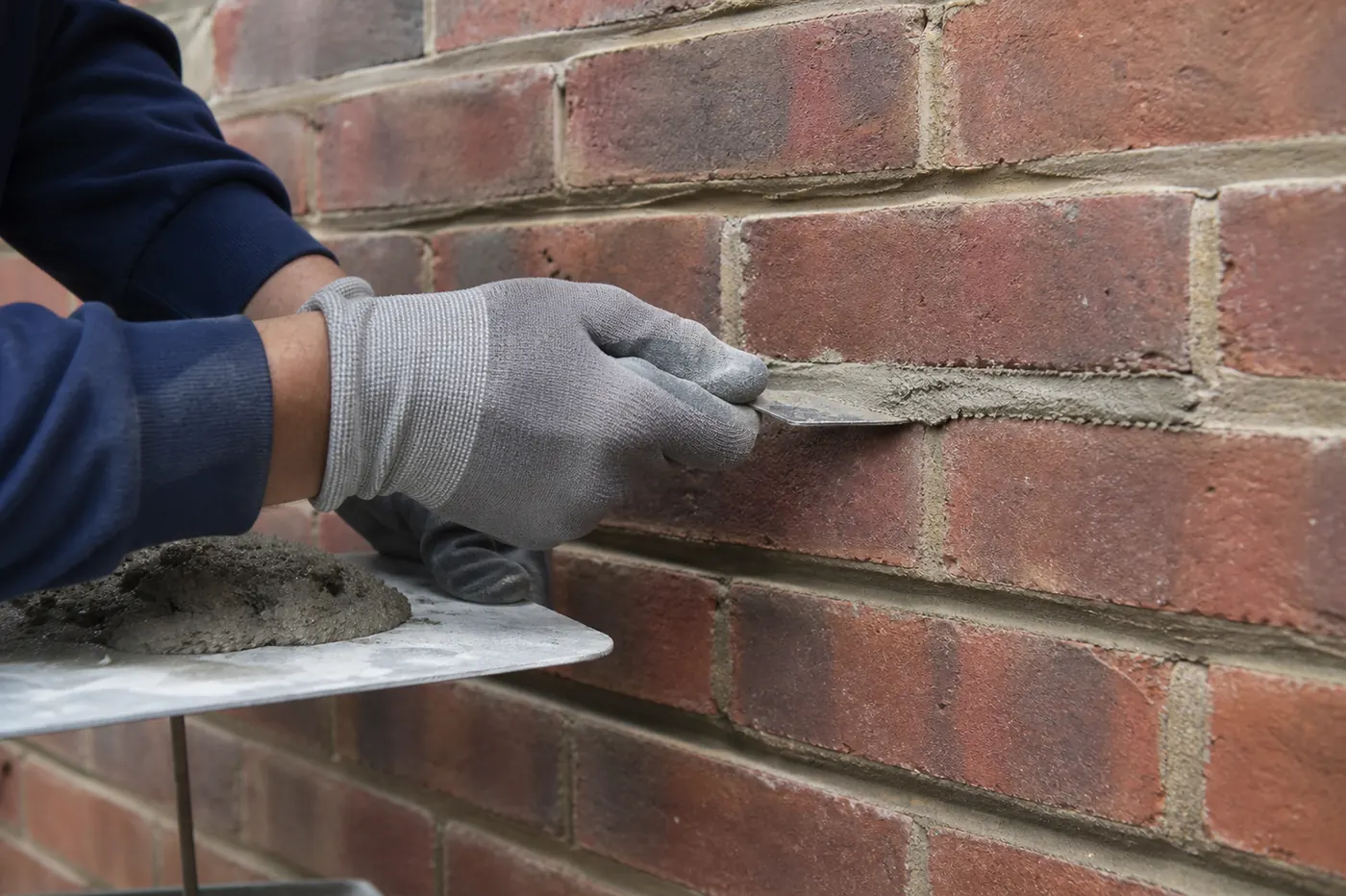
Masonry repair on a Boston chimney costs $300 to $700 for basic work, $700 to $2,500 for a standard repair, and from $2,500 for major work. The job is fixing the brick or stone itself: cracked units, eroded joints, loose shoulders and corbels. A $49 inspection decides how much of that your chimney needs, and the $49 is credited toward the repair if you approve it.
- Masonry repair in Boston is basic at $300 to $700, standard at $700 to $2,500, and major from $2,500.
- The work targets the brick, stone and mortar that have failed, and leaves sound masonry alone.
- Damage that returns beside an old patch usually means the cause was never fixed, not that the brick is cursed.
- The $49 inspection is credited toward approved work, and you get a written price and photos first.
What masonry repair means for a chimney
Masonry is the part of your chimney you can see: the bricks or stones, the mortar between them, and the wide sections where the stack steps out above the roof or inside the house. Masonry repair is the work of putting that structure back into a sound state. It sits between a simple mortar touch-up and a rebuild, and it covers a wide range.
At the small end, one brick has cracked and gets replaced. At the other end, a full elevation of the stack needs several areas opened and re-laid. What ties these jobs together is the principle that the repair should reach down to material that is still strong and then build back up from there.
If your concern is mainly the mortar lines, the repointing page covers that job in detail. If the whole stack is failing, the chimney rebuild page does. This page is about the middle: damaged units and the areas around them.
How brick and stone fail on Boston chimneys
Masonry rarely fails for one reason. Several forces work together, and the repair has to answer the one that is actually at work.
Freeze and thaw
Brick absorbs water. When a cold snap freezes that water inside the brick, the ice takes up more room than the water did and pushes the face off. Greater Boston has plenty of freeze-thaw cycles, so brick that is already damp is at risk every winter.
Water that keeps arriving
A damaged crown, a missing cap or a gap in the flashing sends water into the same few bricks again and again. Those bricks fail first. Fixing them without stopping the supply only resets the clock.
Movement
Chimneys settle, and the ground and the house move with the seasons. A crack that runs in a stair-step line through the mortar, or that widens over time, can signal movement. Movement needs to be understood before it is patched.
Corroding metal
Steel that is buried in or against masonry rusts when it gets wet. Rust swells, and the swelling cracks the brick around it. A rust stain beside a crack is a clue.
Mismatched materials
A repair done with material that is much harder than the original forces the old brick to carry the strain. The older brick then wears away beside the repair.
Signs that the masonry itself needs work
These are the six patterns most often seen, and what each one tends to mean for the work ahead.
- A cracked or spalled brick or two. If the damage is limited to a few units and the wall around them is sound, this is a small job: those units are replaced.
- Eroded mortar joints. Joints worn back from the face weaken the wall and let water in. If it is a handful, they are fixed locally. If it is widespread, the answer is repointing.
- Loose shoulder or corbel masonry. The shoulders and the stepped corbels that spread the chimney out take extra weather. When brick here shifts, the area needs careful attention because it holds weight above it.
- Movement above an opening. A crack or sag above a firebox opening or an arch suggests the masonry is no longer carrying its load evenly.
- Rust staining near embedded metal. Orange streaks and cracking beside a bolt, strap or steel support mean the metal is rusting and pushing the masonry apart.
- Damage next to an old patch. When new damage appears beside earlier work, the old repair may be hard, shallow or covering an unsolved problem.
Any one of these can be minor. Two or three together, or one that is spreading, is a stronger reason to book the inspection soon.
What the technician checks before quoting masonry work
A masonry quote is only as good as the survey behind it. The visit builds a picture of the whole wall, not just the defect that caught your eye.
Mapping the damage face by face
A chimney has four sides, and each takes weather differently. The technician notes which sides, and which heights on each side, carry the damage. This tells you whether you are looking at one local problem or a pattern across the stack.
Sounding and probing
Tapping brick and probing joints separates solid material from hollow or crumbling material. A brick can have a good face and a rotten core. The probing finds the depth where sound masonry begins, and that depth sets how far the repair must reach.
Looking above the defect
Water comes from somewhere. The technician looks up from the damaged spot for a cracked crown, an open cap, failed flashing or a gap that explains the pattern. If one of those is the cause, the plan names it, and you can see whether the fix belongs on this job or on another. A crown repair is a common companion to brick work for this reason.
Judging movement and support
The technician looks at whether the damaged area is still held firmly or whether it has shifted, and whether any lintel, arch or corbel above or below is carrying load it should not. The write-up records what is stable and what is not.
Repair methods and when each one fits
The aim is to match the depth of the repair to the depth of the damage. Going too shallow leaves weak material behind. Going too deep costs you money for no reason.
Minor brick or mortar repair
For a small area, loose mortar is cut back to a firm bed and refilled, and cracked or loose bricks are re-set or swapped. It is a short job when the damage is truly limited, and it sits in the basic price band.
Standard repair across a defined elevation
When one face or one stretch of the stack has several failed units and joints, the work is planned as a single repair across that area. This gives a more even result than many scattered spot fixes, and it is where most of the standard price band is spent.
Replacing individual units
A brick with a failed face is cut out and replaced with a matching brick set into fresh mortar. The match matters: colour, size and hardness should sit close to the original so the wall wears evenly.
Partial reconstruction of unstable areas
If a shoulder, a corbel or a section of the upper stack has moved or lost its bond, the loose area is taken down to stable masonry and laid again. This is heavier work and is quoted in writing after the inspection.
Correcting the source at the same time
If a crown, a flashing detail or a cap caused the damage, it is corrected within the plan or scheduled right after. Rebuilding wet masonry beneath an unrepaired leak is money spent on the same repair twice.
Masonry repair, repointing or rebuild: which is it
The three jobs overlap, and it is common to wonder which label fits your chimney. A short comparison helps.
- Masonry repair is the right label when specific bricks, stones or a defined area have failed and the rest of the wall is sound.
- Repointing is the right label when the mortar joints are the main failure and the brick is mostly healthy.
- A rebuild is the right label when the damage is deep and broad enough that there is no stable base to repair onto.
Many real chimneys need a mix. A face may need repointing and also a few replaced bricks. The written scope should list each one separately, with photos, so you can see what is being done to which part and why.
The most useful single test is this: if you replaced the damaged units and re-laid the joints, would the remaining wall stand up to winter? If yes, it is a repair. If the honest answer is no, the plan should say so and explain what the next size of job involves.
Why patches fail and what to ask before approving one
Repeat damage is the main reason people look for a second opinion on masonry. If damage appears beside an old repair, there are three usual explanations.
First, the earlier repair was too shallow. Mortar was smeared over a weak joint rather than packed into a clean, deep one, so it let go. Second, the earlier material was harder than the surrounding brick, which pushed the stress onto the older masonry next to it. Third, the cause of the water entry was left alone, so new material was attacked by the same water.
The way out is to read the old patch before you pay for a new one. Ask the technician what the old repair is made of, how deep it goes, and why they think it failed. Photos taken before the work and after the old material is removed show you the truth underneath.
It also helps to leave a patch history with your records. A note of what was done, when, and by whom saves a lot of guessing at the next visit.
Questions to put to any proposal
A written price should do more than state a number. Check that it answers these.
- Which faces and which heights of the chimney are included, and which are not?
- How deep will damaged material be removed, and how will that depth be confirmed?
- Are the units being replaced, repaired in place, or taken down and re-laid?
- Does the plan address the water source, or does it leave that to a later job?
- What is the process if the wall is found to be worse once it is opened?
Vague wording such as "repair masonry as needed" gives you no way to compare one proposal with another or to check the finished job. Specific wording, backed by photos, does.
Older Boston masonry and why matching matters
Many chimneys in the area sit on older brick houses, triple-deckers, brownstones and rowhouses. Their masonry was laid with softer brick and softer mortar than most modern work. That softness is not a flaw. It lets the wall breathe and move a little, and it means the mortar is meant to wear before the brick does.
Trouble starts when a repair ignores that design. A hard, dense mortar set around soft brick traps moisture and forces it out through the brick face, which then flakes. A replacement brick that is much harder than its neighbours does the same thing. This is why a repair should be judged on how well it matches, not only on how clean it looks the day it is finished.
When you review the written scope, look for a few items:
- How the replacement brick will be chosen to suit the existing wall.
- What mortar type is planned, and why it suits the age and softness of the masonry.
- Whether a small test area or sample can be shown to you first.
- How the new work will be blended at its edges so it does not stand out.
Asking these questions does not make you difficult. It tells the company you care about how the work will last, and a clear answer is a good sign.
The masonry repair visit and the work day
You book by phone at (617) 404-9587 or through the contact page. You get a 3-hour arrival window and a call ahead.
- Inspection. The chimney is checked inside and out, and photos are taken of every area of concern.
- Written price. The scope and the price are sent to you in writing, and nothing starts until you approve it.
- Repair day. Damaged material is removed back to sound masonry, then new units and mortar are installed. Mortar needs time and dry weather to cure, so the schedule can move.
- Review. You are shown what was done, and the photos give you a record to keep.
If a hidden problem turns up once a wall is opened, such as a bigger area of rot or a failed support, you are told and you approve any change in scope and price before work continues.
Masonry repair price bands
Boston masonry repair is priced in three bands. Where you land depends on height, access, how much material has failed and how many areas are involved. The final number is written down after the inspection.
| Band | Typical work | Boston range |
|---|---|---|
| Basic | A few bricks or joints in one spot | $300 to $700 |
| Standard | A defined area or elevation repaired | $700 to $2,500 |
| Major | Unstable sections taken down and rebuilt | from $2,500 |
For the full picture of what moves a job between bands, read the chimney repair cost guide, or see the whole menu on the pricing page. Items outside these bands are quoted in writing after the $49 inspection.
Preparing for the visit and knowing when not to wait
You do not need to do much. Clear a path to the fireplace and point out stains, cracks or fallen pieces you have noticed. If you have photos of an earlier repair, or the name of whoever did it, have them to hand. Tell the technician if bricks have fallen and where they landed.
Masonry damage often moves slowly, but a few signs mean you should not wait. A loose brick near the top of the stack can fall onto the roof or the ground. A chimney that appears to lean, or one that has a widening crack, needs prompt attention. Damage that lets water into the wall every storm gets worse and costs more each season.
Emergencies come before repairs. A suspected chimney fire means you leave and call 911. A carbon monoxide alarm means everyone gets outside and you call 911. A smell of gas means you leave and call the gas utility or 911. Do not go onto the roof to inspect the chimney yourself.
To find out how much of your chimney needs work, book the $49 inspection at the contact page or call (617) 404-9587.
Questions homeowners ask
Can a single cracked brick be replaced without touching the rest?
Yes, when the surrounding masonry is sound. The damaged brick is cut out and a matching one is set in fresh mortar. If several neighbouring bricks are also failing, the plan may cover the whole area so the repair holds together.
Why is my brick flaking even though the chimney looks fine from the ground?
Flaking, called spalling, happens when water inside the brick freezes and pushes the face off. It can start high on the stack where you cannot see it, and the flakes may collect on the roof or in the firebox. Photos from the inspection show how far it goes.
What does rust near a crack mean?
It usually means steel inside or against the masonry is getting wet and rusting. Rust swells and pushes the brick apart. The repair needs to deal with the metal and the water source as well as the cracked brick.
Will new bricks match my old ones?
A good repair aims to match colour, size and hardness as closely as it can. Older Boston brick can be hard to match exactly, so ask to see the replacement sample and how it sits next to the original before the work is done.
Is a leaning chimney a masonry repair?
Not usually. Lean or displacement points to a structural problem and is assessed during the inspection. It may need a partial or full rebuild. Do not wait on it, and do not go on the roof to check.
Does masonry repair include repointing?
Often a little of it. If joints beside the damaged bricks are failing, they are repaired as part of the job. If joints are failing across a full face, that is quoted as repointing, so the work and the price are clear.
Related guidance
Start with the Boston cost guide, then read the guides below.
- Freeze-Thaw Damage to Boston Chimneys: Signs and Fixes
- Historic District Chimney Work in Boston: What to Know
- Brownstone Chimney Restoration in Back Bay, Boston
- Chimney Masonry Repair Cost in Boston (2026 Guide)
- Old Brick Chimney Repair in Lowell and Greater Boston