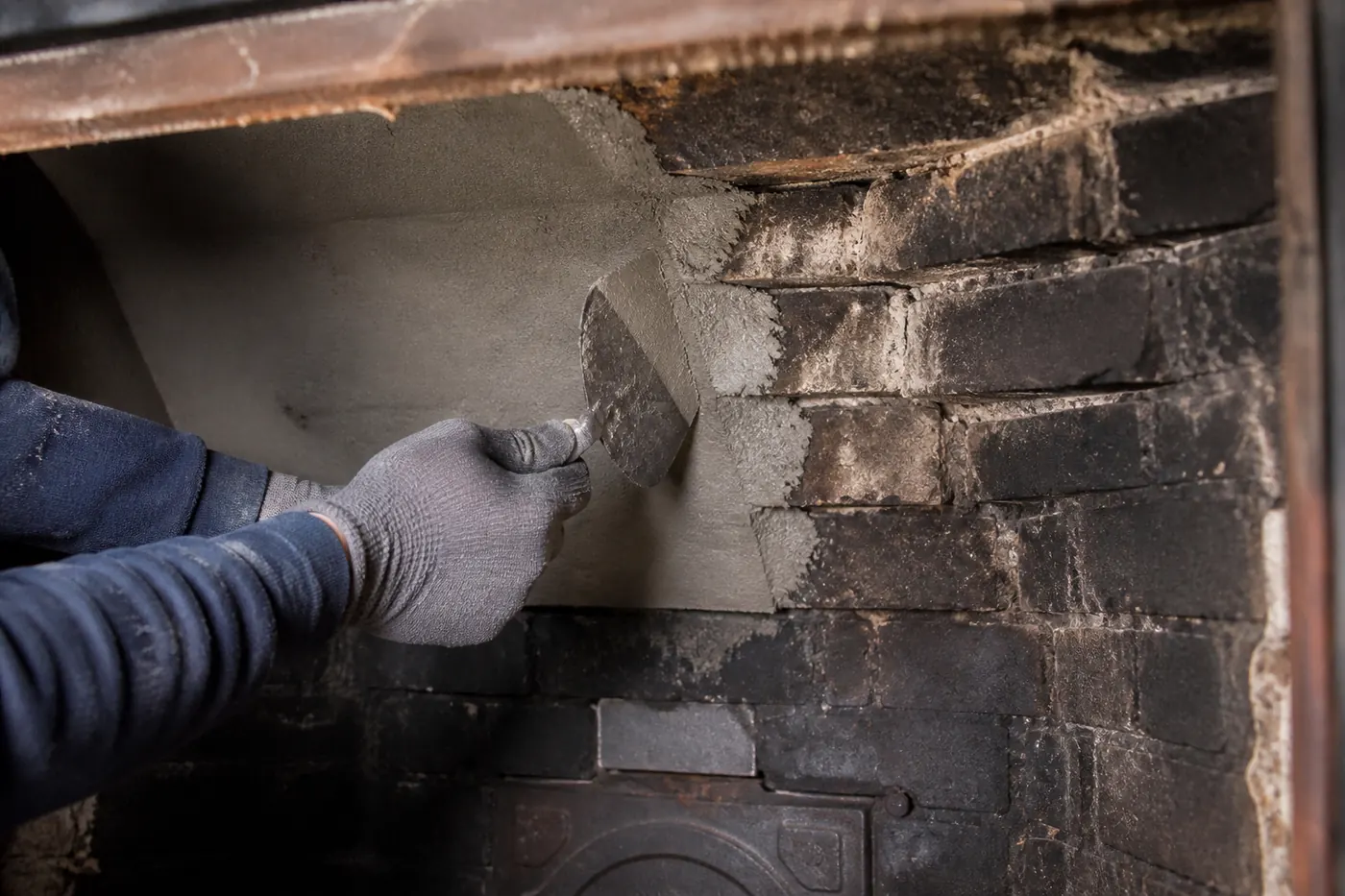
Smoke chamber repair in Boston costs $500 to $1,500, and the price depends mostly on whether the chamber can be repaired and parged in place or has to be partly rebuilt. The smoke chamber is the tapered passage hidden above your damper, and when its walls are rough, open or crumbling, smoke can spill into the room and heat can reach places it should not. We begin with a $49 chimney inspection, credited toward approved repair work, so you see what is up there before you pay for anything else.
- Smoke chamber repair in Boston runs $500 to $1,500, quoted in writing first.
- The chamber is the tapered space between the damper and the flue, and you cannot see it from the room.
- Smooth, sealed walls help smoke rise and keep heat and gases out of gaps.
- The $49 inspection is credited toward approved repair work.
What a smoke chamber is and why its walls matter
Look up inside a fireplace, past the damper, and the opening narrows. That narrowing section is the smoke chamber. It collects the smoke that rises from the firebox and funnels it from the wide fireplace opening into the much smaller flue. Think of it as the neck of a funnel.
In many older Boston homes, the chamber was built from brick laid in steps, each course stepping inward a little over the one below. This is called corbelling. The steps leave a rough, stair-like inside surface. Builders often smoothed it with a coat of mortar called parging, but that coat is thin, and heat, moisture and age wear it away.
When the surface is rough, smoke tumbles and slows instead of rising in a smooth stream. When the surface has open joints or voids, hot gas and sparks can reach brick, mortar and nearby framing that were never meant to take that heat. When water gets in from above, it can wash out joints that you cannot see from the room. So the walls of this passage are not decoration. They are part of how the fireplace breathes and part of what keeps combustion byproducts inside the chimney.
The chamber is one of three parts that sit close together at the top of the fire opening. The damper below it is covered in our guide to chimney damper repair, and the firebox below that has its own page. This page stays on the tapered section in between.
Signs the smoke chamber is the problem
Because the chamber is out of sight, the signs often show up somewhere else. These are the ones that point to it.
- Smoke spills into the room and there is no obvious blockage. The flue is clear, the damper is open and the fire still smokes you out.
- A camera shows open joints above the damper. Mortar gaps in the chamber walls are visible in a recorded image.
- The parging is missing or crumbling. The smooth coat has worn through and the rough brick is exposed.
- Pieces of masonry sit on the smoke shelf. The smoke shelf is the flat ledge behind the damper. Fragments there came from somewhere above.
- A previous inspection noted a rough, stepped transition. Someone has looked and written down what the surface looks like.
- There is heat damage around voids or offsets. Discoloration or cracking near a gap or a jog in the wall suggests heat is reaching it.
Not every one of these means the chamber needs work. Some chambers are rough but stable and sealed, and a rough surface alone is not always a reason to act. What matters is whether joints are open, whether material is loose and whether anything points to heat or water getting through.
Smoke problems also come from causes that have nothing to do with the chamber, so the visit tries to separate them. If you are seeing smoke now, stop using the fireplace until it is looked at.
What the technician checks in the chamber
The chamber is hard to see, so the inspection starts with getting a proper look.
- Throat size and the damper relationship. The opening where the chamber begins is measured and compared to the damper and flue, because a throat that is badly sized for the fireplace can cause smoke trouble by itself.
- A lit view of the walls. The technician looks up into the chamber with a camera and lighting, so open joints and voids are visible rather than guessed at. You are shown the images.
- Loose material versus stable corbelling. Steps that are firmly set and only rough are treated differently from steps that are shifting or shedding brick and mortar. Probing tells the two apart.
- Flue alignment and repair paths. The chamber should lead cleanly into the flue. If the flue is offset, or if the only way to reach the damage is through a tight opening, that affects what can be done.
- Chamber defects versus draft and pressure problems. Smoke can spill because the house is tight, because a fan pulls air down the chimney or because the flue is cold. These get ruled in or out so the repair addresses the real cause.
The findings go into a written scope with photos. If the chamber looks stable and sealed, we tell you so, and you do not buy a repair you do not need.
Reading the camera view takes some judgment, and a second look at the same images with you in the room often makes the problem clear. Ask the technician to point to the exact joint or void on the screen.
Repairing open joints in the chamber
The smallest repair is a patch. When most of the chamber is sound and a few joints have opened, the technician repairs only those joints and leaves the rest alone.
Localized refractory joint repair
Open joints are cleaned out, any loose material is removed, and the gaps are filled with a mortar designed for high-temperature use. Ordinary mortar is a poor choice here, because it breaks down when it is heated and cooled again and again. The aim is to close the path that hot gas and moisture were using without disturbing the sound brick around it.
When a patch is enough
A patch fits when the damage is limited and the surrounding surface is stable. If you can point to one small area on the camera image and the rest of the wall looks tight, a patch is a sensible, modest job. It also costs less, so it sits toward the lower part of the $500 to $1,500 range.
When a patch is not enough
If joints are open across much of the chamber, a patch becomes a series of small repairs with no overall surface. At that point it makes more sense to treat the whole chamber. The same goes for a chamber where fresh joints would only open again next to old, weak ones. The technician explains which side of that line yours falls on and why.
Parging the whole smoke chamber
Full parging is the standard repair for a chamber that is rough, worn or open throughout.
What the work involves
The chamber walls are cleaned and loose material is cleared away. Open joints are filled. Then a smooth coat of refractory mortar is applied to the inside surface, filling the stepped surface and rounding off the rough corners. The result is a continuous, tapered passage with no ledges to catch smoke and no gaps to leak gas.
The work is done from below, through the fireplace opening, in cramped conditions. The technician reaches up past the damper, and in some fireplaces the damper has to be removed or protected first. A small throat or a deep, narrow chamber makes the job slower and more detailed, and that is part of how the price is set.
Cure time
The new coat has to set before you use the fireplace. The technician tells you how long to wait, because it depends on the material and the weather. Do not rush a first fire. Heating fresh mortar too soon can crack it, and then you are paying for the repair twice.
Access panels
Sometimes the chamber can be reached better from the side or back. In those cases a small opening is made in the surrounding masonry or wall, the work is done through it and the opening is closed afterward. This is used where it helps, not as a default, and you are told when the plan includes one.
When the chamber has to be rebuilt
Parging works because it covers a sound structure. It cannot hold up bricks that are no longer holding themselves up.
A chamber needs reconstruction when the masonry is unstable. Warning signs include steps that have shifted, bricks that fall when touched, large voids behind the surface and joints that have washed out so far that the courses are loose. Water damage from above is a common cause, which is why a failing crown or cap often shows up in the same inspection. Heat damage from a long period of leakage is another.
Rebuilding means taking out the unstable section and laying it back up in proper steps, then finishing it with a smooth coat. It is a bigger job. It takes longer, it needs more material and it is the work that pushes the price toward the top of the range. It is also the case where the technician will ask to look at the flue and the structure around the chamber, because a chamber that has failed may signal a larger issue.
Sometimes the problem goes beyond the chamber. If the flue above is cracked or the liner is missing, repairing only the chamber leaves the real hazard in place. Our guide to chimney relining explains the liner side of that picture. If the whole chimney is in poor shape, the technician may bring up the larger question of repair versus rebuild, and you decide with the written options in hand.
Why smoke chamber repair is more than cosmetic
A rough surface inside the chimney sounds like a small thing, and you could ask why anyone would pay to fix it. There are three reasons that come up in real homes.
Draft
Smoke follows the easiest path upward. A smooth, tapered passage lets it move in a clean stream. A rough, stepped one slows and churns it, and in a fireplace that already struggles, that can be the difference between a fire that draws and one that smokes into the room.
Buildup
Soot and creosote cling to rough surfaces. A smooth chamber gives them less to hold onto, and it is easier to sweep clean at the next cleaning. A cleaner chamber also lets the next sweep see the whole path clearly.
Protection
Open joints let hot gas reach masonry and, in the worst cases, nearby framing. You cannot see this from the room. The damage develops slowly, and it can go on for a long time before anything is noticed. Closing those gaps is how a chimney is kept doing the job it was built for.
None of this means every chamber needs a repair. It means the chamber is worth looking at when the signs are there, and it is worth fixing when the evidence says it is open or unstable.
Repair or a bigger job: how to decide
The choice is rarely between fixing and doing nothing. It is between a small fix, a full treatment and a rebuild, and the camera images usually settle it.
- Patch when a few joints are open and the surrounding surface is sound.
- Parge the whole chamber when roughness, wear and open joints run throughout but the structure is stable.
- Rebuild when masonry is shifting, falling or washed out behind the surface.
- Wait and watch when the chamber is rough but sealed and stable, and there is no smoke problem and no sign of heat damage.
Be careful with any quote that recommends the largest option without photos. You are entitled to see the same images the technician saw. If the report calls for a rebuild and you want another opinion, a second opinion from us is free with a written report from a reputable local chimney company, and you can bring us the photos too.
The neighbouring fireplace parts affect this decision. A firebox with failing brick and a chamber with open joints may be one project, and the firebox is covered in our firebox repair guide. Doing them together can save a return visit.
Smoke chamber repair price in Boston
This is the short version. The cost page has the full breakdown of what moves the number.
| Service | Boston price | Notes |
|---|---|---|
| Smoke chamber repair | $500 to $1,500 | From joint repair and parging to reconstruction of an unstable chamber |
| General chimney inspection | $49 | Credited toward approved repair work |
The final price depends on how much of the chamber is damaged, how hard it is to reach and whether the masonry is stable. You get it in writing before work begins. For what drives the number up or down, read the smoke chamber repair cost page. Anything outside this scope, such as flue or liner work, is quoted in writing after the $49 inspection.
The visit, the work day and when it is urgent
To schedule, use /contact/ or phone (617) 404-9587. You get a three-hour arrival window, and we call ahead before the technician comes.
Getting ready
Let the fireplace cool fully and do not burn a fire that day. Clear the hearth and the floor in front of it, and move rugs and furniture away. The technician will cover the floor and set up lighting. If the chamber needs an access panel, the technician will tell you where and show you before any cutting starts.
On the day
The first part is the inspection and the camera view. You see the images and receive a written price. Work begins only after you say yes to the written price. Patching and parging are often completed in a single visit when you approve on the spot, and a rebuild takes longer. The technician gives you a plan before work begins and does not promise a timeline we cannot keep.
After the repair
Ask for follow-up photos of the finished surface after it has cured, so you have a record of what was done. Keep the fireplace unused until the technician says it is safe to light it.
When to act fast
If smoke is entering the room, do not light the fireplace until it has been looked at. If you see a chimney fire, leave and call 911. If a carbon monoxide alarm sounds, leave and call 911. If you smell gas, leave and call the gas utility or 911.
To find out what is happening above your damper, book a $49 chimney inspection or call (617) 404-9587 and we will show you the photos before you decide anything.
Questions homeowners ask
Where exactly is the smoke chamber?
It sits directly above the damper, between the firebox throat and the start of the flue. It narrows as it rises. You can see only the lower edge of it from the room, and the walls above that need a light and a camera.
Can I use my fireplace with open joints in the smoke chamber?
It is not a good idea. Open joints let hot gas and sparks reach masonry and sometimes nearby framing. If smoke is also entering the room, stop using the fireplace until it has been inspected.
Is parging the same as relining the chimney?
No. Parging smooths and seals the tapered chamber just above the damper. A liner is a channel that runs the length of the flue. A chimney can need one, the other or both, and the inspection shows which.
Why does my fireplace smoke when the flue is clean?
A clean flue is no proof of good draft. A rough or open smoke chamber, a damper that is not fully open, a cold flue or a tight house can all push smoke into the room. The visit separates these causes.
How long before I can burn a fire after parging?
The new coat has to set first, and the time depends on the material and the weather. The technician tells you when the chamber is ready. Lighting a fire too early can crack fresh mortar.
Do I need a rebuild if the chamber is rough?
Not necessarily. A rough but stable, sealed chamber may not need work at all. A rebuild is for masonry that is shifting, falling or washed out. The photos show which case you have.
Related guidance
Start with the Boston cost guide, then read the guides below.
- Fireplace Not Drawing? Causes and Fixes in Boston
- Why Is Smoke Backing Into Your House? Boston Guide
- Chimney Scam Warning Signs for Boston Homeowners