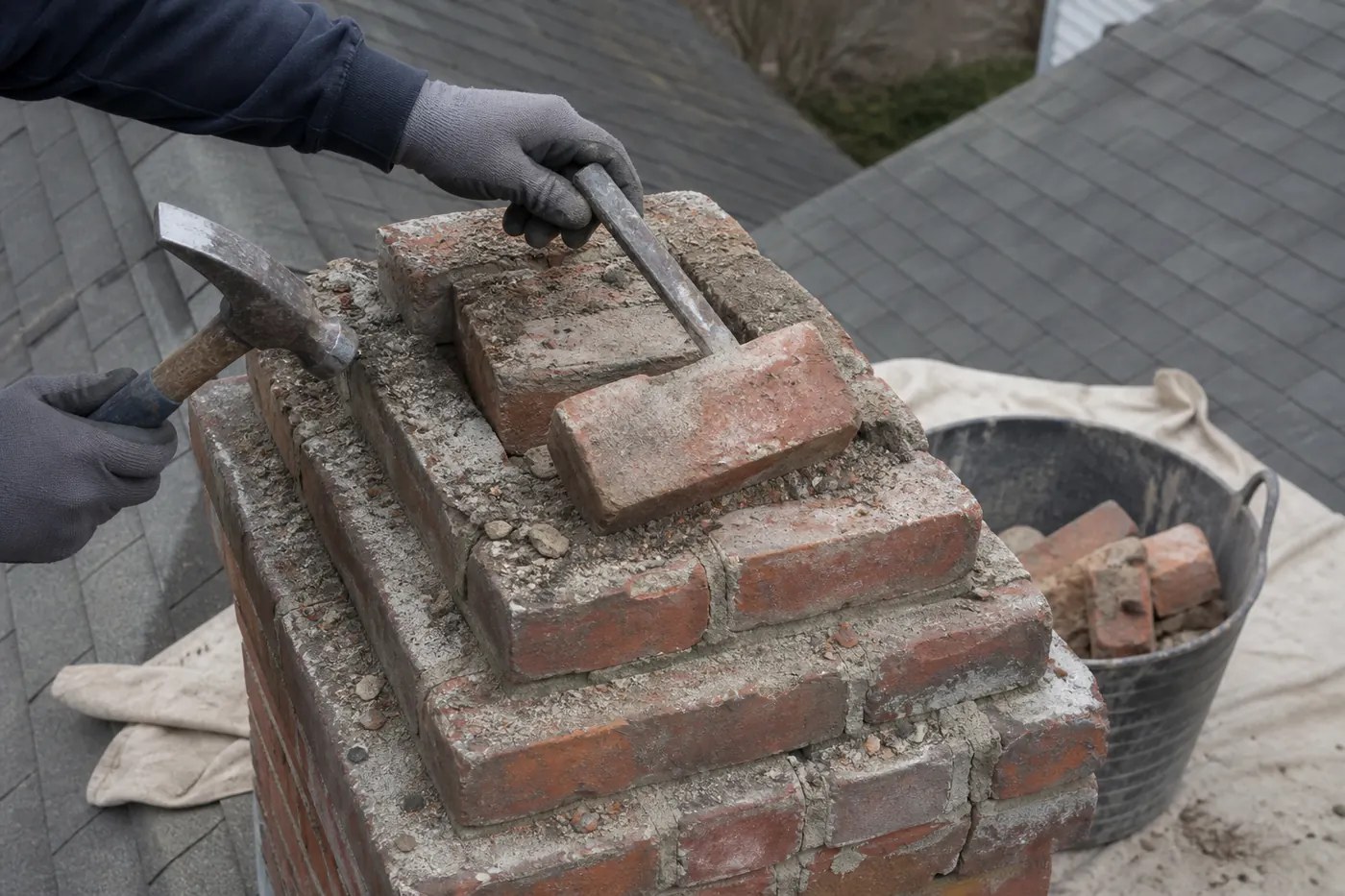
Yes, if the chimney is unused, badly deteriorated, or in the way of a renovation, and in Boston chimney removal is priced in writing after an inspection because no two removals are the same. How much comes out, how the roof is closed and what the inside of the house needs afterward all change the job. The $49 inspection is credited toward approved work, and you see the scope and price before anything is taken down.
- Chimney removal in Boston is priced in writing after an inspection, with no standard number, because the scope varies so much.
- The first decision is how much to remove: the stack above the roof, down to the attic, or the full chimney inside the house.
- Every appliance and utility connection is confirmed before demolition, and the roof is closed in afterward.
- The $49 inspection is credited toward approved work, and you approve the written scope first.
What chimney removal involves and why it is a bigger decision than a repair
A chimney does two jobs you may not think about. It carries the load of its own brick down to the foundation or to a support in the house, and it is part of the weather enclosure where it passes through the roof. Taking it out changes both. The masonry is gone, so the structure around it has to be considered, and the roof opening has to be closed so rain stays out.
That is why removal is not simply demolition. A stack taken down above the roof line is a very different job from removing brick through the attic, and that is different again from removing the chimney through the living space. Each removal limit has its own structural, roofing and finishing steps, and each changes the price.
Removal also cannot be undone the way a repair can. Once the chimney is gone, the fireplace or stove it served is gone with it. Before the work is priced, the technician checks that nothing active still depends on the flue. It is a decision to take your time with, and the inspection is where that starts.
Greater Boston adds its own reasons. Freeze-thaw cycles work on exposed brick every winter, and a stack that no longer carries a fire is often the part of the house that gets the least attention while taking the most weather. Many owners of triple-deckers and rowhouses find that a chimney serving nothing has become a maintenance cost with no benefit, and that is when the question of removal comes up.
Reasons homeowners remove a chimney
People come to removal from different directions. These are the situations that usually lead to the question:
- An unused stack is heavily deteriorated, with crumbling brick, open joints or leaning masonry.
- A renovation removes the appliance the chimney served, such as a boiler replaced with a unit that vents elsewhere, or a fireplace taken out.
- Repeated exterior repairs are no longer worth the cost, and the chimney keeps needing attention it does not earn.
- Roof work is planned, and it makes sense to settle the chimney at the same time.
- Interior space planning is looking at the chimney breast, the part that projects into a room, as something to reclaim.
- An unsafe, disconnected chimney needs controlled demolition before it becomes a hazard.
In the older brick houses, triple-deckers and rowhouses around Greater Boston, an old chimney often outlives its purpose. Heating has changed over the decades, and many flues no longer serve any appliance. A chimney that does nothing can still cost money in leaks, repairs and upkeep.
Not all of these reasons mean removal is right. A deteriorated stack may be repairable, and a renovation may only need a chimney capped and sealed. A fair inspection compares the options instead of steering you to the largest job. If removal does turn out to be the sensible route, you will have seen the evidence for it.
What gets confirmed before any demolition
The first step is making sure the chimney is really out of use. A flue that looks abandoned may still vent a boiler, a water heater or a furnace in the basement, sometimes through an old connection that nobody remembers. Taking it down with an active appliance attached is dangerous, and it can leave you without heat or with exhaust going the wrong way.
The inspection traces every connection into the chimney, including utilities and any pipe that passes through it. Gas or oil appliances that vented into the flue must be disconnected or re-vented first. Gas line work belongs to your gas utility or a licensed gas fitter, and it is arranged before the chimney work, not after. Should you ever smell gas while the heating is being sorted out, get everyone outside and phone the gas utility or 911.
You can help by gathering what you know: which appliances were ever connected, whether a boiler or water heater vents into the stack, and whether any renovation changed the heating. Tell the technician about every pipe, thimble or opening you have noticed.
Interior openings matter too. Old fireplaces are sometimes sealed with a board or a plate that hides what is behind it. Open flues in the attic or basement, cleanout doors and thimbles in the wall are all connection points. A chimney inspection looks for these so none of them is closed or demolished by surprise.
Choosing how much of the chimney comes out
Removal is not all or nothing. The limit you pick is the biggest driver of what the job involves, so it is decided in writing before the price is given.
Above the roof only
The stack above the roof line is taken down and the roof is closed over the opening. The chimney stays inside the house, and the interior is untouched. This is the least invasive choice. It stops the part of the chimney that takes the weather from leaking and deteriorating.
Down to the attic
The chimney is removed through the roof and down to a defined level in the attic. It frees up attic space and removes the part of the chimney above the living area, while leaving the lower part in place.
Full interior removal
Taking out the chimney breast inside the house is a much larger project. It involves structure, finishing and the surfaces of the rooms that the chimney passed through. It should be done only under a separately engineered and finished scope, with the finishes agreed upfront. Ask your local building department what approvals apply to your home.
The technician will explain which limit fits your goals and what each one leaves behind.
A common middle path is removing the stack above the roof while leaving the interior alone. That choice solves the leaking and the falling-brick risk at the top, at a smaller scope, and it leaves the door open to take out more later if your plans change. Tell the technician what you want from the space inside, since that, more than the roof, decides how far down the work goes.
Support, framing and what the chimney is holding up
Brick is heavy, and it sometimes carries more than its own weight. In older houses, floor joists, rafters or other framing can bear on or around the chimney. A chimney can also be built into the shape of the house, with the framing arranged around it.
Before any section is removed, the technician checks how the chimney and the framing relate. If anything depends on the chimney for support, that has to be dealt with first. Removing the chimney without that review can leave floors or walls without support. If the review shows a structural question that goes beyond chimney work, you will be told, and you may need a structural engineer's opinion before going further.
That check is also the reason the work is priced after an inspection. A number given over the phone cannot account for what is behind the plaster.
If you are planning a renovation with an architect or contractor, share the inspection findings with them. They can coordinate framing, flooring and finishes with the removal scope, and it prevents the chimney work from colliding with other trades. Keep the written scope with your project papers.
Houses with a shared wall, such as rowhouses and triple-deckers, deserve extra care here. The chimney may serve more than one unit or sit inside a party wall, and what you remove can affect a neighbor. Raise this at the start so the scope accounts for it.
How top-down sectional removal is done
Chimneys are normally taken down from the top, in sections, rather than knocked over. Brick is removed course by course, starting at the top and working down to the agreed limit. Working in sections keeps the load controlled and keeps debris from falling unpredictably.
Debris is lowered or carried out in a controlled way. It does not drop inside the house. For removal through the roof, the opening is protected from weather during the job, and the roof deck and framing are prepared for closing.
For the homeowner, this part of the day is loud and dusty. Expect hammering, vibration and people working on the roof. The technician will tell you when it is happening so you can plan around it, and you should keep pets and children away from the work area. Leave the roof and the demolition to the technician.
Weather is part of planning. Open roof work is not done when rain or high wind is coming, because the opening has to be protected until it is closed. The technician will tell you if the date needs to move. That is a normal part of roof work in New England, and rescheduling is better than leaving the roof open.
Closing the roof and matching the finish
Taking the chimney out leaves a hole in your roof, so closing it correctly is a core part of the job, not an extra. Framing is rebuilt where needed, the roof deck is filled in, and roofing is matched and weatherproofed. If part of the chimney remains, its exposed top is capped and sealed.
Matching is not always perfect. New roofing next to old can look different, especially on a weathered roof, and exterior siding or brick around the old chimney may show where it was. If you want a specific finish, say so early, because the written scope should state what is and is not included.
Check what the quote says about the roof and interior finishing. The cost page, how chimney removal is priced, covers what to look for when comparing quotes, including which finishing items are quoted separately. Flashing around any part of the chimney that stays is part of that check as well, and the chimney flashing repair page explains how that metal works.
Ask how long the opening will stay unsealed and how it is protected in the meantime. The answer should be specific. A good plan has the roof closed and watertight at the end of the work day, or protected until it can be. Photos of the closed roof are part of what you receive when the work is done.
Dust, debris and protecting the house
Demolition makes dust and debris. The work plan covers how the areas below the work will be protected, how debris leaves the property, and how the site is left when the work ends. Ask about it when the scope is written.
If the removal reaches inside the house, protection of the interior matters most. Furniture, floors and finishes in the work area need covering, and rooms that share air with the work can pick up dust. Move valuables out of the area if you can. For attic removals, tell the technician what is stored there.
Cleanup and the disposal of the removed material should be named in the written scope, not assumed. If the quote is silent, ask what is included.
If you have asthma, allergies or a baby in the house, mention it when you book. It affects how the work area is sealed off, and you may want to stay elsewhere during interior work. Keep windows and vents near the work area closed, and cover or move anything you would not want dusty.
Removal, repair or rebuild: how to decide
Removal is one of three answers to an aging chimney. It helps to see them side by side.
- Repair: the chimney is still in use and the damage is limited. See the chimney repair page.
- Rebuild: the chimney is still needed but too damaged to repair. The chimney rebuild page explains when that applies.
- Removal: the chimney has no job left, or its upkeep no longer makes sense.
The deciding question is whether you still need a working flue. If a fireplace, stove or boiler depends on the chimney, removal is not an option until that is changed. If nothing does, the cost of keeping up an unused chimney is worth weighing against the cost of taking it down.
The inspection gives you the facts for that decision, including whether the chimney is safe in the meantime. If the stack is leaning, shedding brick or failing, tell the technician right away. Falling brick is a hazard to people below. Keep everyone away from the base of a damaged chimney.
Resale is another angle. A chimney that is unused and in poor shape can raise questions in a buyer's inspection, while a clean removal with a closed roof and a written record reads as a finished job. On the other hand, a working fireplace can be a selling point in some homes. Weigh that before you decide.
Removal pricing, preparation and how to start
| Item | Boston price |
|---|---|
| Chimney removal | Priced in writing after inspection |
| General chimney inspection | $49, credited toward approved work |
There is no quoted number for removal itself, because height, access, how much is removed, what the roof needs and what finishing you want all change the work. You get the written scope and price before anything starts. A second opinion is free when you bring a written report from a reputable local chimney company, which is a fair way to compare removal scopes.
Visits begin with a 3-hour arrival window and a call ahead. Before the inspection, gather what you know about the heating and any renovation plans, and clear access to the attic and basement. Check with your insurer and your local building department about anything that affects your home. To book the $49 inspection, use the contact page or call (617) 404-9587.
If you are still undecided, the inspection costs little and commits you to nothing. You come away with photos, a clear view of what the chimney is doing, and a written scope for each removal limit you want priced. That is enough to decide on with confidence, or to take to another company for comparison.
Questions homeowners ask
Can I remove just the part of the chimney above my roof?
Yes. Taking down the stack above the roof line and closing the opening is a common, less invasive choice. The chimney stays inside the house, and the roof is closed over the opening. The scope is written out before the price is given.
How do I know my chimney is not still venting something?
The inspection traces every connection into the flue, including old boiler, furnace or water heater vents. Active gas or oil appliances must be disconnected or re-vented first, and gas work belongs to your gas utility or a licensed gas fitter.
Does removal include fixing the roof and the ceiling?
The roof closure is part of a removal job. How much interior finishing is included depends on the removal limit and what you agree in writing. Ask the written scope to state which finishing items are in and which are out.
Will taking out the chimney affect my floors or walls?
It can, if framing bears on or around the chimney. The technician checks support and adjacent framing before demolition. If the question goes beyond chimney work, you may need a structural engineer's opinion first.
Why is there no price listed for chimney removal?
The work depends on height, access, how much is removed, roof closure and finishing. A price given without an inspection would be a guess. After the $49 inspection you receive a written price, and the $49 is credited toward approved work.
Do I need a permit to remove a chimney?
Check with your local building department and your insurer, since requirements depend on the town and the scope. We do not give permit advice, but the written scope will help you explain the work when you ask.
Related guidance
Start with the Boston cost guide, then read the guides below.
- Chimney Removal Cost in Boston: What Sets the Price
- How to Choose a Chimney Company in Boston, MA
- Is a $49 Chimney Inspection Legit in Boston?