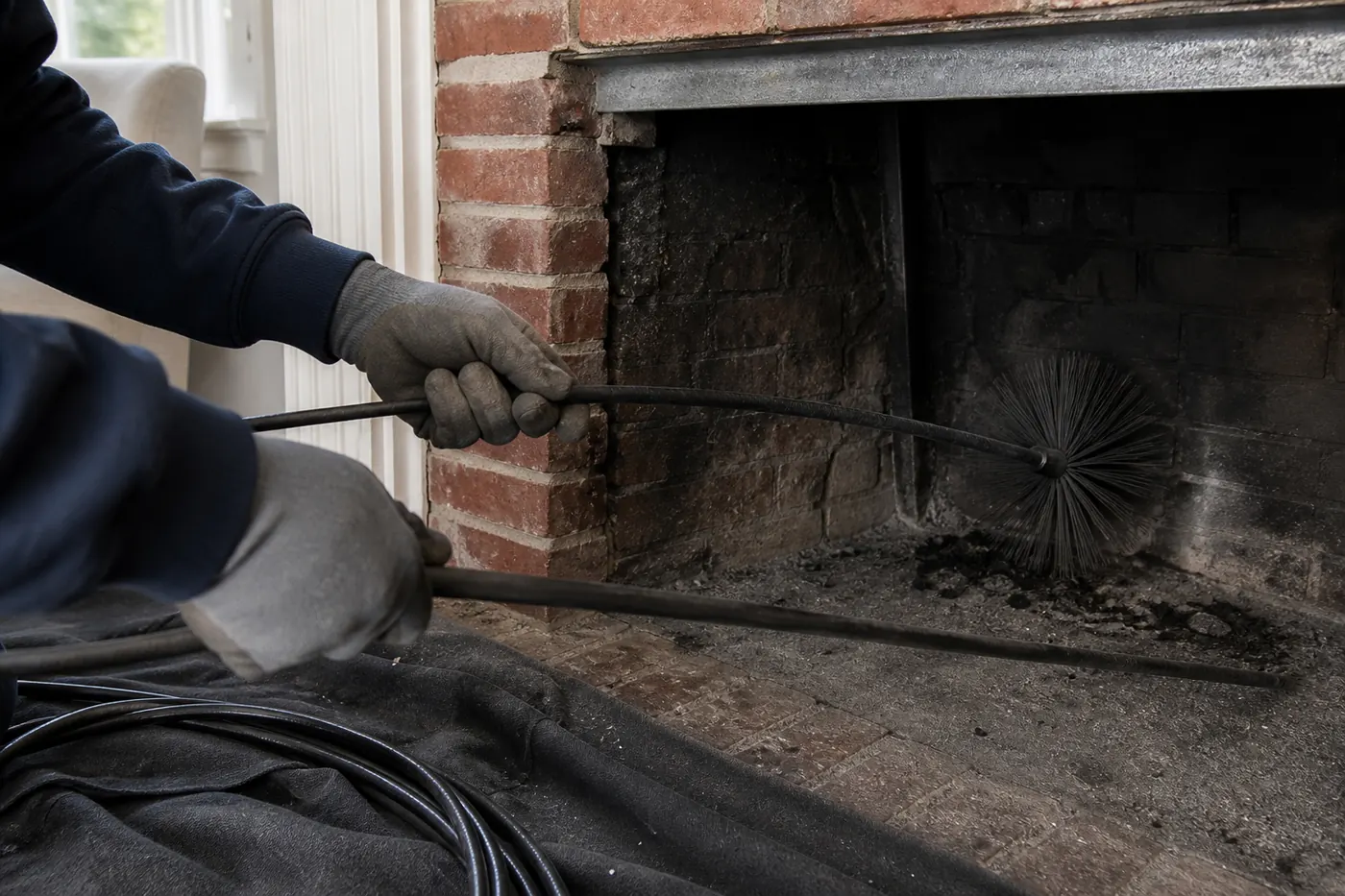
Yes, if your chimney has not been swept since your last season of regular fires, a Boston chimney sweep and cleaning is a fixed $299 and includes an inspection. A sweep removes soot and creosote from the flue, firebox and smoke shelf so smoke has a clear path out of the house. This page explains when a sweep is due, how it is done and what happens at your visit. For the full price breakdown, see the chimney sweep cost guide.
- A chimney sweep and cleaning with inspection is a fixed $299 in Boston.
- A sweep removes soot and loose creosote; hard, glazed buildup is a separate job.
- Sweeping lowers the fuel available for a chimney fire but does not repair damaged flue walls or masonry.
- You see the price in writing and photos of what the technician finds before any extra work is done.
What a chimney sweep removes and why it matters
A chimney sweep clears the leftovers of combustion from every surface smoke touches on its way out. Burning wood, pellets or oil never burns perfectly. Part of the smoke cools against the flue wall and sticks there. That sticky layer is soot when it is soft and powdery, and creosote when it turns tarry, crusty or shiny.
Creosote is flammable. A thick layer inside the flue gives a stray spark something to catch, and a chimney fire can crack the liner, spread into the walls and reach the roof framing. Even a thinner layer narrows the passage, so the fire draws poorly, smells in damp weather and pushes smoke back into the room.
The job is more than the flue itself. A full sweep covers the firebox, the damper, the smoke shelf behind it, the smoke chamber above and the length of the flue to the top. Each of these collects deposits in its own way, and each gets looked at while it is being cleaned.
Sweeping is maintenance, not repair. It removes what has built up. It does not fix a cracked flue tile, a leaking crown or loose brick, though it often shows you whether those problems exist.
Different fuels leave different residue. Wood smoke makes the familiar black soot and the brown or black creosote. A stove that is damped down overnight leaves more of it than one that is run hot. If your chimney vents a gas or oil appliance, the deposit looks different and is lighter, but the flue can still collect scale, rust flakes or blockages from outside.
Signs your chimney is due for a sweep
Most people wait for a symptom. These are the ones that point to a dirty flue:
- A full burning season or a documented yearly service date has passed since the last cleaning.
- You can see black soot or a glossy, glazed film on the walls just above the damper.
- Flakes or small pieces of debris land on the smoke shelf or in the firebox.
- A smoky, campfire smell comes down the chimney during humid summer weather.
- You burn often, or you have burned wood that was not fully seasoned.
- An inspection report says to clean the chimney before using it again.
Why damp weather brings the smell
Creosote absorbs moisture from humid air and releases its odor into the room. A fireplace that smells only on muggy days is usually carrying more buildup than it looks like from the firebox.
Why unseasoned wood matters
Wet wood burns cooler and smokes more. More smoke means more material cooling against the flue walls, so the buildup arrives faster than it would with dry fuel.
How often a Boston fireplace or stove needs sweeping
NFPA 211 recommends that chimneys be inspected at least once a year, and that cleaning follow whenever the inspection shows it is needed. For many homes that means one sweep a year before the first fire of the season. Fall is the sensible time, because you find out about a blocked flue before you light it.
Use matters more than the calendar. A fireplace that burns a few evenings a month collects deposits slowly. A wood stove that heats a triple-decker floor every night all winter can build up in a single season. If you burn heavily, plan on checking it partway through the season too.
Greater Boston adds a few reasons not to skip a year. Long, cold winters mean more burning. Wet weather and freeze-thaw cycles can drop debris, bird nests and loose mortar into a flue that looked fine last fall. Older brick chimneys on rowhouses and brownstones often have unlined or old clay flues with rough surfaces that hold deposits.
If you rarely burn, you still need the yearly look. A chimney that sits unused can fill with leaves, nesting material and fallen debris. Those blockages can be as dangerous as creosote once you light a fire. If you are unsure about your own pattern, an annual chimney inspection answers it with evidence.
Shared and tall stacks deserve a thought too. In a row of attached homes, one brick stack can carry several flues side by side. Each flue serves one appliance and is cleaned on its own, so tell the technician how many fireplaces, stoves or boilers use the stack.
What the technician checks before any brush touches the flue
The inspection comes first so the cleaning does not hide anything. Once a flue has been brushed, a crack or a gap that was packed with soot can look different, and loosened material can shift. So the technician looks before disturbing it.
- Confirm what the chimney serves: an open fireplace, an insert, a wood stove or another appliance, and what the venting path to the roof looks like.
- Protect the floor and the area around the opening so soot stays out of the room.
- Look at the firebox walls and floor, the damper and the smoke shelf for cracks, gaps, rust and loose parts.
- Look up the flue from the opening to see how heavy the deposit is and what it looks like.
- Check the accessible parts of the top, such as the cap and crown, for visible damage.
The point is to separate normal soot from conditions that need a different answer. Soft, brushable soot is a routine sweep. Hard, shiny coating that looks like tar is a bigger job, and the technician tells you before anything else is done.
Where the cleaning needs a closer look at the flue interior than the opening allows, the technician says so and records what could not be seen. That limitation goes in the notes, so a clean-looking result is never presented as a full inspection of parts nobody could reach.
How the flue is brushed and vacuumed
Brush choice depends on what the flue is made of and what shape it is. Using the wrong brush can scratch a metal liner or chip an old clay one, so the match matters more than force.
- Manual brushing. A brush on a set of connecting rods is pushed up and down the flue. This works well for straight runs and for flues with light or moderate soot.
- Rotary brushing. A spinning head cleans rougher deposits and works around an offset. It must suit the liner material, which is why the technician identifies the liner first.
- Vacuum control. A vacuum draws loose soot while the work goes on, so it is captured and does not drift into the house.
The technician works from the bottom up or the top down depending on what the chimney allows, and then passes the brush again until the walls feel and look clean. Rods are added one section at a time, so a tall chimney does not mean a different method.
If the surface is lightly sooted, you may see bare liner or masonry after one pass. If it is layered with tar, brushing alone will not clear it. That is the point where the visit moves from a sweep to creosote treatment, covered further down this page.
Cleaning the smoke shelf, damper and firebox
Many homeowners picture a sweep as one long brush through the flue. In practice a lot of the dirt sits lower down, in corners the brush pushes it into.
Smoke shelf
The smoke shelf is the flat area behind the damper. Falling soot, bits of mortar and bird nesting material all land there. If it is left packed with debris, it can hold moisture against metal and block the draw.
Damper and damper area
The damper plate and its frame collect dust and sticky deposits. A damper that is coated in buildup may not close fully or may stick open. The technician cleans around it and notes whether it moves freely. A damper that is bent or rusted is a repair, which you can read about on the chimney damper repair page.
Firebox
The firebox floor gets swept and vacuumed once the loose material has dropped. Ash that remains is removed or at least noted, since a deep ash bed can hide damage to the floor.
After brushing, the technician looks again at the accessible surfaces. The aim is to confirm that the material has been captured and that nothing was uncovered that was not visible earlier, such as a cracked firebrick or a gap at the smoke chamber.
When a sweep turns into creosote removal or a repair
A fixed price sweep covers standard, brushable deposits in a standard single-flue chimney. Two things can change the plan once the technician is looking at the real condition of the flue.
Glazed or heavy creosote
Creosote that is hard, shiny or tar-like does not release under an ordinary brush. It needs repeated passes or a separate treatment, and sometimes more than one visit. You get that scope in writing before it starts. Our creosote removal page explains the three stages and how each is handled.
Damage the cleaning uncovers
A clean flue is the first time many problems can actually be seen. The technician may find cracked liner tiles, mortar gone from joints, a smoke chamber with gaps or a rusted damper. These are not part of a sweep. They are recorded with photos and listed in a written estimate on the chimney repair side of the work, so you can decide on your own timing.
You are never asked to approve repairs while the technician is standing in your living room. The written price and the photos come first, and you can say no to everything except the cleaning you booked.
More than one flue
A single sweep price is for a standard single-flue chimney. A house with two flues, such as a fireplace and a furnace flue sharing a stack, is quoted for the extra flue in writing.
What the visit looks like from arrival to cleanup
You get a three-hour arrival window and a call ahead, so you are not waiting all day. The technician needs access to the fireplace or stove and a clear path to it.
- Arrival and walk-through. The technician confirms what appliance the chimney serves and asks what you have noticed, such as smoke smell, draft problems or debris.
- Protection. Drop cloths go down, and a vacuum is set up so soot is drawn off.
- Inspection of accessible parts. Photos are taken of the firebox, damper, smoke shelf and any other visible areas that show a problem.
- Cleaning. The flue, damper area, smoke shelf and firebox are brushed and vacuumed.
- Final look. The accessible surfaces are checked again, and you see the photos and what they show.
- Written notes. If anything needs more work, you receive the price in writing before anything starts.
A normal sweep on a single flue is a matter of a modest visit, not a full day. A chimney with heavy deposits, difficult access or multiple flues can take longer, and the technician tells you so before starting that part.
Photos matter because soot hides things. A picture of a cracked firebrick or a gap at the shelf is easier to judge at the kitchen table than a verbal description from someone standing in the firebox. It also lets you show the pictures to anyone else you want to consult before agreeing to repairs.
Chimney sweep price at a glance
The price below is for a standard single-flue cleaning that includes the inspection. Everything else on the list is quoted in writing before work begins.
| Service | Price | What it covers |
|---|---|---|
| Chimney cleaning with inspection | $299 fixed | Standard single-flue sweep, firebox and smoke shelf cleaning, visual check of the accessible parts |
| General chimney inspection | $49 | Credited toward approved repair work |
| Heavy creosote, extra flues, repairs | Quoted in writing | Scoped after the inspection and approved by you first |
For the reasons a job can sit higher or lower and how to read a written quote, use the cost guide linked at the top of this page.
The fixed price is for the cleaning and the inspection together, so you are not paying one fee to look and another to clean. If the inspection shows nothing but ordinary soot, the written price you were given is the price you pay.
How to prepare, and how to keep the chimney cleaner afterward
Preparation takes a few minutes and makes the visit smoother.
- Let the fireplace or stove cool completely. A chimney that was used within the last day is hard to work on safely.
- Clear furniture and rugs from the area around the opening so the technician has room.
- Tell the technician what you have noticed, even small things like a changed draft or a strange smell.
- Keep pets in another room, since soot and loose debris can fall quickly.
After the sweep, your burning habits decide how fast deposits return. Burn dry, seasoned wood. Give the fire enough air to burn hot rather than letting it smolder overnight. Avoid burning trash, cardboard or painted wood. A hotter, cleaner fire sends more of the smoke out of the chimney instead of leaving it on the walls.
If you notice smoke coming into the room, a strong odor or a visible change in how the fire draws, stop using it and call before the next burn.
When a dirty chimney becomes urgent
Some situations are not a matter of scheduling.
- If you think a chimney fire is happening, you may hear a roar, see flames or heavy smoke from the top. Get everyone out of the house and call 911.
- If a carbon monoxide alarm goes off, leave the house and call 911.
- If a chimney fire has already happened and gone out, do not use the fireplace again until it has been inspected. Heat damage can be hidden.
- If smoke is backing into the room each time you light a fire, stop burning until the cause is found.
Everything short of that is a calm booking. If it has been a season or more since the last cleaning, book the $299 sweep with inspection at our contact page or call (617) 404-9587.
Questions homeowners ask
Does the $299 sweep include a look at the whole chimney?
The price covers a standard single-flue cleaning with an inspection of the accessible parts, such as the firebox, damper, smoke shelf and flue walls. Areas that cannot be reached safely are noted rather than guessed at. Anything beyond the cleaning is quoted in writing first.
Can I use my fireplace right after it is swept?
Usually yes, once the technician has finished and told you the chimney is clear to use. If the visit turned up a problem such as a blocked flue or a damaged damper, you will be told to wait until it is addressed. Ask before the first fire if anything was noted.
Will sweeping stop creosote from forming again?
No. Sweeping removes the existing buildup, but new deposits form every time you burn. How fast they return depends on how dry the wood is, how hot the fire burns and how well the chimney draws. Cleaner burning habits slow it down.
Do I need a sweep if I only burn a few times a year?
You still need a yearly inspection, because a chimney used rarely can fill with debris, nests and loose masonry. The cleaning itself depends on what the inspection finds. A lightly used flue may need only a brush pass, while a blocked one needs clearing before any fire.
What if the sweep finds creosote that will not brush out?
The technician stops, shows you photos and writes up a separate scope for creosote removal. You approve the price before that work begins. You are not charged for treatment you have not agreed to.
Do gas fireplaces and wood stoves need sweeping too?
Wood stoves do, and often more than open fireplaces. Gas appliances produce little soot but still need their venting checked for blockage and wear. Gas fireplace cleaning has its own pricing, so mention what you have when you book.
Related guidance
Start with the Boston cost guide, then read the guides below.
- Multifamily Chimney Care for Boston Buildings
- Chimney Inspection Before Selling a Boston-Area Home
- DIY vs Professional Chimney Cleaning in Boston
- How Often Should a Chimney Be Swept in Boston?
- Get Your Fireplace Ready for the First Cold Snap