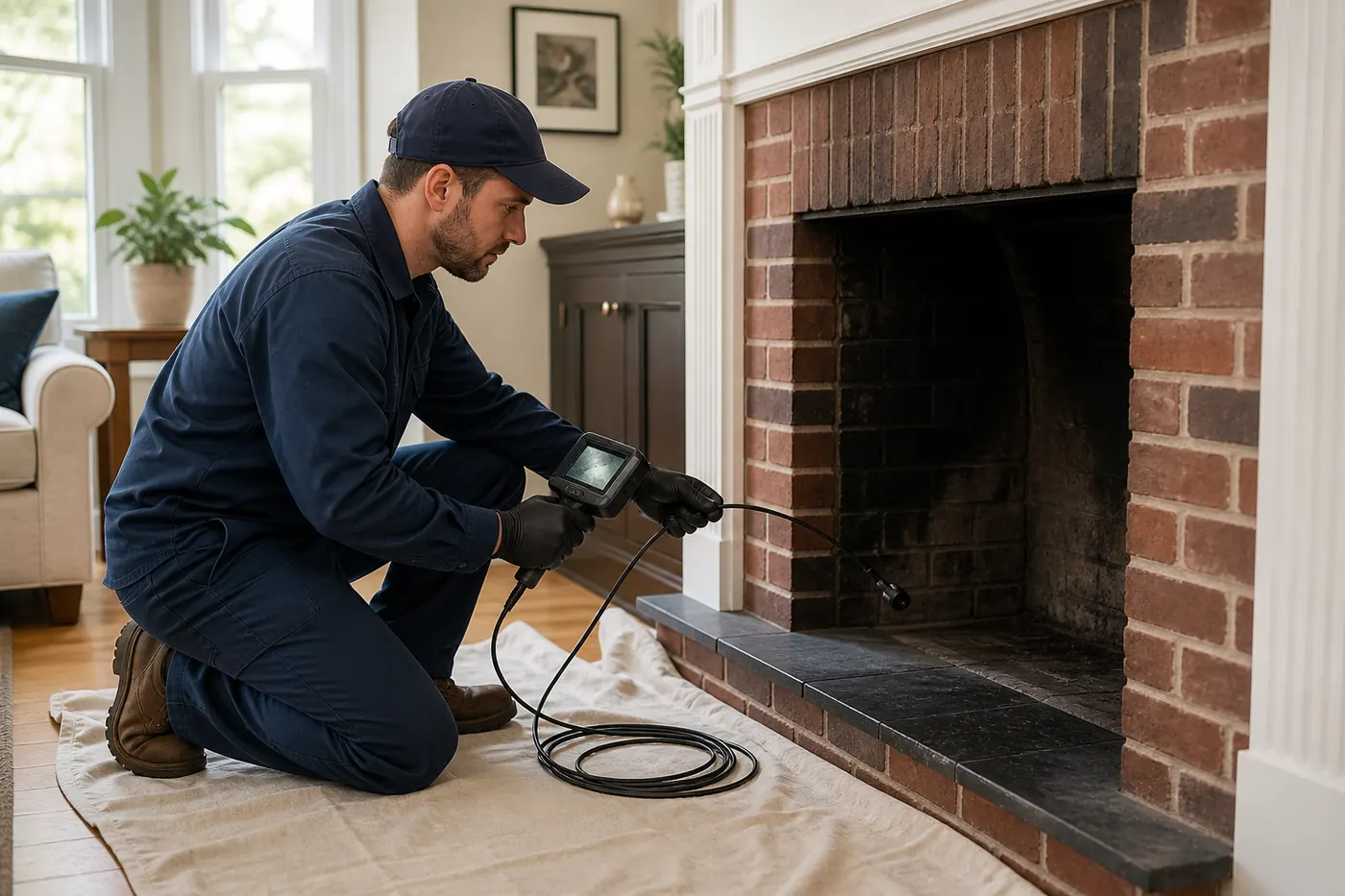
You need a chimney inspection before you buy or sell a home, after a fire or storm, when the appliance changes and at least once a year if you burn, and a general inspection in Boston is $49. That fee is credited toward any repair you approve afterward. Buyer and seller inspections are $99, and a cleaning with inspection is $299. The chimney inspection cost guide compares them side by side.
- A general chimney inspection in Boston is $49, credited toward approved repair work.
- A buyer or seller inspection is $99, and a cleaning with inspection is a fixed $299.
- The report separates what was seen, what could not be reached and what you should do about it.
- A second opinion is free if you bring a written report from a reputable local chimney company.
What a chimney inspection actually tells you
An inspection answers three questions: is this chimney safe to use today, what is wearing out, and what needs doing first. It is not a sales pitch and it is not a guess from the sidewalk. It is a look at how the whole system was built, how you use it and what the weather has done to it.
The system is longer than most people think. It starts at the appliance, whether that is an open fireplace, an insert or a stove. From there smoke passes the damper, the smoke chamber, the flue and its liner, then the masonry above the roofline, the crown, the cap and the flashing where the stack meets the roof. Water, heat and old repairs can cause trouble at any of those points.
NFPA 211 recommends a chimney be inspected every year. The reasoning is simple. Damage rarely announces itself. A cracked flue tile, a gap in the mortar or a missing cap can sit unnoticed for a season while the chimney still looks normal from the living room.
The result you receive is a written statement of what the technician saw, what was limited and what to do next, backed by photos. That is the part you keep and can show to a mason, an insurer, a buyer or a second company.
Think of it as the difference between hearing that a car is fine and seeing the mechanic's checklist. A chimney that looks clean from the room can still have a failing liner inside the wall, and a chimney that looks rough can turn out to be sound. Only a look at the parts tells you which.
Wood, gas and oil appliances each ask different things of a flue. Wood leaves deposits and runs hot. Gas gives off moisture that can eat at an unsuited liner. Oil has its own exhaust and residue to deal with. The technician reads the chimney against the fuel it actually serves.
Six situations when an inspection is the right next step
You do not need a symptom to book one, but these situations are the clearest signs:
- You are buying or selling a house with a chimney, and nobody can show you its history.
- The fuel or appliance changed, such as adding a stove, switching to gas or fitting an insert into an old fireplace.
- A chimney fire, lightning strike or heavy storm may have hit the stack.
- Water stains, a damp smell, smoke in the room or debris in the firebox have appeared.
- There is no service record, and you cannot say when the chimney was last looked at.
- You have a repair quote and want to know whether the scope is real.
Why a changed appliance needs a fresh look
A flue that worked for an open fire may be the wrong size or condition for a stove or an insert. The connection, the liner and the clearances all depend on what is attached to them. Nothing about the old setup proves the new one is safe.
Why a storm matters
Nor'easters and ice can loosen a cap, lift flashing or crack a crown. The chimney may keep working while water finds a way in behind the brick.
Some insurers ask for evidence that a chimney was checked. Ask your own insurer what they require. A written report with photos is the form of evidence most people find easiest to hand over.
How deep an inspection goes
Industry practice describes three depths, and the right one depends on why you are asking.
A basic visual inspection
This covers what can be seen without tools or opening anything up: the firebox, damper, the visible lower flue, the connection to the appliance, and the outside of the stack from the ground where the view allows. It suits a chimney with a steady history that is used the same way each year.
A deeper inspection with a flue scan
This adds a camera look through the flue and access to the attic, crawlspace or other spots that can be reached. It is the usual choice when a property changes hands, when the appliance changes, or after an event that may have damaged the flue, because it shows the length of the liner rather than just its bottom.
A structural inspection
When a hidden problem is suspected, a third depth may involve opening up parts of the chimney or surrounding structure. This is rare, and it is never done without telling you first.
Which one is needed is decided during the visit, not by a rule of thumb. If the technician decides more than the basic visit is needed, the added work is quoted in writing after the $49 inspection and before it starts. You are not billed for a deeper scope you did not approve.
What the technician checks, part by part
The order follows the path of the smoke, from the fire to the sky.
Appliance connection and firebox
The technician looks at how the appliance joins the flue, the condition of the firebox floor and walls, and whether there are gaps, spalling or heat damage. Cracks in firebrick or mortar joints let heat reach framing that was never meant to see it.
Damper and smoke chamber
A damper should open and close fully. The smoke chamber above it should have smooth, sealed walls. Rough, gapped or crumbling surfaces here can leak smoke and catch deposits.
Flue and liner
This is the most important and least visible part. A liner can be clay tile, metal or a poured system. The technician looks for cracked tiles, open joints, rust, scale and the glossy coating left by a past chimney fire. Any of these can let heat or smoke into the walls.
Masonry, crown, cap and flashing
Outside, the brick, mortar joints, crown, cap and the flashing at the roof are checked for cracking, water entry and missing pieces. Older brick homes, triple-deckers and brownstones in Greater Boston take a lot of weather on these parts.
Interior evidence
Stains on a ceiling, a damp wall near the stack or a smell of old smoke in the attic can point to a leak or a hidden defect. These are noted along with the chimney itself.
Each part gets a plain note even when it is fine. A report that lists only problems makes it hard to tell what was actually looked at, so sound components are recorded as sound.
Buyer and seller inspections
A home sale is where a chimney surprise costs the most. A buyer who finds a cracked flue after closing pays for it. A seller who learns of it during the buyer's inspection loses leverage at the worst time.
The buyer and seller inspection is $99. It follows the same path as a general inspection, but the report is written to be read by people who were not there. Findings are separated into things that look sound, things that are limited by access and things that need correction.
- Buyers get a clear picture before they commit, and a list they can bring to negotiation.
- Sellers can learn about problems early and decide whether to fix them or disclose them.
- Agents and attorneys get photos and a plain statement instead of a verbal opinion.
If the report recommends work, that work is not bundled into the $99. It is priced separately. A seller or buyer can hand the written findings to any contractor for a quote.
Check with your attorney or your agent on how inspection findings affect the sale. That is outside what an inspector can advise on.
Timing helps. Book the chimney visit early in the sale process, so any recommended work can be priced and scheduled without pushing back a closing date. Triple-deckers and multi-unit buildings may have more than one flue to look at, and the report should name each one.
Getting a second opinion on someone else's report
If another company has told you that you need a rebuild, a new liner or major masonry, a second look makes sense before you spend. Bring the written report from a reputable local chimney company and the second opinion is free.
The aim is to confirm or challenge the scope. The technician reads the report, checks the same areas and tells you whether the photos and findings hold up. Sometimes the first report is right. Sometimes it recommends more than the evidence supports, or lacks photos that would let anyone judge the claim.
A report worth trusting names the part, describes the condition and shows a picture. If yours says only that the chimney is unsafe, or lists work with no explanation, that is a reason to ask for more detail.
The second opinion does not commit you to hiring anyone. You get the findings and decide what to do with them.
Bring the whole document, not a summary, and any photos that came with it. The more detail you have, the easier it is to match what the first company saw to what the second sees, and to tell the difference between a real defect and a recommendation made out of caution.
How the findings are written and what the report must say
A useful inspection report keeps three things apart that are often mixed up.
- Observation. What was seen, in plain words, with a photo. For example, a crack in a flue tile at a certain point.
- Limitation. What could not be seen and why, such as a bend that hid part of the flue or a roof area that could not be reached safely.
- Recommendation. What to do, how urgent it is and what it would roughly involve.
Recommendations should be ranked. A hazard that makes the chimney unsafe to use goes first. A worn crown that will keep failing slowly goes after. Cosmetic items go last.
The photos also include normal conditions where it helps. A picture of a sound liner section next to a damaged one shows you the difference. It is easier to judge a problem when you can compare it to a part that is fine.
Nothing in the report is meant to rush you. You get it in writing so you can compare it with other opinions and plan repairs in an order that fits your budget and season.
If something in the report is unclear, ask. A good technician can show you the photo and point to the exact spot. You should leave the visit able to explain the findings to a family member or a contractor in your own words.
Keep each report. Over the years they form a history of the chimney, which answers the question of service records that so many owners cannot. A record that shows steady checks is also a point in your favor when you sell.
When an inspection leads to a cleaning
Sometimes soot or creosote is thick enough that the inspection cannot be completed. Deposits hide cracks and joints, and a camera cannot read a surface it cannot see. In that case the sensible step is to clean first, then look.
That is what the $299 cleaning with inspection is for. It combines a standard single-flue sweep with a check of the accessible parts, so you pay once rather than for a look and a separate visit. The chimney sweep and cleaning page explains how the cleaning side works.
If the cleaning shows glazed or heavy buildup that the sweep cannot clear, the technician writes a separate scope and you approve it before more work happens. The inspection credit still works the way it always does: the $49 general inspection fee is credited toward repair work you approve.
A flue so dirty that it cannot be assessed is itself a finding. Mention it in your notes, because both an insurer and a future buyer may ask.
Cleaning before inspecting also gives a fairer baseline. After the flue is clear, the technician can see its true condition, and next year's visit can be compared with this year's photos.
Inspection prices in one table
Here is what each inspection costs in Greater Boston. Anything that goes beyond these is quoted in writing before work begins.
| Service | Price | Use it when |
|---|---|---|
| General chimney inspection | $49, credited toward approved repair work | Annual check, new symptom or unknown history |
| Buyer or seller inspection | $99 | A property is being bought or sold |
| Cleaning with inspection | $299 fixed | Deposits hide the surfaces that need to be checked |
| Second opinion | Free with a written report from a reputable local chimney company | You want the first report checked |
Repair work found during an inspection is quoted in writing after the visit.
What to expect on the day, and when waiting is risky
You get a three-hour arrival window and a call before the technician comes. Make sure someone is home who can point out what you have noticed. Let any fire go out and cool at least a day beforehand so the firebox can be examined.
The visit moves from the appliance outward. The technician confirms what is connected, looks over the interior parts, checks what the outside of the stack shows and photographs problems. Afterward you see the photos and hear the findings. The price for any follow-up work comes to you in writing.
Some things should not wait for a calendar slot. If you suspect a chimney fire is in progress, get everyone out and call 911. If a carbon monoxide alarm sounds, leave and call 911. If you smell gas, leave and call the gas utility or 911. After a chimney fire has gone out, keep the fireplace off until it is inspected, since heat damage can be hidden.
If you have several flues, such as a fireplace in the front room and a stove or boiler flue in the cellar, mention all of them when you book so the visit is planned for the whole stack rather than one opening.
If the report shows work, the chimney repair side of the business can price it. For anything calmer, book the $49 inspection on our contact page or call (617) 404-9587.
Questions homeowners ask
How long does a chimney inspection take?
A basic visit is short, because the technician moves through a fixed set of parts. A deeper inspection with a flue scan takes longer, and a chimney with tricky access or multiple flues takes more time still. You will be told before the visit goes beyond the basic scope.
Does the $49 fee go away if I hire you for the repair?
It is credited toward approved repair work, so it becomes part of the repair rather than an extra charge. The credit applies only to work you have approved in writing. If you take the report elsewhere, the $49 pays for the inspection itself.
Can I use the fireplace while I wait for the report?
That depends on what was found. If the technician sees a hazard such as a cracked liner or heavy glazed creosote, they will tell you to stop burning until it is fixed. If the chimney looks sound, you will hear that as well.
Do gas fireplaces and stoves need inspecting too?
Yes. A gas appliance makes less soot, but its venting can still be blocked, rusted or disconnected, and moisture can damage the flue. A change of fuel is one of the strongest reasons to book, because the old flue may not suit the new appliance.
What happens if the inspection finds nothing wrong?
You get a written report saying so, with photos of the parts that were checked, and you pay only the inspection fee. A clean report is useful on its own, for a sale, an insurer or your own records.
Is a home inspector's chimney note the same as this?
Not usually. A general home inspector looks at a chimney as one part of a house and often stays at ground level. A chimney inspection goes into the firebox, damper and flue and checks parts they cannot reach. If their note says to get the chimney evaluated, this is that evaluation.
Related guidance
Start with the Boston cost guide, then read the guides below.
- Chimney Red Flags When Buying a Home in Boston
- Carbon Monoxide and Chimney Warning Signs in Boston
- Chimney Damage and Home Insurance in Boston, MA
- Chimney Inspection Levels 1, 2 and 3 Explained in Boston
- First-Time Homeowner Chimney Guide for Boston Buyers