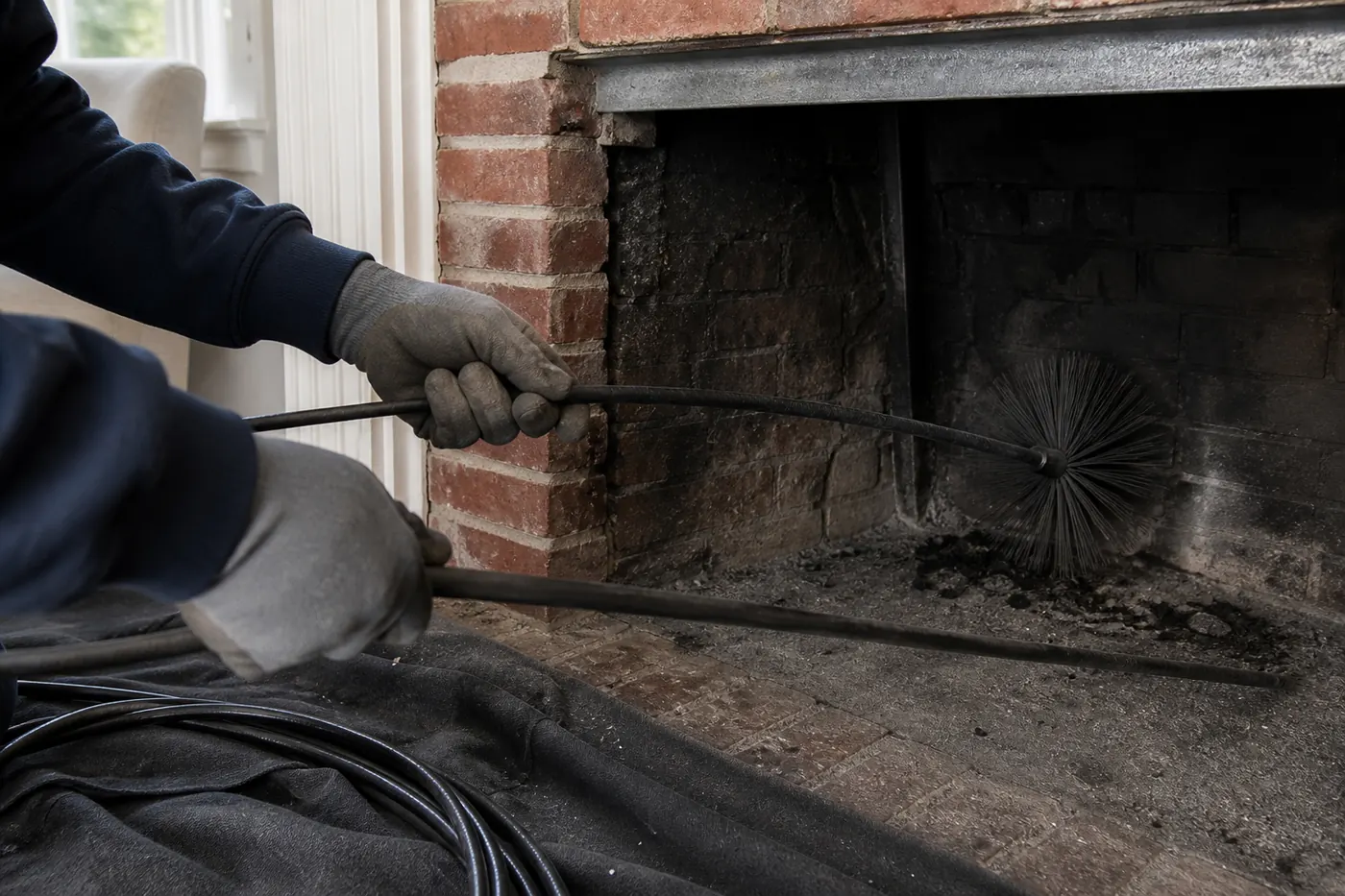
Do not light a fire yet. Find out how many chimneys and flues the house has, ask for any service records, and book an inspection before the first burn. A general inspection is $49 in Boston and is credited toward approved repair work.
Walk the house and find every flue
Many Boston-area homes have more than one flue, and some are not obvious. Walk through every floor, including the basement, and make a simple list.
- Fireplaces. Check every floor. A triple-decker or rowhouse may have one on each level, and some are blocked or painted shut.
- The boiler or furnace. Its exhaust often goes into a chimney, sometimes the same stack as a fireplace.
- The water heater. Gas models usually vent through a flue as well.
- Wood stoves and inserts. They have their own connector pipe and a liner behind them.
- Cleanout doors. Small metal doors near the chimney base in the basement give access to the bottom of the flue.
Then walk outside and count the chimney tops you can see from the street or yard. Match them to what you found inside. A chimney top with no matching fireplace usually serves a heating appliance, and it needs checking just as much as the one you plan to use.
Ask for records before you assume anything
The seller, the buyer's agent or the inspection report may hold useful papers. Ask for them in writing.
- The date of the last sweep or inspection and who did it.
- Receipts for work such as a new cap, a crown repair, relining or repointing.
- Any notes on leaks, smoke problems or animals.
- Information about past chimney fires. Sellers do not always mention them, and an old fire can leave hidden damage.
- Manuals or labels for stoves, inserts and gas appliances.
If the home inspector flagged the chimney, ask for that page of the report. A general home inspection usually looks at what is visible, and it may not cover the inside of the flue. A chimney inspection goes further and gives you a clear baseline for the home.
Get a real chimney inspection before the first fire
A fireplace can look fine and still be unsafe. Cracked liners, blocked flues and missing caps do not show in the living room.
The chimney inspection checks the parts you cannot easily see: the firebox, damper, smoke chamber, flue and the visible parts of the stack. The $49 general inspection is credited toward approved repair work. If you are still in the middle of a purchase, the buyer and seller inspection is $99. The chimney inspection cost page lists the options.
NFPA 211 recommends an inspection at least once a year, and extra checks after a fire, a storm or a change in appliance. Starting with an inspection in year one gives you that baseline.
Ask the technician for photos so you can see what they see.
Learn the parts, so quotes make sense
A few words come up in almost every conversation about a chimney. Knowing them makes it much easier to compare proposals.
| Part | What it does |
|---|---|
| Cap | A cover on top that keeps out rain, birds and animals |
| Crown | The slab across the top of a masonry chimney that sheds water |
| Flashing | Metal that seals where the chimney meets the roof |
| Liner | The inner pipe or tile that carries smoke and protects the walls |
| Damper | A door in the flue that opens for a fire and closes when not in use |
| Smoke chamber | The sloped area above the firebox that funnels smoke into the flue |
Cleaning removes deposits, maintenance keeps parts working, and repair fixes damage. A good proposal keeps those three separate.
What is different about older Boston homes
If your new home is a triple-decker, brownstone or older brick house, expect a few surprises that newer homes rarely have.
- Unlined flues. Older chimneys were often built with no liner at all, just brick and mortar. Smoke and moisture can then work on the masonry directly.
- Fireplaces closed off decades ago. Rooms may have a mantel with no opening, or an opening blocked with a panel. The flue behind it may still be in use for a heating appliance.
- Conversions. Many homes switched from coal or oil to gas, and the old chimney was never fitted with a liner sized for the new appliance.
- Weathered brick. Decades of freeze-thaw cycles and salt air near the coast leave mortar joints worn.
None of this means the chimney is bad. It means the baseline inspection matters even more, and that you should ask whether a liner is present. Relining is quoted in writing after the inspection, with repair at $1,200 to $2,500 and replacement at $1,500 to $4,500 as typical ranges.
Safety basics for your first season
Check these before you use any fireplace, stove or gas appliance.
- Smoke and carbon monoxide alarms. Put them on every level and near sleeping areas, test them and replace batteries as the manufacturer directs.
- A fire extinguisher kept near an exit, not by the fireplace itself.
- A clear hearth. Keep furniture, rugs and curtains well back from the opening.
- Dry, seasoned wood only. Wet wood causes smoke and buildup.
- Ash in a metal container kept away from the house and outside, not in a paper bag or the trash.
If a carbon monoxide alarm sounds, leave the house and call 911. If a fire starts in the chimney, leave and call 911 from outside. If you smell gas, leave and call your gas utility or 911. Our guide to carbon monoxide chimney warning signs goes into detail.
Red flags that deserve a quick call
Some signs should not wait for the next season. They are easy to spot once you know them.
- Smoke that comes into the room instead of going up.
- Damp patches, peeling paint or stains around the chimney or fireplace.
- Crumbling mortar, loose bricks or white powder on the brick.
- A chimney that leans, or a cap that is missing or rusted.
- Black buildup, flakes or a strong smoky smell when the fireplace is cold.
- Scratching, chirping or droppings in the flue.
Each of these has a different fix and price. For example, crown repair is $300 to $900, and standard chimney repair work is quoted in writing after the inspection. Never go up on the roof to check for yourself.
A simple yearly plan and what it costs
Once the baseline inspection is done, keep a calendar so nothing slips.
- Spring. Look at the chimney from the ground. Book repairs while the weather is dry.
- Late summer or early fall. Book the sweep. A chimney cleaning with inspection is $299 fixed.
- First cold night. Check the damper, alarms and fuel before lighting a fire.
- After any big storm or fire. Look for new damage and call if you see any.
Keep every report, photo and receipt in one folder. When you sell, that record shows the next buyer the chimney was cared for. It also helps if an insurance question comes up, and you can check with your insurer or agent about what they require.
Book the $49 inspection at /contact/ or call (617) 404-9587.
Questions homeowners ask
Is it safe to use the fireplace in a house I just bought?
Not until the chimney is inspected. You do not know when it was last cleaned or whether the liner is sound. A technician can confirm that before anyone strikes a match.
My home inspector already looked at the chimney. Do I still need a chimney inspection?
It is a good idea. A general home inspection looks at what can be seen quickly, while a chimney inspection examines the flue and internal parts in more detail. They do different jobs.
What if the fireplace has been sealed or painted shut?
Do not try to open it yourself. Sealed fireplaces may have a blocked flue or a damaged liner. A technician can tell you whether it is safe to restore or better left alone.
How do I find the chimney leading from my boiler?
Follow the large metal vent pipe from the boiler to where it enters the wall or ceiling. Then look for a matching chimney top outside. A technician can confirm which flues serve which appliance.
Which chimney costs should a first-year owner plan for?
At minimum, a $49 inspection and a $299 cleaning with inspection. Repairs depend on what is found, and each is quoted in writing before work begins.