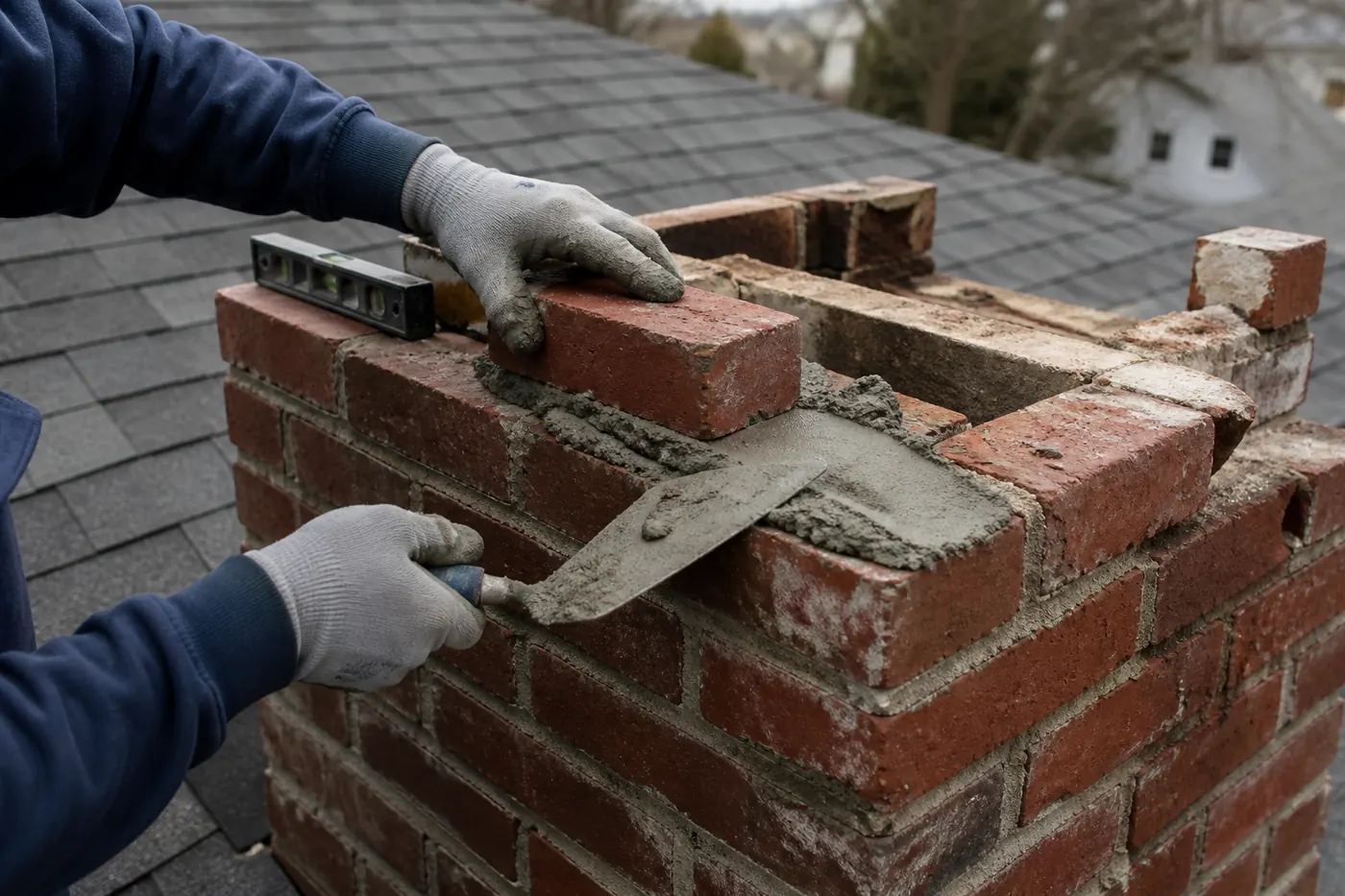
Chimney repair in Boston runs from $300 for a small fix to $2,500 and up for larger masonry work, and the first job is finding out which repair you actually need. A stain on the ceiling or a loose brick on the lawn is a symptom, not a diagnosis. A chimney inspection costs $49, traces the damage to its source, and that $49 is credited toward any repair you approve.
- Most chimney repairs in Boston fall between $300 and $2,500, and major masonry work starts at $2,500.
- A stain, a crack or a loose brick is a symptom. The right repair depends on where the water got in.
- Six jobs sit under this heading: mortar, brick, crown, flashing, a partial rebuild and a full rebuild.
- The $49 inspection is credited toward approved repair work, and you get a written price before anything starts.
What chimney repair covers and how to find your repair
Chimney repair is not one job. It is a family of jobs, and the point of this page is to help you work out which member of the family your chimney needs. A chimney is a stack of parts: brick, mortar joints, a concrete crown on top, metal flashing where it meets the roof, a cap over the flue, and a liner inside. Any one of them can fail, and a failure in one often shows up somewhere else.
Start with the symptom you can see, then follow it to the part that is likely to blame. The table of signs further down does that. After that, the page walks through each repair type, says when a small fix is enough, and explains when a bigger job is the honest answer.
If you already know the job, go straight to the page for it: masonry repair for cracked or spalled brick, repointing for failed mortar joints, or the chimney rebuild page for a stack that cannot be saved. This page is for the reader who has a symptom and no name for the fix.
Why Boston chimneys break down
Water is behind almost every chimney repair. Brick and mortar are porous. They soak up rain, snow melt and the damp air that comes off the harbor. In a Greater Boston winter that water freezes inside the masonry, expands, and pushes the surface apart. It thaws, and the process starts again the next cold night. One winter does little. Many winters turn a hairline gap into a loose brick.
A chimney also has more exposure than the rest of your house, which is why it often wears out before the walls and roof around it. It stands above the roof, takes wind from every direction, and has no overhang to protect it. Coastal salt air and nor'easters add to the load. Older brick homes, triple-deckers, brownstones and rowhouses often carry chimneys that were built a long time ago and have been patched more than once.
Because water travels, the place it shows up is rarely the place it came in. It can enter at a cracked crown, run down inside the stack, and stain a wall two floors below. That is why a repair that treats only the stain tends to fail, and why the first step is always to trace the route before anyone quotes a fix.
Six signs and the repair each one usually points to
Use this list as a starting map, not a verdict. Each sign has a likely cause, and the inspection confirms or corrects it.
- Open or recessed mortar joints. You can see a gap or a groove where mortar used to be. This usually points to repointing.
- Spalling brick faces. The surface of a brick has flaked or popped off, leaving a rough pit. This points to brick replacement, and to the water source behind it.
- Cracks through the crown or the upper courses. A crack in the concrete slab on top, or in the top rows of brick, lets rain straight into the stack. This points to crown repair.
- Rust at flashing or metal parts. Orange streaks or flaking metal at the roof line suggest the seal has failed. This points to flashing repair.
- Interior stains after wind-driven rain. A brown patch near the chimney wall that appears only in certain storms means water has a path in. It could be the crown, the flashing, the mortar or the cap.
- Loose material on the roof or in the firebox. Grit, brick chips and mortar crumbs mean something above is breaking down, and it needs a look soon.
Two signs deserve extra attention. A chimney that leans, or a stack with several loose bricks at once, is no longer a patch job. And any sign of smoke coming into the room, or a change in how the fire draws, is a safety question before it is a repair question.
How a technician traces the real cause
The visit is built around one question: where does the water get in, and what has it already damaged? Looking at the worst-looking spot is not enough, because the worst-looking spot is often just where the water ended up.
Following the water path
The technician starts at the stain or the loose material and works upward. Is there a gap in the mortar above it? Does the flashing sit tight against the brick? Is the crown cracked, and does the cap shed water or channel it toward the flue? Each answer rules a part in or out. The photos you receive let you follow the same trail on the ground, without climbing anything yourself.
Probing the masonry
A joint can look fine and crumble under a tool. A brick can look rough and still be solid. Probing the joints and tapping the brick shows how deep the damage goes and whether the brick behind the surface is still sound. This decides whether the fix is a patch, a section or a wall.
Separating the parts
Crown, flashing, cap and wall failures often overlap. The technician writes them up as separate items so you can see what each one costs and what happens if you skip it.
Reading earlier repairs
Old patches tell a story. A hard, grey patch over soft old brick can trap water and speed up damage next to it. A patch that has cracked again points to a cause nobody fixed. The photos you receive show these details so you can judge them yourself.
Choosing between the repair types
Once the cause is clear, the repair usually falls into one of these groups. They run from small to large, and a good plan uses the smallest one that will last.
Localized mortar or brick repair
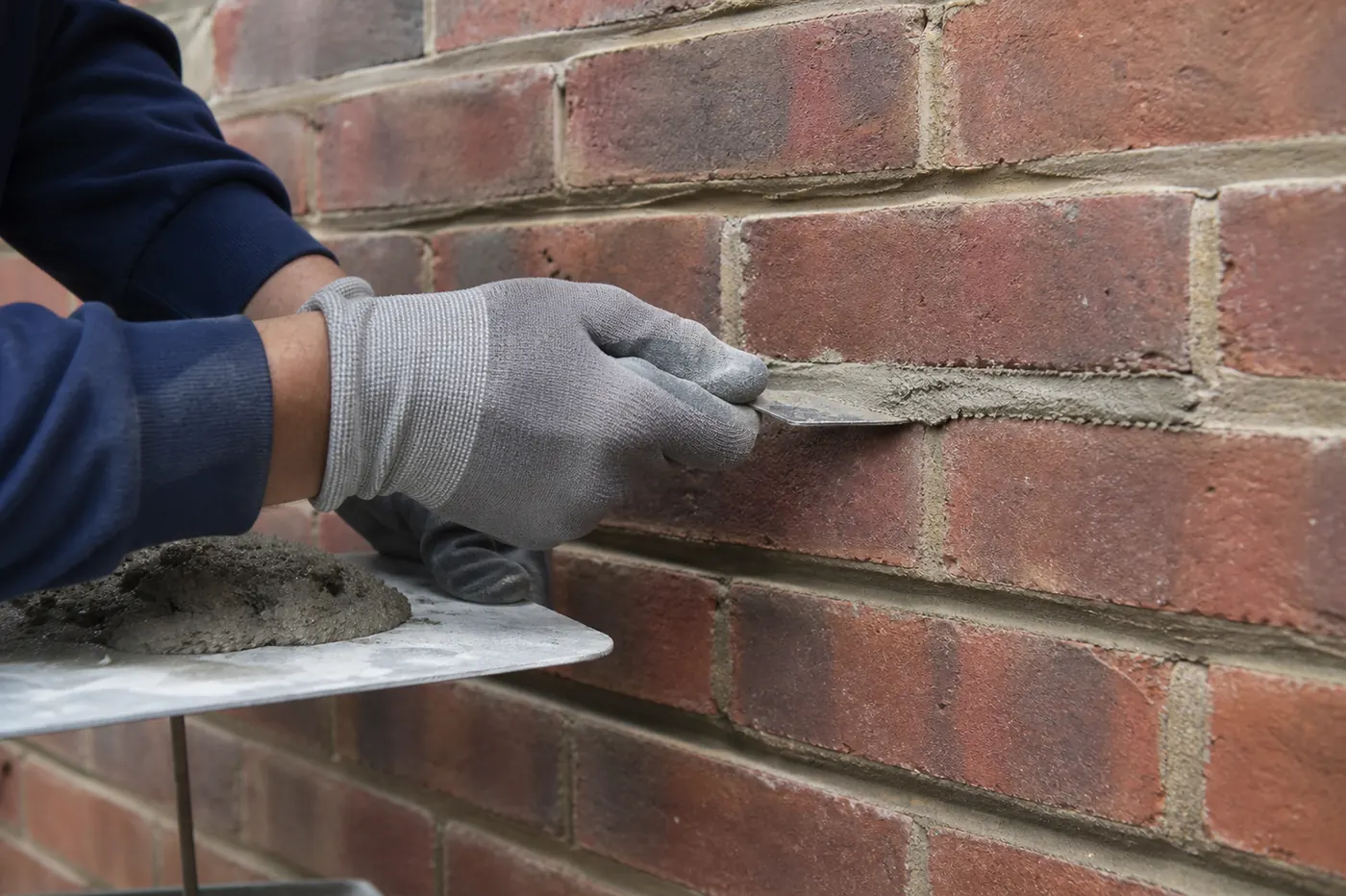
When damage is limited to a few joints or a few bricks, the fix stays small. Loose mortar is cut out and replaced, and individual damaged bricks are swapped for matching ones. The details for brick work are on the masonry repair page.
Partial or full repointing
If joints are failing across a whole face or the whole stack, spot fixes will not hold. Repointing renews the mortar across that area. It is a different job from a patch because the aim is an even, sound set of joints rather than a few repaired ones.
Crown repair or rebuild
A hairline crack in a crown can often be sealed or filled. A crown that is crumbling, or that has no overhang to shed water, is rebuilt. Either way the work sits at the top, where water first meets the chimney.
Flashing repair or replacement
Flashing is the metal seal at the roof. A small gap can be resealed. Metal that is rusted through, lifted or badly bent is replaced, because a seal over a bad base does not last.
Partial masonry rebuild
When the top rows of brick are loose or deeply damaged, those rows come down and are laid again. Brick below them that is sound stays in place, which keeps the job smaller than a full rebuild and usually keeps the original look of the chimney as well. The new top rows are tied into the old ones so the stack acts as one piece again.
Full rebuild
This is the last step. It applies when there is no stable material left to build on. The chimney rebuild page explains how that decision is made.
When a repair is not enough
Some chimneys are past the point where repair makes sense, and a straight answer saves you from paying twice. These are the patterns that lead a technician to recommend a bigger job.
- Many bricks are loose or displaced at once, not just one or two.
- The face loss runs deep across several courses, not just the surface.
- The stack leans, or it has moved relative to the roof.
- The same area has been patched more than once and keeps failing.
- Both the mortar and the brick are broken down, so new mortar would have nothing solid to grip.
The reverse also matters. If a problem is limited, you should not be sold a rebuild. A written scope that lists exactly what is being replaced, and photos of what is wrong, let you check that the size of the job matches the size of the damage.
A second opinion is free if you bring a written report from a reputable local chimney company. If another company has recommended major work and you are unsure, that is a sensible way to test the advice.
Why the same damage keeps coming back
The most common complaint about chimney repair is that it needed doing again. It usually happens for one of three reasons.
The cause was never fixed
If a cracked crown keeps feeding water into the stack, replacing the bricks below it only gives the water something new to destroy. The repair has to start at the entry point.
The new material does not suit the old
Old Boston brick is often softer than modern brick, and old mortar is softer than modern cement-heavy mixes. When a hard material is set against a soft one, the soft one takes the damage. A good repair matches the existing masonry so the wall ages evenly.
The patch was cosmetic
A thin film of mortar or sealant over a weak joint looks tidy for a season. The weak joint underneath keeps moving, and the film lets go. Cutting back to sound material before filling is what makes a joint last.
If your chimney already has a patch that is cracking, tell the technician. It is useful evidence, and it may point straight at the real cause.
What happens at a repair visit
Booking is simple. Call (617) 404-9587 or use the form at the contact page. You are given a 3-hour arrival window and a call ahead, so you do not have to wait in all day.
- Inspection. The technician looks at the chimney inside and out, traces the water path, and takes photos of what is found.
- Written price. You receive the findings, the photos and a written price before any repair starts. The scope names each item: mortar, brick, crown, flashing or other.
- Your decision. You approve all of it, part of it, or none of it. Nothing is done until you say yes.
- The repair. Work follows the approved scope. If something new turns up behind a wall, you hear about it and approve it before the scope changes.
Small repairs may be finished in a short visit. Larger ones can take more than a day, and weather can move the date, because mortar and sealants need dry conditions to set properly. Ask at the visit how long your own scope is likely to take, and what the weather could change.
Deciding what to fix first when the list is long
Sometimes an inspection finds several problems at once, and the total looks larger than you planned for. You do not have to treat everything as equally urgent. A sensible order follows the water.
- Anything that lets water in at the top. A cracked crown, a failed cap or open flashing feeds every other problem below it, so it usually comes first.
- Anything that could fall. Loose bricks near the top of the stack, or crumbling material over a walkway, are a safety matter for people below.
- Failing mortar on the faces that take the most weather. The side that gets the nor'easter rain tends to deteriorate first.
- Cosmetic items. Minor surface staining or a small chip that is not letting water in can often wait and be priced again later.
Ask the technician to rank the items in the written price. A ranked list lets you spread work across seasons without losing track of what each delay risks. Fixing the top of the chimney first also stops new damage from starting while you plan the rest.
Chimney repair price ranges at a glance
These are the Boston ranges for the main repair jobs. Your own price is written down after the $49 inspection, because height, access and how much material has failed all move it. The full breakdown is on the chimney repair cost page.
| Repair | Boston range |
|---|---|
| Masonry repair, basic | $300 to $700 |
| Masonry repair, standard | $700 to $2,500 |
| Masonry repair, major | from $2,500 |
| Crown repair | $300 to $900 |
| Partial repointing | $300 to $700 |
| Full repointing | $700 to $2,500 |
| Partial rebuild | $2,000 to $4,500 |
Flashing, leak repair and other items are quoted on their own pages, and anything not listed there is quoted in writing after the inspection.
Getting ready and knowing when to act fast
Preparation is light. Clear the area around the hearth so the technician can reach the firebox, and point out any stains, drips or smells you have noticed. Tell them if the chimney has been repaired before and, if you have it, show any earlier report. Pets should be kept away from the work area.
Most chimney damage is slow, so booking within a few weeks of noticing it is reasonable. Some signs should move faster. Bricks or mortar landing on the roof or ground, a visibly leaning stack, or water coming in during every storm all mean the damage is advancing. Waiting adds cost because water keeps working inside the wall.
Treat these as emergencies, not repairs. If you suspect a chimney fire, or a fire of any kind, leave the house and call 911. If a carbon monoxide alarm sounds, get everyone outside and call 911. If you smell gas, leave and call the gas utility or 911. Never climb onto the roof to check a chimney yourself.
When you are ready for a straight answer on what your chimney needs, book the $49 inspection at the contact page or call (617) 404-9587.
Questions homeowners ask
How do I know if my chimney needs repair or just a cleaning?
Cleaning removes soot and creosote from inside the flue. Repair deals with damaged brick, mortar, crown or flashing. If you see loose mortar, flaking brick, rust or water stains, you need an inspection to find out. A chimney can be clean and still be letting water in.
Can I wait a season before repairing a cracked chimney?
It depends on the crack. A hairline crack that is not letting water in can often be watched. A crack in the crown or a loose brick at the top lets freeze-thaw cycles work on it all winter. The inspection tells you which case you have.
Why did a repair I paid for before not last?
Usually the cause of the water entry was left in place, or the repair material did not match the old masonry. Cosmetic patches over weak joints also fail. Ask for photos and a written scope that names the cause as well as the damage.
Is the $49 inspection really credited toward the repair?
Yes. The $49 general inspection is credited toward approved repair work. If you approve a repair, the $49 comes off the job. If you decide not to go ahead, you still have photos and a written report of what was found.
Does chimney repair stop a roof leak around the chimney?
Sometimes. If the leak comes from the crown, mortar or flashing, repairing those stops it. If the water comes from the roof surface or elsewhere, it will not. Tracing the water path first avoids paying for the wrong repair.
What if the technician finds something I did not call about?
You are told, shown photos, and given a written price for it. Nothing extra is done without your approval. You can fix it now, fix it later, or leave it, and the report stays as a record.
Related guidance
Start with the Boston cost guide, then read the guides below.
- Chimney Repair Cost in Boston: 2026 Price Guide
- Landlord Chimney Responsibilities in Massachusetts
- How to Check a Chimney Contractor in Boston, MA
- Massachusetts Chimney Code Requirements Explained
- Spring Chimney Damage Inspection for Boston Homes