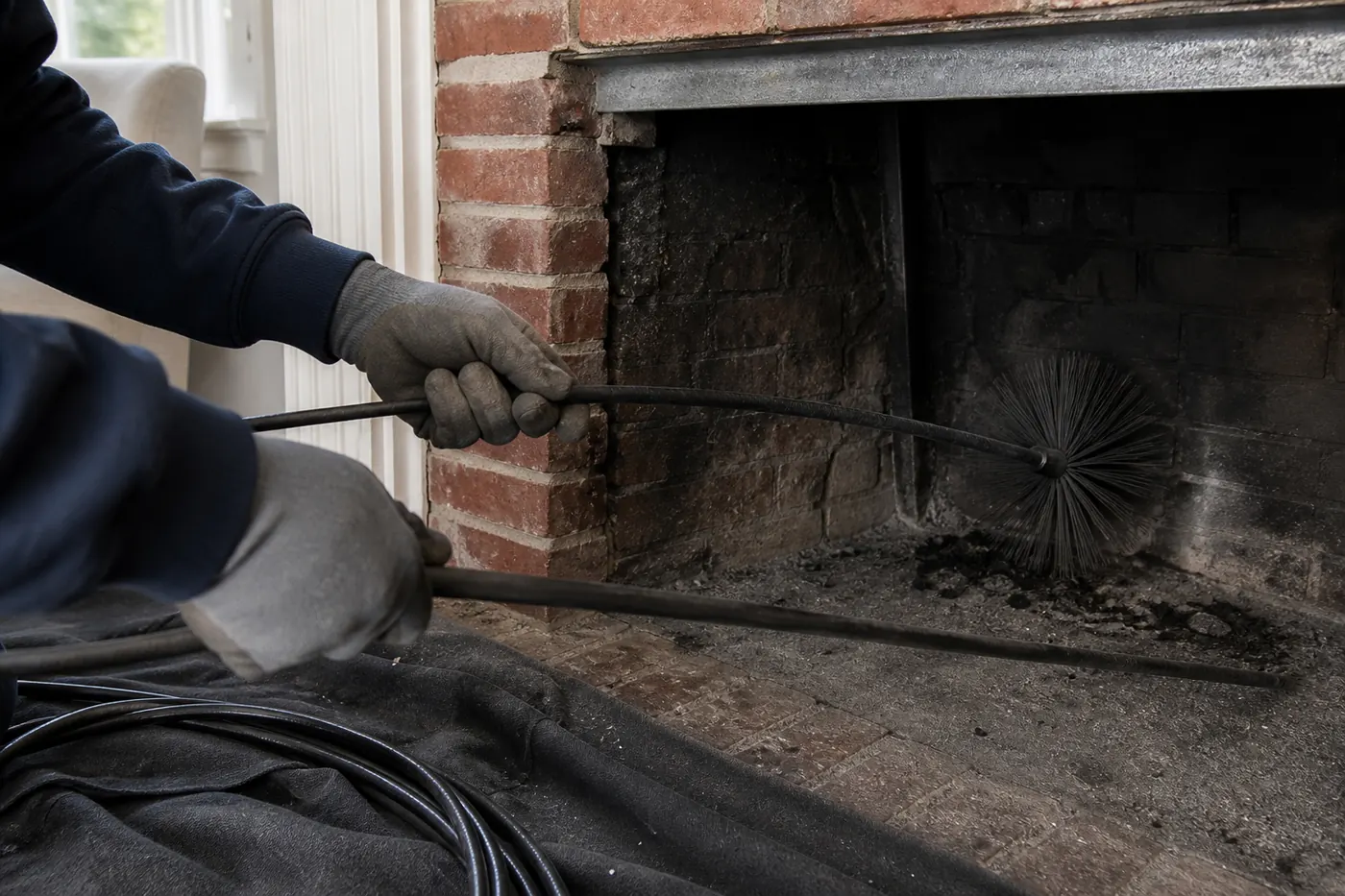
Several layers of rules can apply to a chimney in Massachusetts: the state building code, the maker's instructions for your appliance, and whatever your town adds or enforces. Which ones matter depends on your fuel, your appliance and the work you plan. This page explains the kinds of rules and who to ask, and it cannot replace a check with your local building department.
The layers of rules around a chimney
People often ask for "the code" as if it were one document. In practice, several sources can touch the same chimney.
- The state building code. Massachusetts adopts a statewide building code and updates it from time to time. It covers how chimneys, fireplaces and venting are built and altered.
- Fire safety rules. Your local fire department may have requirements and guidance for solid-fuel appliances and alarms.
- Appliance listings. A stove, insert or gas unit is tested and listed with specific installation instructions. Those instructions control what may be connected to your flue and how.
- Local enforcement. Your town's building department decides when a permit or inspection is required and how it is carried out.
- Other parties. Your insurer, a mortgage lender, a condo association or a historic commission may have their own conditions.
Because codes are revised and local practice varies, nothing here is a substitute for the current requirement in your town.
Why these rules exist: what they protect
Chimney rules are about preventing a handful of predictable failures. Understanding them makes the requirements easier to follow.
Fire spreading to the structure
Hot flue surfaces must be kept a safe distance from wood framing, or protected by suitable materials. Cracked liners and gaps in masonry let heat and sparks reach combustible material.
Exhaust getting into the house
A flue must be sized, built and kept clear so combustion gases rise and leave. Blockages and cracks can force smoke and carbon monoxide inside. Carbon monoxide has no smell, which is why working alarms matter.
Structural failure
Chimneys are heavy. Rules on construction and support aim to keep brick and stone in place through freeze-thaw cycles and storms.
The wrong appliance on the wrong flue
A stove or boiler connected to a flue it was not designed for can overheat it or leave deposits that start a fire.
Water and decay
Caps, crowns and flashing are part of the picture too, because a chimney that stays wet deteriorates faster and puts the other protections at risk.
Projects that often raise permit questions
Whether a particular job needs a permit is decided locally, so ask first. These are the kinds of projects where homeowners commonly need to check.
- Rebuilding a chimney or a large part of it.
- Installing a new fireplace, wood stove, insert or gas appliance.
- Relining or changing the venting type.
- Removing a chimney or opening a wall for one.
- Changes that affect a fire-rated wall or the roof.
Routine work, such as a cleaning, a cap, or minor repointing, may be treated differently. Do not guess, and do not assume that because a neighbor skipped a permit, you can. A short call to the building department answers it, and a good contractor will tell you if a permit is needed and who pulls it.
Costs that may come with permitted jobs use these Boston ranges: partial rebuild $2,000 to $4,500, full rebuild $4,000 to $10,000 or more, liner replacement $1,500 to $4,500. Permit fees are set by your town, so ask the building department, and do not rely on a figure from a website.
Who to ask, and what to ask
Go to the people responsible for the rule, not a secondhand summary.
- Your local building department. Ask whether your project needs a permit, and what inspections follow.
- Your local fire department. Ask about any requirements for solid-fuel appliances and alarms.
- The state's official website. It publishes the current building code information and any amendments.
- Your insurer or agent. Ask how an older or recently altered chimney affects coverage.
- An attorney if you are a landlord, a seller, or in a dispute and need advice about your obligations.
If you hire a contractor, ask whether they will handle permits. The guide to home improvement contractor registration explains what to verify before you sign.
What a chimney inspection can and cannot tell you
An inspection tells you the condition of the chimney and whether it is safe to use as it stands. It documents cracks, blockages, deposits, damaged liners, loose masonry and the match between your appliance and your flue. NFPA 211, a widely used safety standard, recommends a yearly inspection.
It is not a legal ruling. A technician cannot certify that your project meets the current code in your town, and cannot decide whether a permit is required. Only the local authority can do that. What the inspection gives you is evidence: photos, a written description and a written price, so you can bring accurate facts to the building department, your insurer or a buyer.
If you want that evidence, our chimney inspection is $49, credited toward approved repair work. The inspection cost page lists what each level covers.
Keep the paperwork with the house
Records protect you later, when you sell, refinance, file a claim or hire the next contractor.
- Permits and any sign-offs from the town.
- Written proposals, invoices and warranty documents for chimney work.
- Before and after photos.
- The manual and listing label for any stove, insert or gas unit.
- Inspection reports with the date and what was found.
Take photos before work begins as well as after, since buried work such as a liner cannot be seen once the job is finished. Ask your contractor to label photos with the date and the part of the chimney they show.
Keep a simple folder, paper or digital, labeled for the chimney. When a buyer's inspector asks what was done and when, you have the answer on hand.
Common mistakes homeowners make
These problems show up again and again, and they are easy to avoid.
- Connecting a new stove to an old flue without checking that the flue suits it.
- Assuming a past owner's work was permitted and inspected.
- Hiring for a rebuild without asking who handles the permit.
- Treating a cleaning as proof that a chimney meets current rules.
- Using a fireplace after smoke or an alarm problem before a professional has checked it.
If you see flames or heavy smoke from the chimney, leave the house and call 911. If a carbon monoxide alarm sounds, leave and call 911 as well. Rules and paperwork can wait.
Next step
Start with the condition of your chimney, then take what you learn to the local office responsible for the rules. Write down your questions, bring the inspection photos, and note the appliance you use or plan to install. Ask each office what it needs from you in writing, so you are not relying on a phone call you cannot prove later.
The chimney repair page explains the work that usually follows an inspection. When you are ready, book the $49 inspection at our contact page or call (617) 404-9587.
Questions homeowners ask
Does Massachusetts require a yearly chimney inspection?
Confirm that with your local building and fire departments, because rules and local practice differ. Separately, NFPA 211 recommends a yearly inspection, and an annual look is sensible for safety whatever the rule says.
Do I need a permit to install a wood stove or insert?
Often a permit or inspection is involved, but it is decided by your town. Call the building department before you buy, and keep the appliance's installation instructions and listing label.
Can a chimney company tell me if my chimney is up to code?
It can tell you its condition and whether it is safe to use, with photos. Whether it satisfies the code that applies to you is a question for your local building department.
Do landlords have chimney duties in Massachusetts?
Landlords and tenants may have obligations about safety and maintenance. Ask an attorney or the appropriate official source for what applies to your situation.
Will old, unpermitted chimney work cause trouble when I sell?
It can come up in a buyer's inspection or in negotiations. Ask your agent or attorney how to handle it, and gather any records you have. A $99 buyer or seller inspection documents the chimney's current condition.