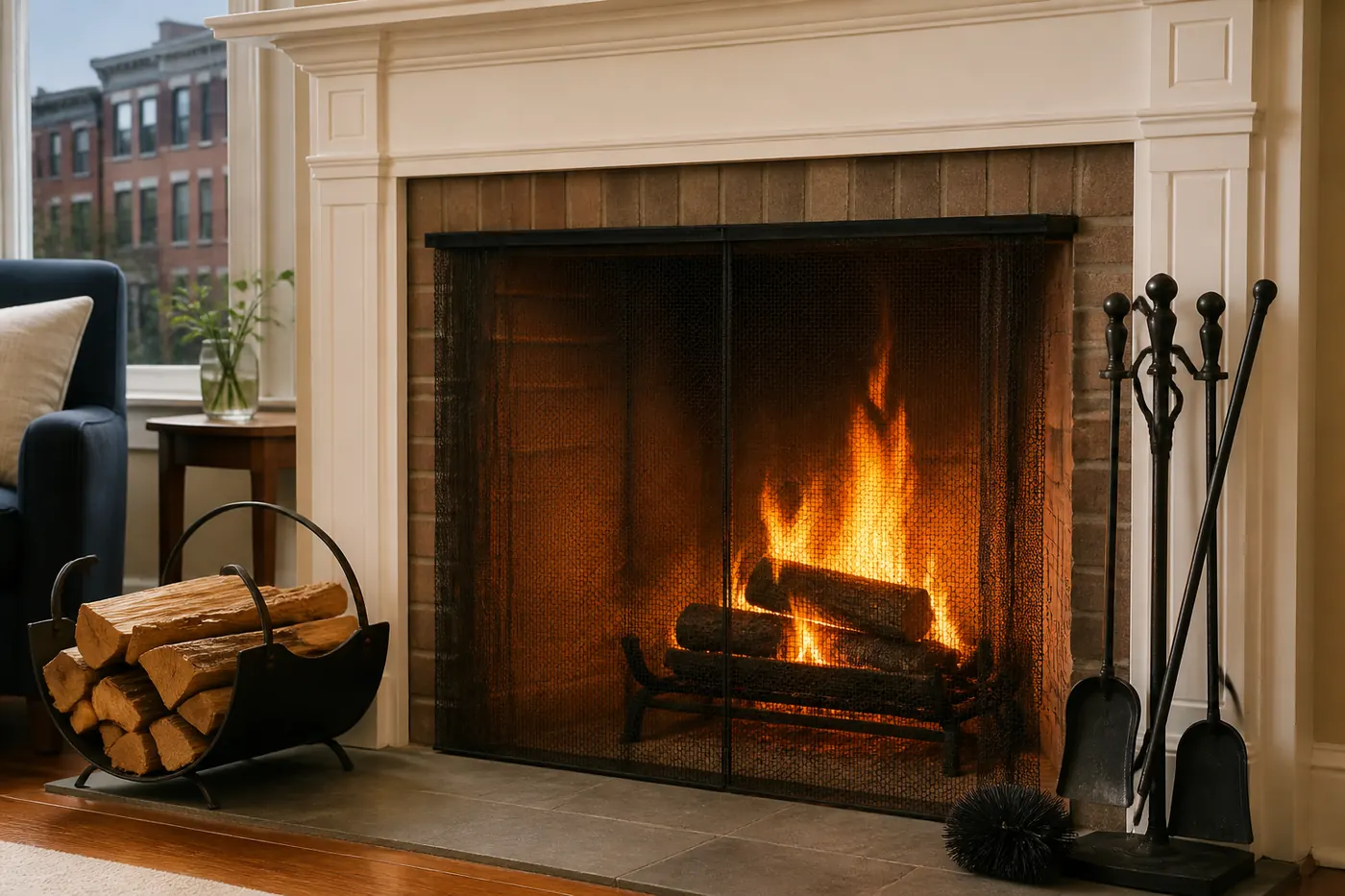
Keep the flue clean, burn only dry seasoned wood, run your fireplace correctly and fix venting damage quickly. A cleaning with a Level 1 visual inspection is $299 in Boston, and a general inspection is $49. If you ever think a chimney fire is happening, leave the house and call 911.
How a chimney fire starts
A chimney fire is a fire inside the flue. It usually begins with creosote, the sticky residue left when wood smoke cools on the flue walls. Creosote can be dry soot, flaky tar or a hard glaze, and every type can burn. A spark, a hot fire or a flare-up can ignite it, and the flames then climb the flue.
The fire can crack flue tile, damage the liner and push heat through gaps into framing around the chimney. Not every chimney fire is loud. Some burn slowly and quietly, and the damage is found later during an inspection.
Four factors raise the risk: heavy deposits, wet fuel, poor airflow and damaged venting. Each can be managed, and the rest of this guide covers them in turn.
Boston adds its own pressures. A long cold season means many fires, and wood smoke cools fast in an exterior chimney on a freezing night, which lays down more creosote. Older brick chimneys, with their softer mortar and aging tile, can also have gaps that new owners never see. That is why a first-year visit is worth it after you buy an older home.
Have the flue cleaned and inspected on a schedule
The NFPA 211 standard recommends that chimneys, fireplaces and vents be inspected at least once a year. Cleaning removes the fuel for a chimney fire, and inspection finds the cracks, gaps and blockages that make one more dangerous.
In Boston, a chimney sweep with a Level 1 visual inspection is $299. If you rarely burn, a $49 chimney inspection is a lower-cost start, credited toward approved repair work.
If deposits are glazed or thick, brushing alone may not do it. Heavier buildup is treated as its own job under creosote removal, with stage 1 at $299 to $450, stage 2 at $450 to $700 and stage 3 from $700. A stage 3 glaze is the kind that fuels serious fires, which is why it should never be left in place. Never use a chemical product or an intense fire to burn deposits off, since that can set off the very fire you want to avoid.
Burn dry wood and nothing else
Fuel matters as much as cleaning. Wet or green wood burns cool and smoky, and the smoke deposits creosote as it cools in the flue. Seasoned wood burns hotter and cleaner.
- Use wood that has been split, stacked off the ground and covered on top for a long period. It should look gray, have cracks at the ends and sound hollow when two pieces are knocked together.
- Keep logs in a dry spot, not stuffed up against the house.
- Never burn trash, cardboard, wrapping paper, painted or treated wood.
- Avoid Christmas trees and large amounts of paper.
For help choosing, see our post on the best firewood for New England.
Run the fireplace the right way
Open the damper fully before you light anything, and leave it open until the ashes are cold. Build moderate fires instead of roaring ones, because very hot burns can ignite deposits and stress the flue. A smothered, smoldering fire is also bad, since it produces more creosote.
Use a sturdy screen, keep flammable items away from the opening and never leave a fire unattended. Put ashes in a metal container with a lid and keep it outside, away from the house, since embers can stay hot for a long time.
If smoke spills into the room, put the fire out and stop using the fireplace until it is checked. Smoke in the room can mean a blocked or cold flue, a closed damper or a bigger problem. A technician can tell which. If the damper sticks, read what to do when a damper is stuck.
Fix venting damage before it gets worse
A damaged flue turns a small fire into a bigger one. Flue liner cracks, missing mortar between tiles and holes in a metal liner let heat and sparks reach combustible framing. Old Boston chimneys often have clay tile that has cracked after decades of freeze-thaw cycles, and some older flues have no liner at all.
- Liner repair: $1,200 to $2,500.
- Liner replacement: $1,500 to $4,500.
- Smoke chamber repair: $500 to $1,500.
These are planning ranges. After the $49 inspection you receive a written price before work and photos of what the technician found. Learn more on the chimney relining page.
Keep water and animals out
Water and nests both raise fire risk in less obvious ways. Water rusts metal parts and breaks down masonry. Nests and leaves can block the flue and burn like kindling. A chimney cap keeps both out, and a standard cap is $300 to $700.
If you hear scratching or chirping, do not light a fire. A blocked flue sends smoke back into the house. See birds and animals in a chimney for what to do. Animal removal is $299 to $900.
Flashing and crown problems let water in and damage the structure over time, so a healthy outside helps the inside stay safe. Look at the stack from the ground after storms for missing pieces, leaning or a loose cap, and tell us if you see any. A cracked chimney crown is a good example: it looks minor, but it lets water down to the tile and the mortar.
Know the warning signs and what to do
A chimney fire can show itself in these ways:
- A loud roaring or rumbling sound from the chimney.
- Dense smoke from the top, or flames and sparks above the chimney.
- A strong, hot smell.
- Cracked tile or warped metal found later on inspection.
If you suspect a chimney fire, get everyone out of the house and call 911 from outside. Do not go on the roof and do not try to fight it yourself. After the fire department clears the house, have the chimney inspected before you use it again, since damage is not always visible. Our guide on what to do in a chimney fire emergency covers this.
If a carbon monoxide alarm sounds, leave and call 911 as well.
A simple prevention checklist
- Book an annual cleaning or inspection before the heating season.
- Burn only dry, seasoned wood.
- Open the damper before every fire.
- Keep fires moderate and always supervised.
- Store ashes safely outside in a lidded metal container.
- Repair cracks, gaps and cap damage promptly.
- Test smoke and carbon monoxide alarms regularly.
Keep the list on the fridge or by the hearth, and review it at the start of each heating season. If you share the home with others, make sure everyone knows the damper rule and where the ash bucket goes.
None of this is complicated, and most of it is free. The one paid step, the cleaning and inspection, tells you whether the flue is safe to use. We give a 3-hour arrival window and call ahead.
Book your $299 cleaning at /contact/ or call (617) 404-9587.
Questions homeowners ask
How can I tell if I have creosote buildup?
You may see black flaky soot on the damper or smoke shelf, or smell a sharp odor from the fireplace. The only reliable way is an inspection. A technician looks at the flue and tells you the type and amount.
Do chimney cleaning logs prevent fires?
They are not a replacement for brushing and inspection. They cannot remove heavy deposits or show cracks. Our post on chimney cleaning logs explains their limits.
Can a gas fireplace cause a chimney fire?
Gas does not leave thick creosote, so the risk is much lower. Gas units still need annual service because vents can block or rust. A gas fireplace cleaning is $299.
Is it safe to use the fireplace after a chimney fire?
Not until it has been inspected. Fires can crack tile and damage liners in ways you cannot see. Have a technician check the flue and give you a written report before you burn again.
How often should I clean a chimney I rarely use?
Still have it inspected each year. Nests, moisture and cracks can cause problems without any fire. The $49 inspection is credited toward approved repair work and shows whether cleaning is needed.