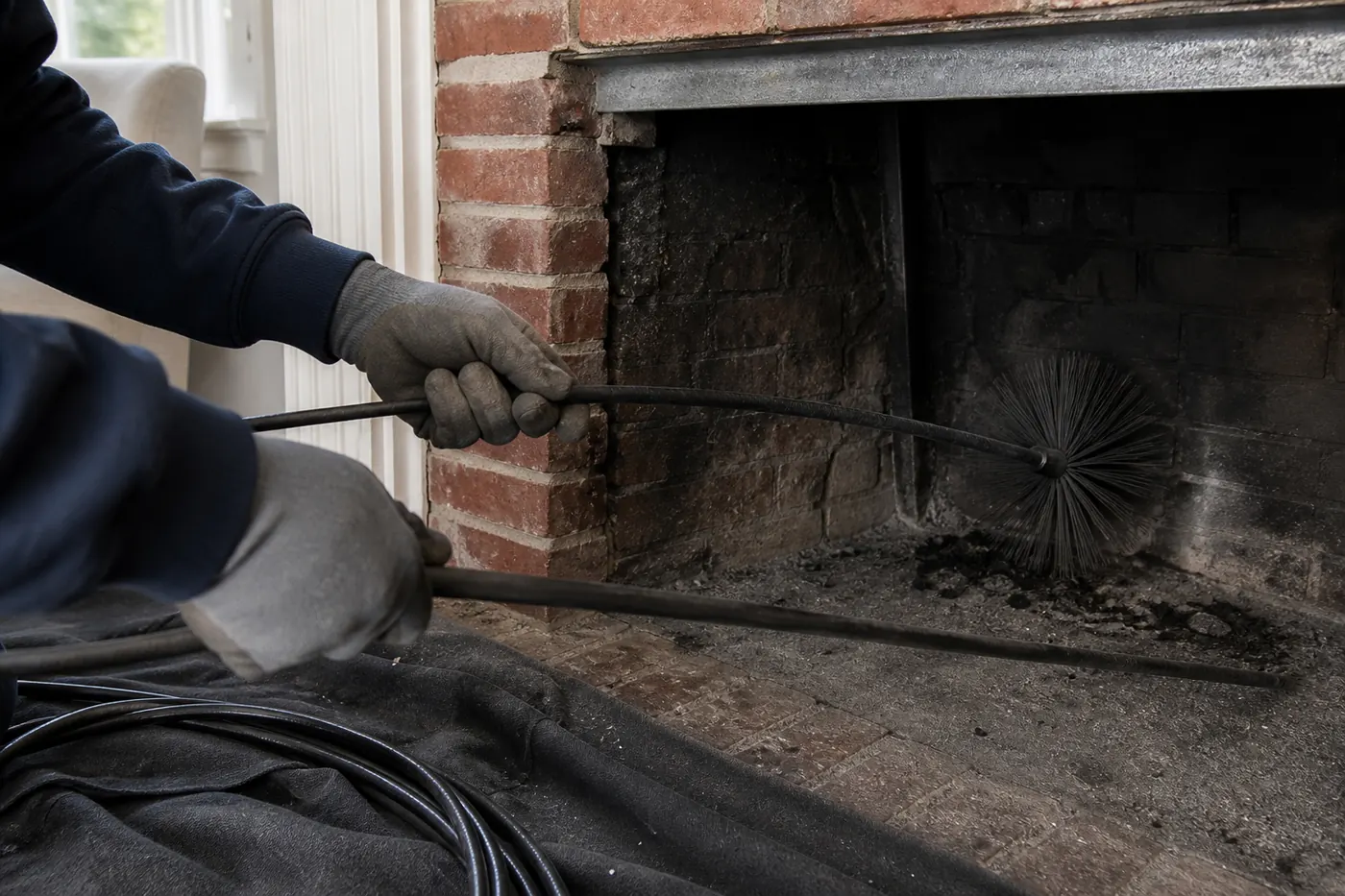
Start by booking a cleaning and inspection before the first cold snap, because that is when schedules fill up. Then check the hearth, damper and alarms inside, and look over the chimney from the ground. A cleaning with inspection is $299, and a general inspection alone is $49.
Why fall is the right time, and what the checklist covers
A chimney sits unused all summer, but it does not stand still. Rain gets into small cracks, birds and squirrels look for shelter, and creosote left from last winter sits in the flue. By the time the first chilly evening arrives, everyone wants a fire, and the repair schedule is packed.
Greater Boston adds its own pressure. Freeze-thaw cycles begin early, and a mortar joint that was borderline in September can open up after a few cold nights. The goal of a fall checklist is simple: find problems while the weather is still mild enough to fix them.
The checklist below is arranged in the order you would actually do it, from booking ahead to lighting the first fire. Set aside an hour for the parts you can do yourself, and keep a notes file on your phone with photos and dates. That record helps the technician spot what has changed since last year, and it is handy if you ever need to show an insurer or a buyer what was done.
Step one: book early
The most useful thing you can do costs nothing. Pick a date for the cleaning and inspection while the calendar is still open. Waiting until the first week of freezing weather often means a longer wait, and it leaves less time to approve and finish repairs.
- Cleaning with inspection: $299 fixed. See our chimney sweep cost guide for what is included.
- General inspection only: $49, credited toward approved repair work.
- Arrival window: we give a three-hour window and call ahead, so you do not wait around all day.
If you used the fireplace or stove a lot last winter, or you do not remember your last cleaning, do not skip this step. The yearly inspection that NFPA 211 recommends is meant for exactly that situation.
Step two: look at the chimney from the ground
You do not need to climb anything. A pair of binoculars from the yard, or a zoom on your phone camera, shows a lot. Walk all the way around the house and look for:
- Bricks that are crumbling, flaking or missing a face
- Mortar lines that look sandy, recessed or cracked
- A leaning or bowed stack, or a gap where the chimney meets the house wall
- Rust streaks, a tilted cap, or a screen that looks torn
- A crown, the sloped slab on top, with cracks or chunks missing
- Bird or squirrel nesting material hanging out of the top
- Vines or branches touching the stack
Take dated photos of anything that worries you. Never go onto the roof to check. A wet or leaf-covered roof in October is slippery, and a technician has the right gear.
If you spot a problem, our chimney repair page lists what kinds of fixes are common and how they are priced.
Step three: check the hearth and the damper
The firebox
Clear out old ash and any debris. Look at the firebrick lining the back and sides for cracks or gaps, and at the floor of the firebox for loose pieces. A few hairline lines are normal. Missing chunks or wide gaps are worth a photo.
The damper
Open the damper gently by hand or with the handle. It should move smoothly and stay put. If it sticks, grinds or will not open all the way, do not force it, because that can snap a part and leave it stuck. Note what you noticed and mention it at the visit.
A flashlight look up
With the damper open, shine a flashlight upward. You may see black, glossy or flaky buildup, which is creosote, or light coming through where it should not. Take a photo, and let the technician take it from there.
If the damper is stiff or broken, the chimney damper repair page shows what that fix involves.
Step four: test the alarms and plan your fuel
Fall is the time to make the safety basics automatic.
- Test every smoke alarm and every carbon monoxide alarm. Replace batteries, and replace any unit that is past the date printed on it.
- Put a CO alarm on each floor and near sleeping areas.
- Make sure everyone in the house, including renters in a triple-decker, knows to leave and call 911 if an alarm goes off.
- Keep a clear space of floor around the hearth, with nothing flammable nearby.
Then think about wood. Wet or green wood makes smoky, smoldering fires and builds creosote quickly. Wood should be split, stacked off the ground and covered on top, with the sides open to air. Our guide to firewood for New England covers what to buy and when to order it.
If you burn gas, fall is also the time to have the unit serviced. Gas cleaning is $299.
What the technician does at the visit and what it may turn up
During the cleaning and inspection, the technician brushes the flue, checks the damper and firebox, and looks at the liner, smoke chamber, crown, cap and visible masonry. You get photos of what was found and a written price for anything that needs work, before you approve anything.
Findings tend to fall into a few groups, with Boston planning ranges:
- Minor masonry fixes: $300 to $700 for basic work
- Crown repair: $300 to $900
- Caps: $300 to $700 for a standard cap
- Heavy creosote: $299 to $450 for stage 1, higher for stages 2 and 3
- Flashing repair: $200 to $400
Anything not on this list is quoted in writing after the $49 inspection. Fixing items in fall, before the ground freezes and the snow starts, is usually easier than doing it in February.
Step five: the first fire of the season
Once the chimney has been checked and cleared, light your first fire the right way.
- Open the damper fully before you light anything.
- Start with a small fire of kindling and dry wood so the flue can warm up.
- Watch the smoke. It should rise out of the top, not drift into the room.
- Stay in the house, and never leave the fire unattended.
- If you smell smoke, see smoke in the room, or an alarm sounds, stop, put the screen in place and open a window. If it gets worse, get everyone out and call 911.
A small odor from dust burning off the first time is common. A strong smell, or smoke that will not rise, is a sign to stop and book an inspection.
Through the season, glance at the chimney after every big storm and every hard freeze. A new stain on the ceiling near the chimney, a fresh pile of brick bits in the yard, or a lid that blew sideways in a nor'easter are all worth a call. Catching a small change early keeps a minor repair from turning into a major one.
Ready to get ahead of the cold? Book your $299 cleaning with inspection at /contact/ or call (617) 404-9587.
Questions homeowners ask
How early in the fall should I schedule my chimney cleaning?
As early as you can. Booking before the first cold snap leaves time for any repairs the inspection finds. Waiting until everyone wants a fire usually means a longer wait.
Do I need a cleaning if I barely used my fireplace last year?
An inspection is still a good idea. Animals, moisture and cracks can show up even in an unused chimney. The technician can tell you whether a cleaning is needed based on what the flue looks like.
My damper will not open all the way. Should I force it?
No. Forcing it can break a part and make the repair bigger. Open it gently, note what is wrong, and bring it up at the inspection.
What if I find a bird or animal in my fireplace?
Do not reach in. Keep the damper and glass doors closed and keep pets away. Animal removal is $299 to $900 depending on the situation, and a technician can also check what the animal damaged.
Should I wait to fix small chimney problems until spring?
Usually it is better to deal with them in fall. A small crack can let in water, and Boston's freeze-thaw cycles make it grow over winter. Your technician can tell you what is urgent and what can wait.