Spring is the time to look for what freezing, thawing, snow and ice did to the chimney: new cracks, loose brick, open mortar joints, rust, stains and water paths. A chimney inspection in Boston costs $49 and is credited toward approved repair work. The sooner damage is found, the more options you have, and the less the repair tends to cost.
Why spring is a good time to look
A Boston winter is hard on masonry. Water soaks into brick and mortar, freezes, expands and breaks the surface from inside. Then it thaws and the cycle begins again, many times over a season. Add road salt in the air, wet snow and wind from nor'easters, and a chimney that was fine in October may not be fine in April.
Spring offers two advantages. First, snow and ice no longer hide the top of the chimney, the roofline and the flashing. Second, you have the whole mild season ahead to do repairs that need dry weather. If you wait until the next fall, a small crack can have another full winter to grow.
The goal of a spring check is simple: find changes since last year, and decide which ones need action now and which can be watched.
A ground-level walk-around you can do today
You do not need to go on the roof, and you should not. Start with your own eyes and a pair of binoculars or a phone camera with zoom.
- Stand back in the yard and look at the full height of the chimney. Does it lean or look different than last fall?
- Scan for bricks or mortar missing, especially near the top
- Look for white powder, dark streaks or flaking brick faces
- Check the roof for fallen bricks, chunks of crown or a bent cap
- Check the ground near the base for debris, mortar crumbs and pieces of brick
- Inside, look at the ceiling and wall around the chimney for new stains
If you have photos from last fall, compare them with today's. Even a casual picture helps show what changed. If you have none, take a set now, and you will have a baseline for next year.
Safe handling of fallen debris
If you find bricks or mortar chunks on the ground, pick them up with gloves, keep them together in a bucket and photograph them first. Show the pieces to the technician. The side that was exposed, the color and the way a piece broke tell them a lot about whether the damage came from water, age or movement. Keep children and pets away from the base of the chimney until it has been checked.
Signs of winter damage and what they mean
| What you see | What it can mean |
|---|---|
| Flaking or peeling brick faces | Spalling from trapped water and freezing |
| Sandy, crumbling mortar | Joints failing, may need repointing |
| Cracks on top of the chimney | Crown damage, a path for water |
| Rust streaks or a rusted cap | Metal parts wearing, possible leak |
| White powder on brick | Water moving through the masonry |
| Damp or stained ceiling | Water entering at flashing or the stack |
| Leaning or gaps at the roof joint | Movement, needs prompt attention |
A leaning chimney, large missing sections or falling bricks are urgent. Keep people away from the area below, and call for an inspection right away. Our post on crumbling mortar explains one of the most common findings.
What winter does to each part of the chimney
Different parts fail in different ways, and knowing the pattern helps you read what you see.
- Top of the stack. The crown and the upper courses of brick take the most water and ice. Cracks and loose mortar tend to start here.
- Mid-stack brick. Faces can flake where water has soaked in. Salt air from the coast can speed this up.
- Roof joint. Flashing can lift or open from the movement of ice and snow sliding off the roof.
- Inside the flue. Moisture can loosen tile and leave rust on the damper and firebox.
- Metal parts. Caps and chase covers can rust or bend under ice and wind.
A technician checks each zone in turn so one problem does not hide another. A stained ceiling, for example, could come from any of the first four.
What a spring inspection covers
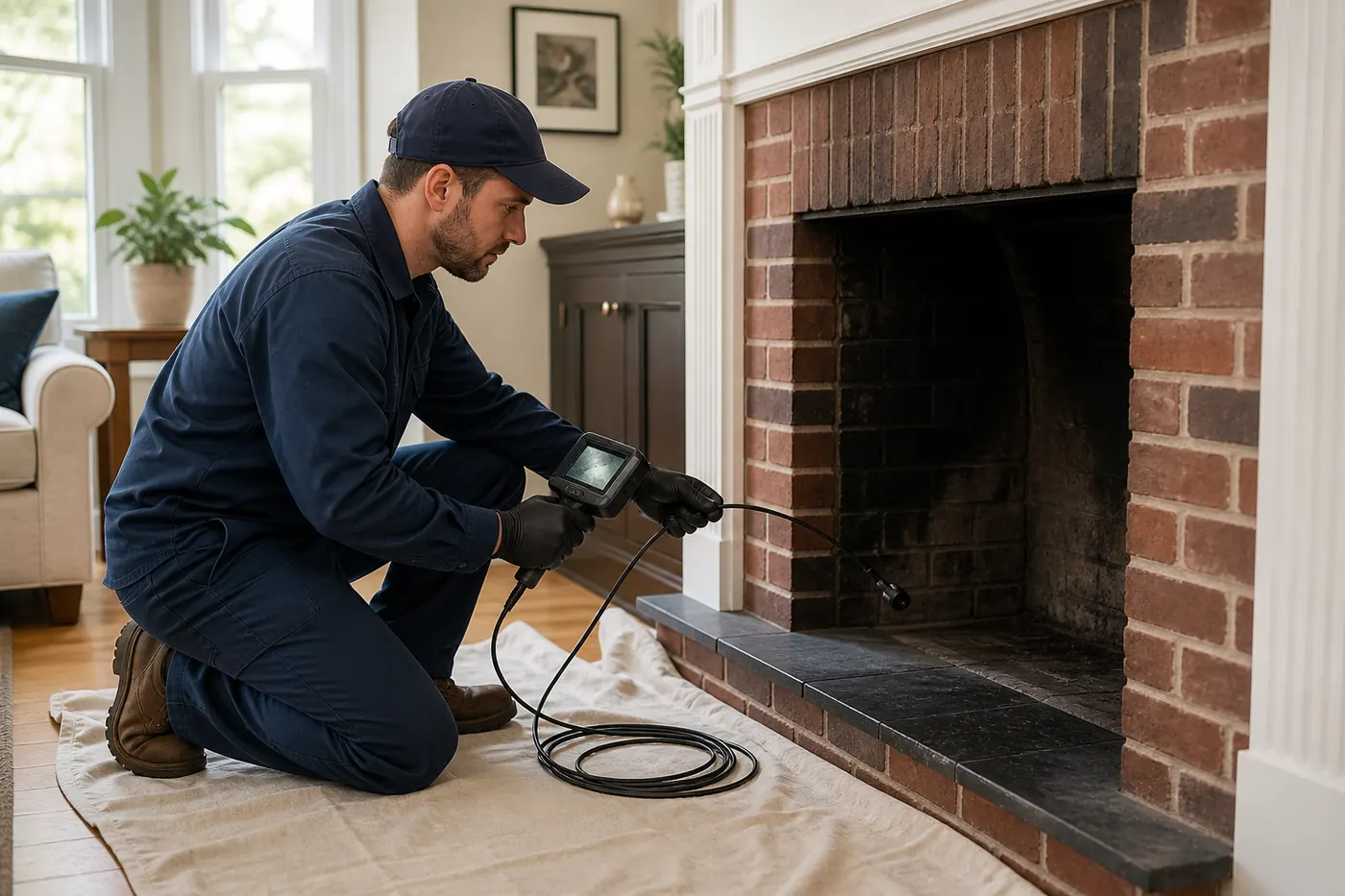
The $49 chimney inspection is a documented look at the chimney, with photos. It usually includes:
- The exterior of the stack, as far as it can be seen and reached
- The crown, cap and the flashing where the chimney meets the roof
- The mortar joints and brick surfaces
- The firebox, damper and visible part of the flue
- Signs of moisture inside the house near the chimney
The technician shows you photos of what they find and explains it in plain language. Anything hidden or out of reach is noted as a limit, not described with false certainty.
If you also burned wood this winter, a cleaning at $299 fixed, with inspection, is the natural time to have the flue swept and checked for creosote. This is usually the cheapest moment to catch a problem.
Repairs that follow the common findings
Most spring findings fall into a few repair categories, each priced separately and quoted in writing:
- Crown repair: $300 to $900, or a rebuild at $900 to $2,500
- Repointing: partial $300 to $700, full $700 to $2,500
- Masonry repair: basic $300 to $700, standard $700 to $2,500, major from $2,500
- Flashing: repair $200 to $400, partial $400 to $800, full $800 to $2,500
- Waterproofing: standard $300 to $500, with crown seal $500 to $800
- Cap: standard $300 to $700
You should not need to do all of it. A good report separates what is urgent from what can wait. For the broader picture, see our chimney repair page and the chimney inspection cost guide.
Timing the work
Masonry repair depends on weather. Mortar, crown material and sealants need time to set, and they do not set well in cold, wet or freezing conditions. The mild, dry stretches of spring and early fall are the best windows, which is why spring inspections matter. They give you time to schedule a repair before summer storms and before the next winter.
Spring is also busy, since many homeowners look at their chimneys at the same time. Booking early gives you more choice of dates. We give a 3-hour arrival window and call ahead before arriving.
If you find a leak, a loose brick or stains, do not wait for a better time to look. Water damage grows quietly inside walls, and an early look is cheap compared with a repair after the damage has spread.
Your spring checklist
- Photograph the chimney from the yard and compare with last fall
- Look for debris on the roof, the ground and in the gutters
- Check ceilings and walls near the chimney for stains or new damp spots
- Do not climb the roof, chip at the mortar or patch anything yourself
- Book an inspection, and keep the written report with your home records
To book the $49 inspection, call (617) 404-9587 or use the form at /contact/.
Questions homeowners ask
How soon after winter should I schedule a chimney inspection?
As soon as snow and ice have cleared and the roofline is visible. Early spring lets you plan repairs for dry weather. If you see falling brick or a leak, do not wait.
Can I inspect the chimney myself?
You can do a ground-level look with binoculars or a camera zoom, and check the ceilings inside. Do not climb on the roof. A technician can see parts you cannot reach and document them with photos.
Is white powder on my chimney bricks a problem?
It is a sign water is moving through the masonry. The powder itself can be brushed off, but the moisture source should be found. It may point to a crown, mortar or flashing issue.
Do I need an inspection if I did not use the fireplace?
Yes, since weather damages the chimney whether or not it is used. A chimney that sits unused can still have cracked masonry, a leaking crown or animals nesting in the flue.
What if the inspection finds nothing?
Then you have a dated report and photos as a baseline for next year. NFPA 211 recommends a yearly inspection, so a clean report is good news, and it makes later changes easy to spot.