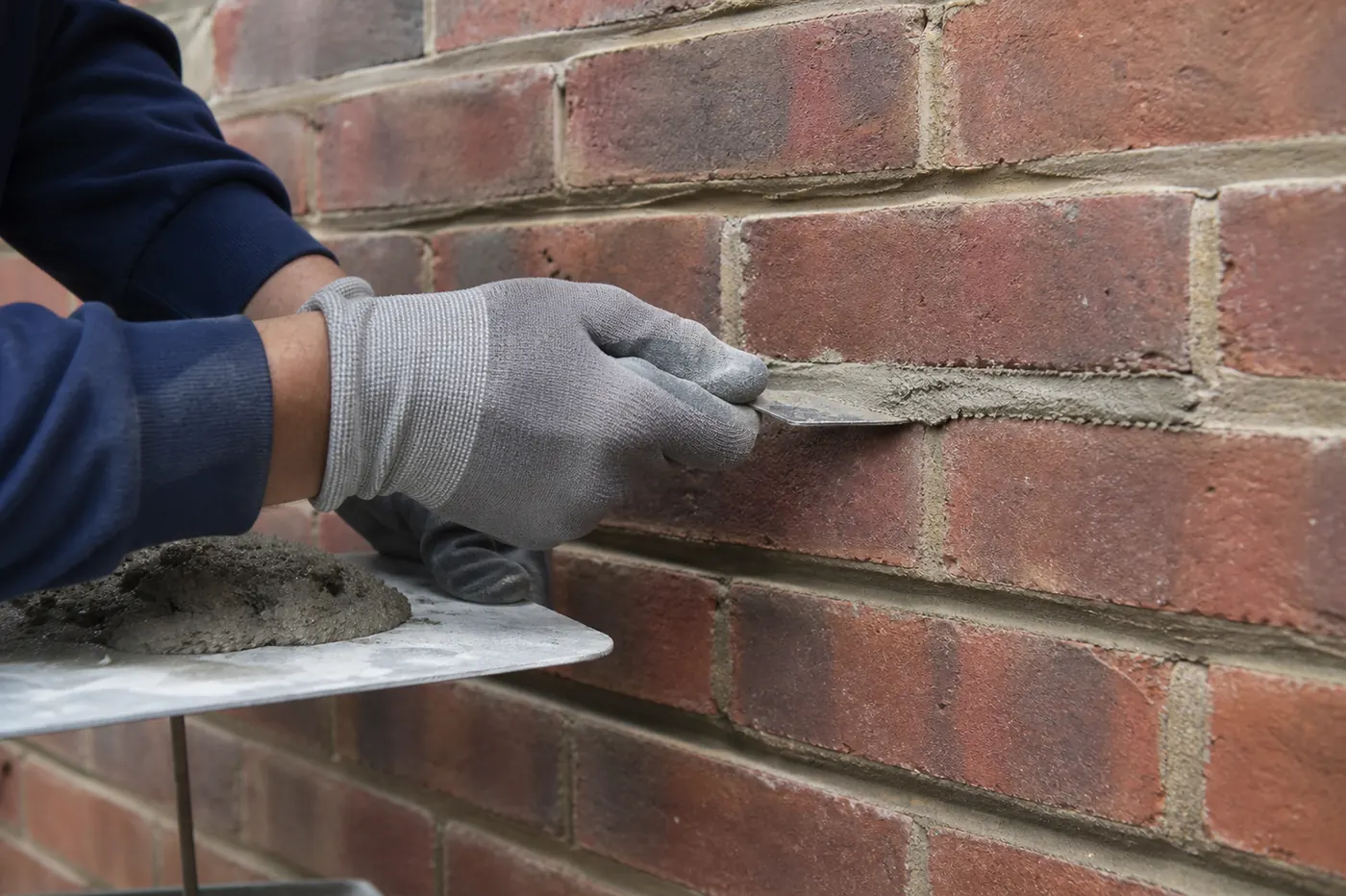
Yes, once the joints have lost real depth, because open joints let water into the brick and the stack behind it. The fix is repointing, which replaces the failed mortar. In Boston, partial repointing runs $300 to $700 and full repointing $700 to $2,500, and a $49 inspection shows which one your chimney needs.
Cosmetic wear or a failing joint?
Not all mortar loss is a problem. A little surface weathering on a chimney that has stood for decades is normal. The question is how deep the loss goes and how much of the stack is affected.
Treat it as urgent when you see any of these:
- Joints recessed so far that you could slide a fingernail well into them.
- Gaps wide enough to see daylight or the next layer of brick.
- Bricks that move, rock or have shifted out of line.
- Sand or gritty crumbs collecting on the roof, in the yard or on the firebox floor.
- A chimney that leans or looks wavy from a distance.
If bricks are loose or you feel the stack is not stable, do not light fires until a technician has looked at it. Never go on the roof to check. Binoculars from the ground tell you plenty.
A useful rule of thumb: mortar is the sacrificial layer of a masonry wall. It is supposed to wear before the brick does. Losing a little is normal. Losing enough that the brick edges are exposed to rain and frost is the point where repair beats waiting.
Why mortar breaks down
Mortar is porous by design, and a chimney is the most exposed masonry on a house. It stands above the roof with all four sides facing the weather. Several things work on the joints at once:
Freeze and thaw
Water soaks into the joint, freezes in a cold Boston night and expands. Repeat that over many winters and the mortar turns to sand.
Flue gases
Exhaust from burning wood or gas is acidic and damp. When the flue is not lined well, those gases can attack mortar from the inside, so the damage shows up on the outside.
Age
Original lime-based mortar is soft and eventually wears away. That is expected on older triple-deckers and rowhouses and is why joints need renewing every few decades.
Poor earlier repairs
Hard patches, caulk and thin smeared mortar bridge the gap for a season, then crack and let water behind them.
A missing or cracked crown makes every one of these worse, because the top of the stack is no longer shedding water. See chimney repair for the related fixes.
What you can see from the ground
You can learn a surprising amount without leaving the yard. Stand back and look at the stack from several sides, since the north and west faces often weather fastest in New England. A pair of binoculars helps.
Look for this checklist:
- Dark, hollow-looking lines where joints should be flush with the brick.
- White powder on the brick face, which means water is moving through the wall (it is called efflorescence).
- Brick faces flaking off, which often follows long-term moisture.
- Cracks that run through several joints in a stair-step pattern.
- Rust streaks or loose metal near the top.
Check inside too. Look at the attic or basement walls around the chimney for stains, and see whether the firebox has debris. Take photos with the date on them. They help the technician and they let you track whether things change from season to season.
Repointing: partial or full
Repointing, also called tuckpointing, means grinding out the failed mortar to a safe depth and packing in fresh mortar. It does not rebuild the brick. The size of the job depends on how much of the stack has failed, not on how bad one spot looks.
| Scope | When it fits | Boston range |
|---|---|---|
| Partial repointing | Failure confined to one face or a section near the top | $300 to $700 |
| Full repointing | Joints failing on most faces or all the way down the stack | $700 to $2,500 |
Height, roof pitch, brick condition and how many joints need work move the price within each band. Our chimney repointing cost guide explains those factors, and the repointing service page shows the steps. If the bricks themselves are crumbling, read repointing versus rebuilding next.
Shortcuts that make it worse
Some fixes look cheap and cause bigger bills later. Be wary of a quote or a do-it-yourself plan that includes any of the following.
- Caulk or sealant in the joints. It traps moisture and peels within a season or two.
- Ribbon pointing. A raised band of mortar laid over old, loose mortar does not bond and falls off.
- Mortar that is harder than the brick. In older walls, hard mortar forces the brick to take the stress, and the brick faces spall.
- Shallow patching. Mortar needs to be packed in to a proper depth to hold.
- Coating the brick without fixing the joints. A sealer over open joints locks water in.
A fair quote describes how deep the old mortar will be removed and what will go back in its place.
What the inspection visit covers
The $49 general inspection looks at the whole chimney, not just the joints. The technician checks the mortar on every accessible face, the brick condition, the crown, the cap, the flashing and the flue, then photographs problem areas. You get findings and a written recommendation, and the fee is credited toward approved repair work.
If another company has already quoted you, a second opinion is free when you bring their written report. That is useful when one quote says patch and another says rebuild. Compare which photos each company used to justify its scope.
Ask each company to write down the area to be repointed, such as the top four feet or all four faces, so the quotes can be compared side by side.
When the visit shows that moisture is coming from somewhere else, such as a failed crown or flashing, the quote should name that work too. Fixing only the joints while water still enters at the top means the new mortar will not last.
What waiting costs you
Mortar problems rarely stay small. Every winter, more water gets into open joints, and what could have been a partial repointing grows into a full job. If bricks begin to flake or the stack starts to lean, the work moves into masonry repair or a partial rebuild, which cost a good deal more.
Fall is a practical time to act, since work is easier before hard freezes and before rain and snow soak the stack. Even in winter, though, an inspection tells you how much time you have and whether anything needs attention right away.
If you notice smoke or a fire in the chimney, leave the house and call 911. For everything else, book the $49 inspection at /contact/ or call (617) 404-9587, and you will get photos and a written price before any work begins.
Questions homeowners ask
Can I just fill the gaps myself with a tube of mortar repair?
Not safely or lastingly. The work is at height, and shallow patching over loose material does not bond. Caulk and tube products often trap water. Leave repointing to a trained technician and stay off the roof.
How long does repointed mortar last?
It varies with the mortar used, the exposure and whether water is still getting in from the crown or flashing. We do not promise a number of years, but properly packed joints on a dry, sound chimney last far longer than patches.
Why is there sand piled in my fireplace?
Grit in the firebox can come from deteriorating mortar inside the flue or smoke chamber, where you cannot see it. Stop using the fireplace and have the inside inspected before the next fire.
Does white powder on my bricks mean the mortar is bad?
It means water is moving through the masonry and leaving salts behind. The mortar may be part of the cause, but the crown, flashing or cap might be the entry point. An inspection finds which.
Do I need to repoint the whole chimney if only one side is crumbling?
Often not. Partial repointing covers the failed area, and the technician should show photos to explain why the rest can stay. If the other faces are also thin, doing them together saves a second visit.