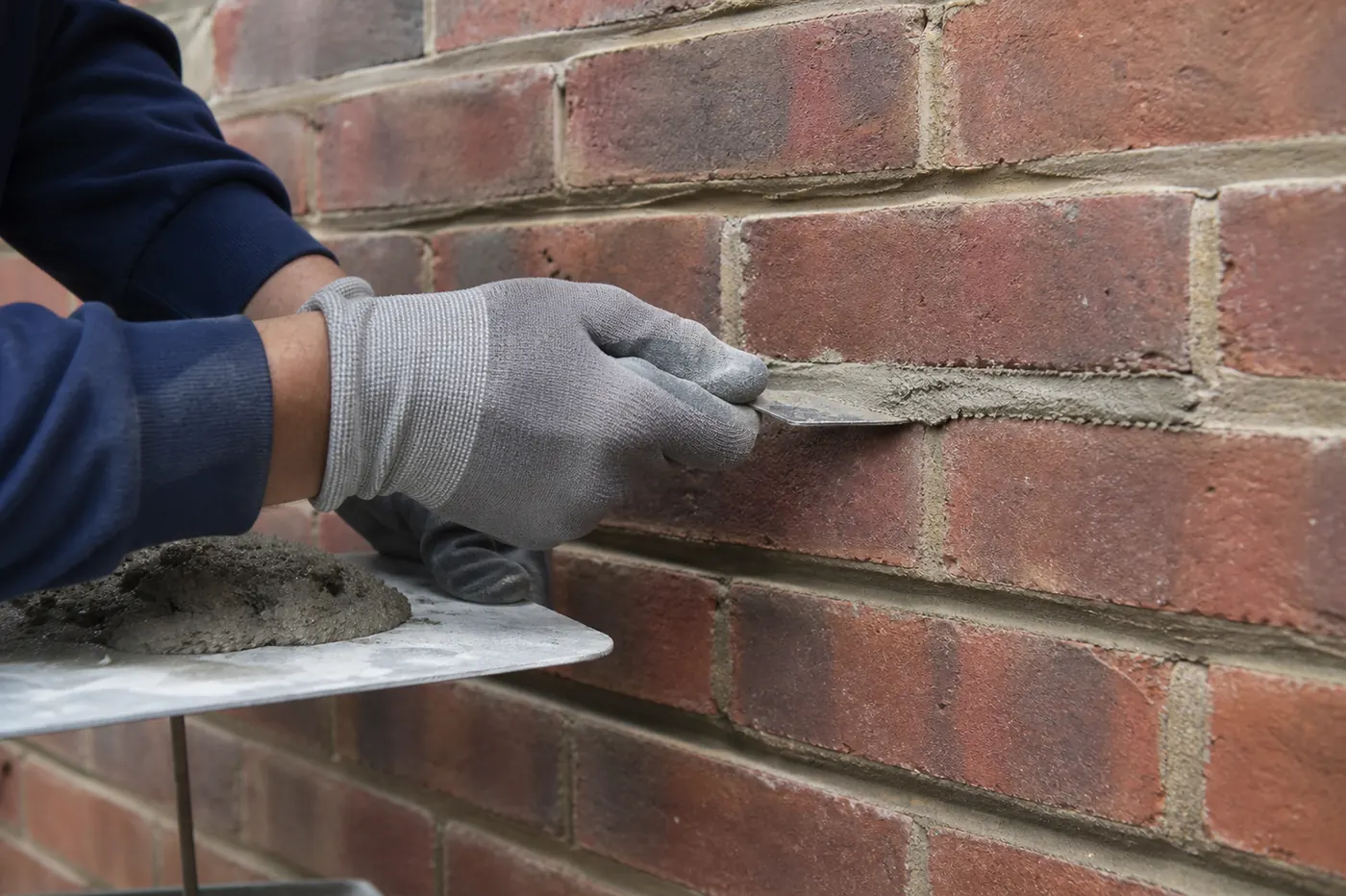
Repointing, also called tuckpointing, costs $300 to $700 for a partial job and $700 to $2,500 for a full job on a Boston chimney. The deciding question is how much of the mortar has worn out, not how long the chimney is. You get the written price before work starts, and the $49 inspection is credited toward the repointing if you approve it.
- Partial repointing is $300 to $700 and covers limited areas of worn mortar.
- Full repointing is $700 to $2,500 and covers joints that have worn out across the chimney.
- Height, access and the share of failed joints decide where a job lands in its range.
- Damaged brick is priced as masonry repair or rebuild, not as repointing.
Repointing and tuckpointing prices in Boston
The two names describe the same family of work, new mortar in the joints between bricks, and they share one price scale. The size of the job sets the tier.
| Job size | Boston price | Typical situation |
|---|---|---|
| Partial repointing | $300 to $700 | Worn joints in one area or on one face |
| Full repointing | $700 to $2,500 | Joints worn across most of the chimney |
| General inspection | $49, credited toward approved repair work | First step, to see how far the wear goes |
Prices outside these tiers are quoted in writing after the inspection. The repointing and tuckpointing service page explains the signs of worn mortar and how the work is done, so this page can stay on the money.
How to read the two tiers
Think of partial repointing as a targeted fix and full repointing as a complete renewal of the visible mortar. The price gap between them reflects that difference in scope. The partial band tops out at $700 and the full band begins at $700, so a job that sits at the boundary is a judgment call. In that case, ask for both prices and the reasons for each, then choose with the numbers side by side.
What the partial repointing price covers
A partial job fixes a defined area, and the quote should say which one. Common examples are the upper few courses that take the worst weather, one elevation that faces the prevailing wind, or a patch around a spot where an older repair let go.
This tier suits a chimney that is mostly sound. The quote names the area, and the price follows it. Because the area is limited, the price stays in the $300 to $700 band, and the rest of the chimney is left alone.
Partial work is often the right choice, not a compromise. It deals with the place where water is entering without paying to redo joints that are still healthy.
Questions to ask about a partial quote
- Is the area on the quote the one where water is actually entering?
- What shape are the joints just outside that area?
- If more worn joints show up once work begins, will you be asked before the price changes?
A clear answer to the third question is the main protection against a partial job quietly becoming a full one.
What the full repointing price covers
Full repointing treats the joints across the whole exposed chimney. It makes sense when the mortar has aged evenly and nearly everywhere is worn, which is common on older Greater Boston brick homes, rowhouses and brownstones that have gone decades without maintenance.
The $700 to $2,500 band is wide because chimneys differ so much. A short, easy-to-reach stack sits near the bottom. A tall one with several faces sits higher. Your written quote should state that the full chimney is included, so you are not surprised later by an area that was left out.
Full repointing is often quoted by a company that also notices the other parts at the top of the chimney. If the crown, flashing or cap are weak, they should appear on the same written estimate as separate items, so the full price reflects everything you decide to approve and nothing you did not.
A fresh set of joints also changes the way a chimney looks, and you may want to see a sample before approving the finish. Ask whether that is part of the quote.
What moves a repointing price up or down
Within each tier, a handful of factors set the figure.
- The share of joints that have failed. More worn joints mean more work for the same chimney.
- Height. A taller chimney needs more setup around it.
- Access. A roof that is steep or hard to reach slows the work and adds preparation.
- Number of faces. Each exposed side of the stack counts.
- Earlier repairs. Hard patches or surface coatings applied before may need attention first.
- Color and finish matching. Blending new mortar into old brick takes care on a visible stack.
You can check each of these against the photos in your estimate. A quote that cannot connect its price to these factors is hard to trust.
Remember that these factors work together. A tall chimney with a small worn area is still a partial job. A short, easy chimney with joints worn throughout is still a full one. Height and access adjust the price inside the tier, and the amount of failed mortar picks the tier.
Weather timing is the last practical point. Mortar needs mild, dry conditions to cure well, so the work is scheduled around Boston's cold snaps and rain. Ask how a delay would be handled, and whether the written price stays the same if the date moves.
Photos taken at the start give you a record to compare with once the work is done, and they are worth requesting alongside the quote.
When the bricks are damaged, the price changes category
Repointing works only when the bricks are still sound. If the faces of the bricks are flaking or cracked, new mortar will not hold them, and the job moves into masonry repair, which runs $300 to $700 for basic work, $700 to $2,500 for standard work and from $2,500 for major work.
When the damage runs deep and wide, the quote may compare repair with a partial rebuild, priced $2,000 to $4,500. See the chimney repair cost page and the chimney rebuild cost page for those tiers.
The inspection matters here, because it separates a mortar problem from a brick problem before you pay for the wrong one.
This is the most important cost fact on the page. People often hear a low repointing figure, approve it, and later learn that damaged brick needed a different kind of repair. Check the inspection photos for flaking faces and ask directly: will the bricks hold the new mortar?
What a written repointing quote should list
Ask for specifics, because "repoint chimney" can mean a small patch or the whole stack.
- Which faces and heights are included, named one by one.
- Whether the job is partial or full, and the price for that tier.
- Photos showing the worn joints.
- How color will be matched, if that is part of the scope.
- Anything excluded, such as damaged bricks, the crown or flashing.
- The date and arrival window.
When these are written down, the quote can be compared and, if needed, enforced.
If a quote lists a total with only a few words of description, request a revised version. A few extra minutes of writing now is cheaper than a disagreement later about which parts of the chimney were covered.
How to compare two repointing quotes
Repointing quotes are easy to misread because the unit of work is not always the same.
- Find out exactly which parts of the chimney each quote includes.
- Ask for a total price. If a company describes its price in a unit other than the whole job, ask what that comes to for your chimney, and get it in writing.
- Check whether bricks are repaired or replaced, or left alone.
- See whether the crown and flashing are inspected at the same time, since water often enters at those points too.
A low quote that covers one face next to a higher one that covers the whole chimney is not a real comparison. Make the scopes match first.
If two quotes cover the same scope and still differ by a lot, ask each company to explain the gap. Differences in height, access and preparation are reasonable. A difference that nobody can explain is a reason to get a free second opinion, which is available when you bring a written report from a reputable local chimney company.
What is quoted separately, and how the $49 credit applies
Repointing does not include crown work, flashing, a new cap or waterproofing, and each has its own pricing. A standard waterproofing treatment is $300 to $500, and the chimney waterproofing cost page lists the other tiers. These can be done in the same visit or later, but each carries its own written price.
The $49 inspection is credited toward repair work you approve, and that includes repointing. If the findings point to a larger job than mortar alone, the credit applies to whichever repair you decide to do.
When waiting makes repointing cost more
Worn mortar lets water in, and in Boston that water freezes. Frozen water pushes at the joints and at the bricks. Bricks that start sound can begin to flake over repeated cold seasons, and then a $300 to $700 partial job becomes masonry repair or a rebuild.
If you can push a key or screwdriver tip into a joint, or see gaps between bricks, do not wait for spring. Book your $49 inspection at our contact page or call (617) 404-9587.
Questions homeowners ask
Is tuckpointing the same as repointing for pricing?
In this price guide they are priced the same way. Both mean replacing worn mortar in the joints, and the tier depends on how much of the chimney is involved. Partial jobs are $300 to $700 and full jobs are $700 to $2,500.
How do I know whether I need partial or full repointing?
The inspection shows how widespread the worn mortar is. If it is confined to one area, partial repointing is usually enough. If worn joints appear on most faces, full repointing is the better choice, and the quote should say which one it is.
Why is full repointing such a large range?
Chimneys vary in height, number of faces, roof access and how much mortar has failed. A short, simple stack and a tall, hard-to-reach one need very different amounts of work, so the band runs from $700 to $2,500.
Will the price go up if you find damaged bricks?
Damaged bricks are separate from repointing and are priced as masonry repair or, where the damage is extensive, rebuilding. You get a new written price for that work before it starts, and you can approve or decline it.
Does repointing stop leaks by itself?
It closes one path for water, but leaks can also come from the crown, the flashing or a missing cap. The inspection looks at all of them, so the quote addresses the real source of the water.
Can I do repointing in stages to spread out the cost?
Often yes. Because the quote names areas separately, you can start with the most exposed area and schedule the rest later. Ask for each stage to be priced in writing and for the $49 credit to be applied to the first one.
Related Boston chimney guides
- Crumbling Chimney Mortar in Boston: Causes and Fixes
- Chimney Tuckpointing Cost in Boston (2026)
- Repointing vs Rebuilding a Brick Chimney in Boston
Review Repointing & Tuckpointing Options Book the $49 Inspection