Yes, if water is showing up around your chimney after rain, and in Boston a leak repair runs $400 to $3,000 depending on where the water gets in. A stain only tells you where water arrived, so the real work is finding the entry point before anyone fixes anything. We start with a $49 inspection that is credited toward approved repair work, and you get the written price before the work begins.
- Chimney leak repair in Boston runs $400 to $3,000, depending on the entry point and the fix it needs.
- A ceiling stain shows where water arrived, not where it got in, so the source is confirmed before a repair is quoted.
- The usual entry points are the cap, the crown, the masonry joints, the flashing and the chase cover.
- The $49 inspection is credited toward approved repair work, and you see photos and a written price first.
Where chimney leaks start and why the stain misleads you
A chimney is a tall, narrow structure standing in the most exposed spot on your roof. It takes rain from above, wind-driven rain from the side, and snowmelt that runs down the roof slope and piles up against its base. Each of those loads has a different way in, and water almost never stays where it enters.
That is why a brown ring on the ceiling beside the chimney is a poor map. Water can run along a rafter, follow the outside of the flue, or slide down the back of a wall before it finally shows itself. Wind can push rain sideways into a joint that stays dry in calm weather. Gravity then carries the water somewhere else entirely. Fixing the spot where the stain appears is how homeowners end up paying for a repair that changes nothing.
The parts that can let water in are the cap, the crown (the concrete slab at the top), the brick and mortar joints, the flashing where the chimney meets the roof, the chase cover on a framed chimney, and the roof surface around it. In older Boston brick homes, triple-deckers and rowhouses, the masonry is often porous and has been through many freeze-thaw cycles, so two or three of these parts may be failing at the same time. A leak diagnosis exists to sort that out in order, so the repair matches the cause.
Boston weather makes this harder. Cold winters mean water that gets into masonry freezes, expands and opens the gap a little further. Coastal salt air and nor'easters add driving rain from unusual angles. A chimney that stayed dry for a long time can start leaking after one hard season, because the damage built up slowly out of sight.
Signs your chimney is leaking
Some leaks announce themselves with a drip. Many do not. These are the patterns that point to a chimney as the source:
- Stains show up on the ceiling or wall near the chimney after wind-driven rain, but not after a gentle rain.
- The brick stays dark and wet for days after a storm while the rest of the house dries out.
- Water reaches the firebox or collects on the smoke shelf, the flat ledge behind the damper.
- Flashing sealant has been redone before and keeps cracking or pulling away.
- Rust streaks or white mineral deposits (called efflorescence) mark a path where water has been moving through the masonry.
- There are several visible defects, such as a cracked crown, loose joints and tired flashing, and nobody can say which one is responsible.
A musty smell near the fireplace, peeling paint on a chimney wall, or a damp attic corner can belong on this list too. None of these signs proves a leak by itself, and each one can have a second cause such as a roof leak or condensation. They are reasons to book an inspection, not a diagnosis.
It also helps to notice the timing. A leak that appears only in heavy wind and rain usually involves the masonry face or the flashing on the windward side. A leak that appears in any rain, even a light one, usually means a more open path, such as a crown crack or a missing cap. Write down what you see and when. That small log gives the technician a head start on the diagnosis.
How the source of a leak is found
Good diagnosis is a process of elimination. The technician works from what you tell them to what they can see, and ranks the likely entry points instead of guessing at one.
Start with your story
When did you first notice water? Was it after a nor'easter, a thaw, or a plain rainstorm? Which way was the wind blowing? Where exactly did the stain appear? Those answers narrow the search more than most people expect, because a leak that only happens in a driving east wind points at a different part than one that happens in every rain.
Check the chimney from top to bottom
The inspection looks at the cap, the crown, each face of the masonry, the mortar joints, the flashing, and the roof surface above the chimney. Inside, it covers the firebox, the smoke shelf and, where it can be reached safely, the attic or chase. The technician is looking for cracks, gaps, open joints, loose or lifted metal, and the marks water leaves behind.
Separate active water from old damage
An old stain can sit on a ceiling for years after the leak that caused it has stopped. A fresh, damp patch, soft material or active staining is different. The visit is meant to tell the two apart, so you do not pay to fix a problem that already ended.
Rank the likely causes and state the limits
You get photos of what was found and a plain ranking of the most likely entry points. If the evidence is not clear, the technician says so. Some leaks only reveal themselves in the right weather, and an honest report names that limit instead of pretending to certainty.
Expect a plain explanation at the end of the visit. You should come away knowing which parts were checked, which looked sound, which showed defects, and what the technician would do first. If a second company has already given you a report, bring it. A second opinion is free when you have a written report from a reputable local chimney company, and comparing two reports often makes the real cause clearer.
Cap and crown: the top of the chimney
The top is the first place to look, because everything that falls on the chimney lands there. A missing or damaged cap lets rain drop straight down the flue. A cracked crown lets water seep under the slab and into the brick below, where it cannot easily dry out. Hairline cracks that look harmless in summer can widen once water freezes inside them.
When the diagnosis confirms a cap or crown defect, the repair is aimed at that defect alone. A cap can be replaced or added, and a crown can be patched or rebuilt depending on how much of it has broken down. These jobs are covered in detail on the chimney crown repair page, including how to tell a small crack from a failed slab.
The point for a leak job is simple: if the top is open, nothing lower down will stay dry. A repair to the walls or flashing that leaves a cracked crown in place usually has to be redone.
One more point on caps: a cap does two jobs, keeping out rain and keeping out animals. If a cap is missing or bent, debris and nesting material can also collect inside the flue, and that moisture and debris cause trouble of their own. The right cap depends on the flue size and the style of your chimney, and the technician will explain the choices when one is needed.
Masonry joints and brick faces
Brick is not waterproof, and mortar is the weak point. As joints erode, they open a path for water to travel into the wall, and wind-driven rain finds every open joint on the exposed side of the chimney. Brick that has absorbed water and frozen can flake or break at the face, which exposes softer material underneath and speeds up the next round of damage.
Where the defects are limited, the fix is to replace the failed joints or damaged units in the affected area. Where they are spread across a whole wall face, the repair scope grows, and so does the price. The technician will point out which situation you have, with photos, so you can see the difference rather than take it on trust.
If a stain keeps coming back on the same wall, the masonry on that side deserves a close look. Joints that look fine from the ground can be open at roof height.
Efflorescence deserves a word. The white, chalky powder on brick is mineral salt left behind when water travels through the wall and evaporates at the surface. It is not harmful by itself, but it is a trail marker. Where you see it, water has been moving through that part of the masonry, and the technician will check what is feeding it.
Flashing and chase covers: where the chimney meets the roof
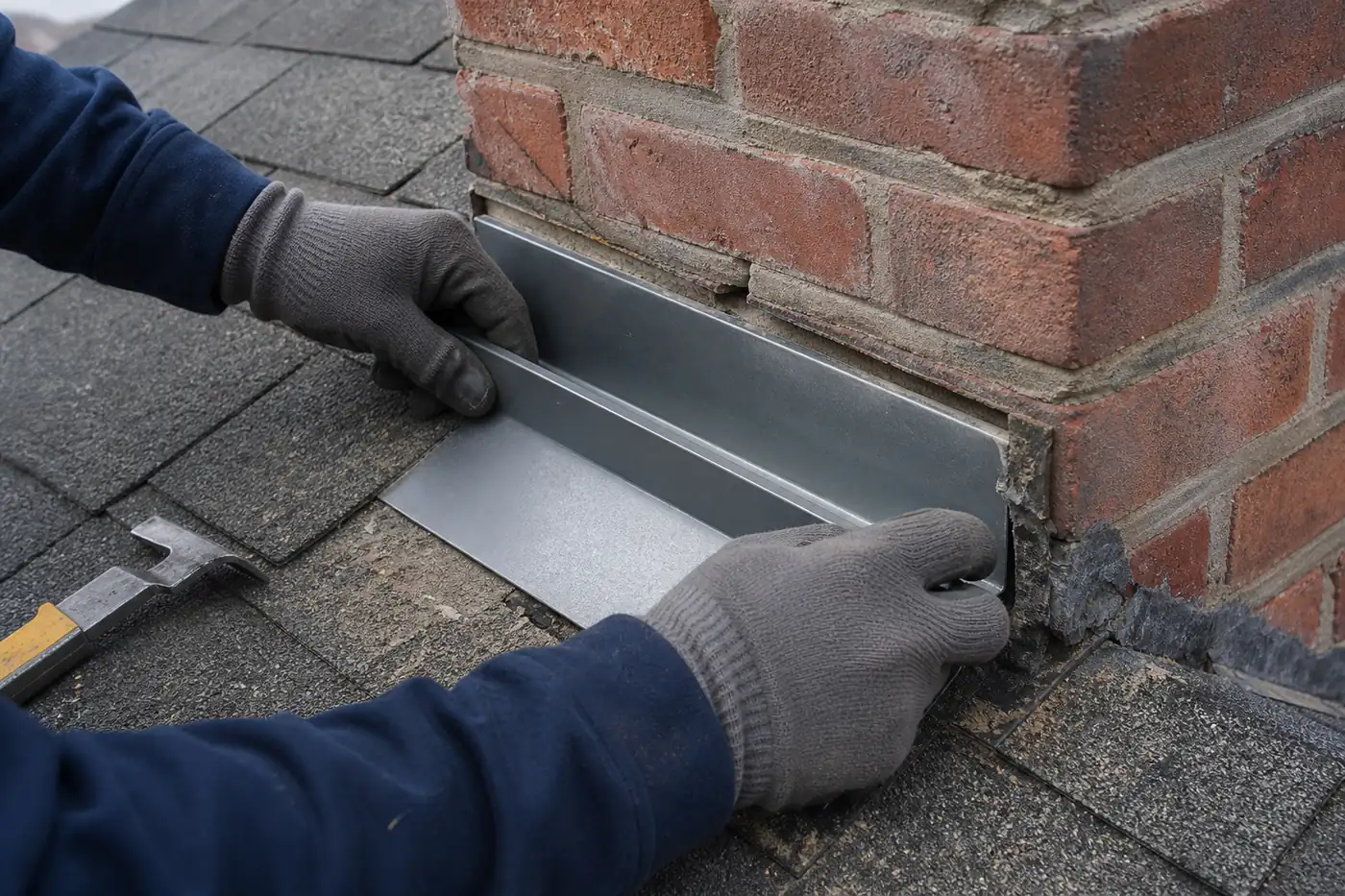
Flashing is the layered metal that bridges the gap between the chimney and the roof. It is one of the most common leak sources, and also one of the most commonly misdiagnosed. A bead of sealant along the edge may look like a repair, but sealant alone is a short-term patch on a joint that moves with the weather. If you have already had sealant applied and the leak returned, that is a strong hint the flashing needs real work.
Depending on what the technician finds, the flashing fix can be resealing, replacing part of the metal, or rebuilding the whole assembly. Each step up costs more, and each fits a different level of damage. The chimney flashing repair page explains the options and how they compare.
On a framed chimney, a chase cover covers the top of the chase the way a crown does for brick. A rusted, dented or ill-fitting cover lets water into the framing around the flue. Replacing the cover is a defined repair, and it is the right answer when the metal has failed rather than when a seam simply needs attention.
Flashing problems often show up at corners and along the downhill side of the chimney, where water collects. Rust on exposed metal, lifted edges, and gaps between the metal and the brick are typical findings. Tell the technician if the roof was recently replaced, because roofing work can disturb flashing or leave it poorly matched to the chimney.
Repair, replace or do a bigger job
The size of the fix depends on how much has failed, and a leak repair can land anywhere from a single targeted repair to a larger rebuild of the affected area. Here is how the choices usually line up.
- Repair: one confirmed defect, such as a cracked crown section, a gap in the flashing, or a handful of failed joints. The rest of the chimney is in sound shape.
- Replace: a part has reached the end of its useful life, such as a corroded chase cover, a missing cap, or flashing too rusted to hold a seal.
- Bigger masonry work: the damage has spread through a wall face or into the brick itself. Repointing or partial rebuilding may be a better use of money than patching.
If the inspection shows the damage runs deeper than a leak, the technician will tell you and explain which page of work applies. For example, widespread joint failure points to chimney repointing, and badly broken brick can point to a rebuild. You are never asked to approve the larger job during the first visit. You see the written scope and price, then decide.
Water-repellent treatment comes after the physical repairs
Homeowners often ask whether a clear water-repellent coating will solve a leak. The honest answer is that it helps with absorption and nothing else. A breathable treatment slows water soaking into sound brick and still lets the masonry dry out. It cannot close an open joint, bridge a cracked crown, or stop water getting past failed flashing.
That is why treatment is the last step, not the first. Once the physical defects are corrected, a treatment can reduce how much water the remaining brick takes on. Applied before the repairs, it can trap moisture and waste the money. If treatment makes sense for your chimney, it is covered on the chimney waterproofing page.
A good rule: a coating is a finish, not a repair. If someone offers to coat your chimney as the fix for an active leak, ask what physical defect they found first, and ask to see the photos.
What the visit and the repair day look like
You book a time through the contact page or by phone. You get a 3-hour arrival window, and the technician calls ahead before arriving. The first visit is the $49 inspection, with the technician checking the sources listed above and photographing what is found.
After the inspection you receive a written price for the repair. If you approve it, the $49 is credited toward the work. Nothing is done until you agree to the price and scope in writing.
On repair day, the work follows the approved scope. A small repair can be done in a single visit. Larger flashing or masonry work takes longer, and the technician will tell you what to expect when the price is given instead of promising a timeline in advance. When the work is done, you see photos of the repaired area.
If wet weather or wind arrives, rooftop work may be rescheduled. That is a safety and quality decision, and you will be told when it happens.
Interior damage is a separate matter. Stained plaster, wet insulation or damaged drywall near the chimney is not part of a chimney leak repair, and the written price covers the chimney work only. If the technician sees interior damage, it is pointed out so you can arrange that repair separately once the water is stopped.
Leak repair price, preparation and when it is urgent
| Item | Boston price |
|---|---|
| Chimney leak repair | $400 to $3,000 |
| General chimney inspection | $49, credited toward approved repair |
The spread is wide because a leak can come from one cracked crown or from several failed parts. The final number depends on the entry point, the height and access, and how much material has failed. The overall pricing overview shows how this fits with other work, and the written quote after your inspection is the figure that counts.
To get ready, note when the water appeared and in what weather, and clear a path to the fireplace and to any attic or closet where you saw staining. Take photos of the stain, since they help show how it changes. Do not climb onto the roof to look. Leave the roof work to a technician.
A slow stain can wait for a scheduled visit, but each freeze-thaw cycle makes a wet chimney worse. Book sooner if water is reaching the firebox, if masonry is falling apart, or if a stain is spreading. If you smell gas or a carbon monoxide alarm sounds, leave the house and call 911. To book your inspection, use the contact page or call (617) 404-9587.
Questions homeowners ask
Why does my ceiling stain not line up with the chimney?
Water travels. It can run along framing, down the outside of the flue, or behind a wall before it shows up as a stain. The stain marks where water arrived, so the technician traces the path back to the entry point instead of repairing at the stain.
Can I just put sealant on the flashing myself?
A bead of sealant is a short-term patch on a joint that moves with temperature changes, and it often fails again. Working on a roof is also dangerous, so we recommend you do not go up there. A technician can tell whether the flashing needs resealing, partial replacement or a full rebuild.
Will a waterproofing coating stop my chimney leak?
Only if the leak is simple absorption through sound brick. It cannot close open joints, a cracked crown or failed flashing. Physical defects are repaired first, and a breathable treatment is considered afterward.
How do I know the leak is from the chimney and not the roof?
Often you cannot tell from inside the house. The inspection checks the chimney parts and the roof surface around them, and it looks for fresh water marks compared with old staining. If the evidence points to the roof itself, the report says so.
What happens if the technician cannot find the leak in one visit?
Some leaks only appear in certain wind or rain conditions. The report ranks the likely entry points, names what could not be confirmed, and explains the next step. You are not asked to approve a repair that rests on a guess.
Is the $49 inspection really credited toward the repair?
Yes. The $49 general inspection is credited toward approved repair work. You get the written price and photos first, so you decide with the full picture.
Related guidance
Start with the Boston cost guide, then read the guides below.
- Chimney Crown Repair Cost in Boston: 2026 Price Guide
- Chimney Mold and Moisture Fixes in Boston (2026)
- Ice Dams Around Your Chimney: Boston Homeowner Guide
- Signs Your Boston Chimney Needs Repair: What to Look For
- Chimney Flashing Repair Cost in Boston (2026)