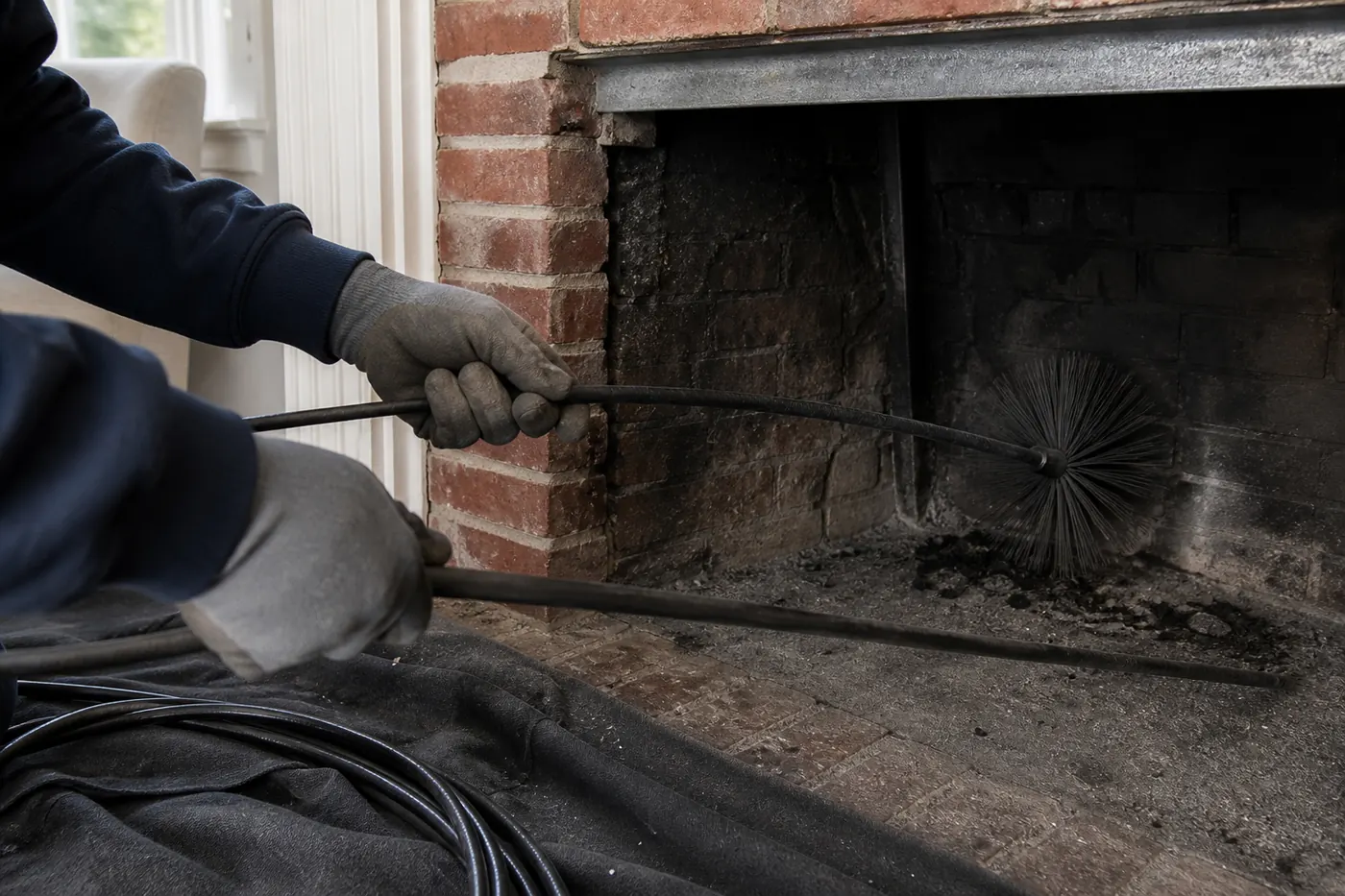
Before the storm, get the flue cleaned and checked and make sure your alarms work. During it, keep the fire small, watch for smoke in the room, and stay off the roof. If smoke spills, an alarm sounds or you see flames from the top, stop using the fireplace and get out. Roof and masonry checks wait until it is safe to look.
Do these things before the forecast turns bad
Storm warnings usually give a day or two. Use that time for the items that are easy now and hard later.
- Test every smoke alarm and carbon monoxide alarm. Replace dead batteries. Alarms should be on each level and near sleeping areas.
- Check your supply of dry wood and bring in enough for a few days. Wet storm wood smokes and builds creosote. Dry wood feels light, has cracked ends and makes a sharp sound when two pieces are knocked together.
- Clear the hearth of rugs, papers, and anything flammable.
- Make sure the ash bucket is empty and has a lid.
- Think about when it was last cleaned. A flue with heavy buildup is a bigger risk when you burn for hours.
If it has been over a year, a sweep with inspection is $299 fixed, and booking early beats trying to find an opening once the first flakes fall.
Why storms stress a chimney
A nor'easter delivers several hazards at once: strong wind, heavy rain or wet snow, rapid temperature changes and sometimes ice. A chimney sits above the roof in the full force of all of them.
- Wind can push air down the flue and into the room, causing smoke to puff back or the fire to flare.
- Driving rain finds weak joints, cracked crowns, loose caps and lifted flashing.
- Snow and ice can pile up around the cap, and a blocked or clogged top keeps smoke from leaving.
- Debris and branches can strike the cap or knock a loose one off.
None of this means you cannot use your fireplace. It means you need to watch it more closely than on a calm night.
Greater Boston adds a few local twists. Salt in coastal air corrodes metal caps and flashing over the years, so a part that looked fine last spring may be weaker now. Many older homes have brick chimneys that have been through many freeze-thaw winters, and their joints may already be open. Triple-deckers and rowhouses can have chimneys that share walls or rise through several floors, so a leak or smoke problem can show up on a different level than you expect.
The point of a pre-storm check is simple: find the weak spot while the weather is calm, not when it is already failing.
What to watch during the storm
Keep an eye on the fire and the room, not the roof.
- Burn small fires of dry wood. A large, hot fire for hours is harder on an old flue than a moderate one.
- Notice smoke. A little at start-up is normal. Smoke that keeps rolling into the room is not.
- Listen for a low rumble or roar from the chimney, and smell for hot tar. Both can mean a chimney fire.
- Check ceilings and walls near the chimney for drips or damp patches, and place a container under any drip.
- Open a window slightly if the room feels smoky, but do not leave a smoking fire unattended.
Take notes as you go: the time, the wind direction, whether snow or ice was falling, and what you saw. These details help a technician sort wind trouble from a leak or a draft problem later.
When to stop using the fireplace and get out
Some signs mean the fire should be put out and the room left alone. Do not weigh the risk. Act.
- A carbon monoxide alarm sounds. Leave the house with everyone, including pets, and call 911 from outside. Do not go back in to check.
- You hear roaring, see flames or sparks coming from the top, or smell burning tar. This may be a chimney fire. Get everyone out and call 911.
- Smoke fills the room and does not clear when you stop adding wood. Let the fire die down, ventilate if you safely can, and do not use the fireplace again until it is checked.
- You smell gas near a gas fireplace. Leave and call the gas utility or 911.
For more on the warning signs, read carbon monoxide chimney warning signs.
Never climb up to look
The urge to check the roof after a storm is strong, especially if you hear something rattle. Do not do it. Wet shingles, ice, snow and wind make a roof dangerous even for people who work on them every day. A fall can be far more costly than any chimney problem.
You can learn a lot from the ground and from inside:
- Look at the chimney from the yard, and use binoculars if you have them.
- Look for bricks or pieces on the ground, a crooked or missing cap, or a visible lean.
- Check the attic or ceiling around the chimney for new stains, if you can do so safely.
Photograph anything that looks off and wait for safe conditions before anyone goes up.
If you cannot tell whether a problem is urgent, treat it as urgent for safety purposes: stay off the roof, keep the fireplace unused, and call for an inspection. A day without a fire costs far less than a mistake.
Ice dams, leaks and frozen caps
Ice often forms where the chimney meets the roof. Melting snow runs down, refreezes at cold spots and can force water behind flashing. The result can be a ceiling stain that appears days after the storm, not during it. Our post on ice dams and your chimney explains the process.
If you see a leak, protect the floor and contents and keep a record. Leak repair is quoted case by case, in a broad range of $400 to $3,000, because the cause could be flashing, the crown, the cap or the masonry. A technician finds the source first and quotes after.
Do not chip at ice on or near the chimney. You can damage the flashing or the brick, and you may fall.
After the storm: what to book and when
- Look from the ground once the weather has cleared, and take photos.
- Hold off using the fireplace if there was smoke spillage, an alarm or any sign of a chimney fire, until it has been checked.
- Book an inspection. The $49 chimney inspection is credited toward approved repair work, and the technician photographs what is found.
- Get written prices for any repairs. Our chimney inspection page and chimney inspection cost page show what to expect, and chimney repair explains how fixes are quoted.
- Tell your insurer if there was damage, and ask your agent how to document it.
Book the $49 inspection at /contact/ or call (617) 404-9587. We give a three-hour arrival window and call ahead.
Questions homeowners ask
Is it safe to burn a fire during a nor'easter?
It can be, if the flue is clean and sound, the wood is dry, and your alarms work. Keep the fire moderate and watch for smoke. Stop using it if smoke spills, an alarm sounds or you hear or smell signs of a chimney fire.
Why does my fireplace smoke more on windy nights?
Gusts can push air down the flue, and a cap blocked by snow or debris can make it worse. Rooms that are tightly sealed can also draw poorly. If it happens often, have the cap, flue and draft checked.
What should I do if my chimney starts leaking in a storm?
Protect floors and furniture, catch drips in a container and take photos with the date. Do not go on the roof. Schedule an inspection after the storm so the source can be traced.
Should I knock snow or ice off the chimney?
No. Climbing up or chipping at ice is dangerous and can damage flashing or brick. Wait for it to melt or for a professional to assess it safely.
Can a power outage make fireplace use riskier?
People often burn more fires during an outage, which raises the creosote and carbon monoxide risk. Make sure battery-powered alarms are working, burn dry wood, and never use a charcoal grill or generator indoors for warmth.