Scratching, chirping or a sudden musty smell from the fireplace usually means something has moved in. In Boston, animal removal plus a cap or screen to keep it from happening again typically runs $299 to $900. The order matters: identify the animal, clear it humanely, clean the flue, then close the top.
What you are hearing, smelling and seeing
A chimney looks like a perfect den to wildlife: dark, sheltered and a little warm. Birds build nests on the smoke shelf or inside the flue. Squirrels and raccoons drop in from the roof and then cannot climb back out of a smooth liner. An open damper or a missing cap makes it easy.
The signs are fairly consistent:
- Scratching, fluttering or chirping, often at dawn or dusk
- Twigs, leaves, feathers or shredded insulation in the firebox
- A sour, musky or rotten smell that gets worse on humid days
- A damper that will not open fully, or smoke that backs into the room
- A cap that is bent, loose or gone when you look up from the yard
Sound alone does not tell you what is up there. A trapped adult, a nest with young inside and an animal that died last week each call for a different response. That is why the first job is identification, not removal.
Why a fire is the wrong way to get it out
People sometimes light newspaper or a few logs to smoke the animal out. Please do not. Nests are made of dry twigs, grass and fluff, which is exactly what burns best. A fire under a nest can ignite creosote higher in the flue, and a chimney fire can spread into the walls.
A blocked flue also cannot vent. Smoke and carbon monoxide can fill the room instead of leaving through the top. And a panicked animal does not always climb up. It may drop into the firebox, run through the house or die inside the flue, which makes the smell far worse.
If you see flames, smell smoke in the house or hear a roaring sound from the chimney, leave and call 911. Never go on the roof to check. If a carbon monoxide alarm sounds, leave and call 911 as well. Carbon monoxide has no smell, so a blocked flue is never something to wait out.
Baby animals and protected birds
Spring and early summer are the busy season for nesting. If you hear thin, constant chirping or squeaking, young may be inside. Removing a mother and leaving babies behind is cruel, and the babies will die and smell. Removing the babies without the mother can also cause problems.
Some bird species and other wildlife are covered by wildlife protection rules. Those rules can limit when and how a nest may be disturbed. We do not state the specific rules here because they change and depend on the species. To find out what applies, check the state's official wildlife website or call your local animal control office before anything is removed.
A responsible technician will tell you what they see, show photos of the nest or animal and explain the options. In some cases the right answer is to wait until the young have left, then clear the flue and close it. In other cases a licensed wildlife handler is the right person to call. Either way, you should hear the plan before any work begins.
How removal and cleanup actually work
The visit starts with a look inside the flue, usually with a camera or light, to find the animal or nest and see how far the debris goes. Then the technician decides how to bring it out safely. Birds are often removed by hand or with a tool from the firebox or the smoke chamber. Larger animals may need a one-way exit or a handler.
Once the animal is gone, the cleanup matters just as much as the removal:
- Remove every piece of nesting material, because even a small mass can block draft
- Clear droppings and debris from the smoke shelf and firebox floor
- Check the damper, smoke chamber and liner for damage from claws or heavy debris
- Sweep the flue so soot and old creosote are not mixed with leftover nest material
Droppings and old nests can carry germs and insects, so this is not a job for a vacuum cleaner and a shovel. The usual follow-up is a chimney sweep, which includes an inspection at $299 fixed. If the animal chewed or bent a damper, damper repair may come next.
Closing the top so it does not happen again
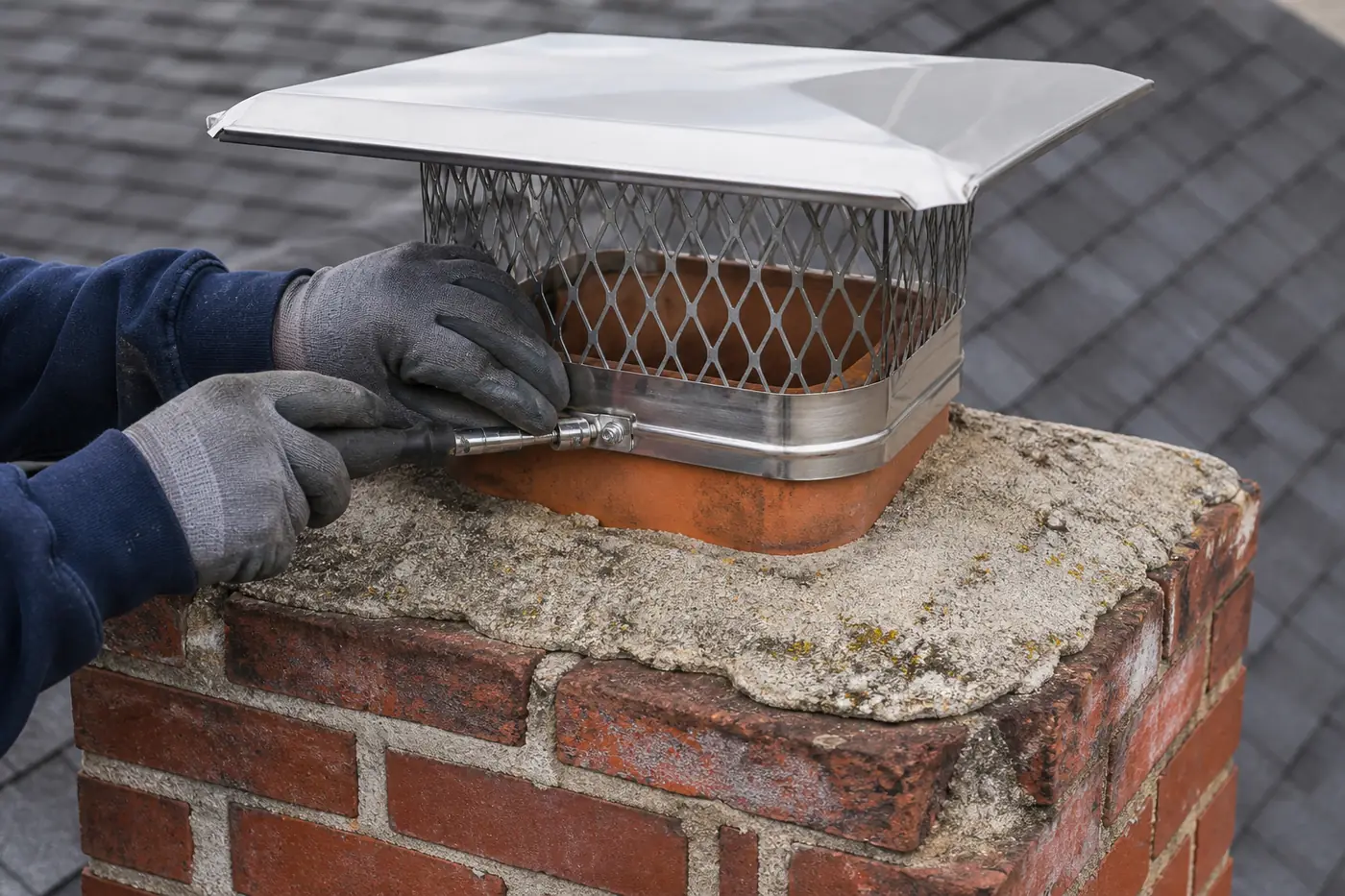
A cap is what keeps the next animal out. It is a metal hood with mesh sides that sits over the flue, and it also keeps out rain and sparks. The key rule: install it only after you have confirmed nothing is inside. Capping over a live animal traps it.
| Option | Typical Boston price |
|---|---|
| Standard cap | $300 to $700 |
| Premium cap | $800 to $1,300 |
| Custom chase cover (prefab chimneys) | $800 to $1,500 |
Mesh size matters. Openings that are too wide let in small birds and bats. Openings that are too fine can clog with soot on a wood-burning flue. A cap should also fit the flue, not just rest on top of it, and be fastened so wind and raccoons cannot pry it off. See our chimney cap installation page for the details, and read how a cap differs from a chase cover if your chimney is a metal prefab type.
What the bill depends on
Animal removal in Boston runs $299 to $900. The spread comes down to a few things:
- What the animal is and whether young are present
- How deep it is, and whether the damper or smoke chamber blocks access
- How much nesting material and debris has to come out
- Whether the cap is already there and just needs to be reattached, or a new one is needed
The cap is a separate line from removal. If the inspection also finds damage, such as a cracked flue tile or a broken damper, that repair is priced separately after you see photos. For a sense of how those numbers work, see our chimney repair cost guide.
If the house already has water stains or a musty smell, the animal may be only part of the story. Water can come in through the same open top, and an uncapped flue is open to rain.
What to do today
Here is a short list you can act on without climbing anything:
- Close the damper if you can reach it, and keep a glass door or screen shut so nothing enters the room
- Do not burn anything in the fireplace until the flue is checked
- Keep children and pets away from the firebox
- Write down when the noises happen and what the smell is like
- If the animal is loose in the house, open an outside door and close interior doors so it can leave
Then book a visit. The $49 inspection is credited toward approved repair work, and you get a written price before anything is done. Book it at /contact/ or call (617) 404-9587.
Questions homeowners ask
Can a bird or squirrel get stuck permanently in a chimney?
Yes. Smooth clay or metal liners give little to grip, so an animal that falls in can be unable to climb back up. It may die inside the flue. If you hear scratching that stops after a few days and a smell follows, call for an inspection.
Will a chimney cap keep bats out?
A properly fitted cap with the right mesh size blocks most animals, including bats. It will not help if an animal is already inside when the cap goes on. Have the flue checked and cleared first, then close the top.
Is it safe to use the fireplace after animals have been removed?
Not until the flue has been cleaned and checked. Leftover nesting material can burn or block draft, and the animal may have damaged the damper or liner. A sweep with inspection tells you whether it is clear.
Why does my fireplace smell worse when it rains?
Humid air and moisture pull odor out of soot, creosote and anything that has died in the flue. If the smell is sharp or rotten, an animal may be involved. A smell that comes with water stains may also mean a leak at the top.
Does homeowners insurance cover animal damage in a chimney?
That depends on your policy and the type of damage, and we cannot tell you what yours says. Ask your insurance agent before you pay for large repairs, and keep the photos and written price from the inspection.