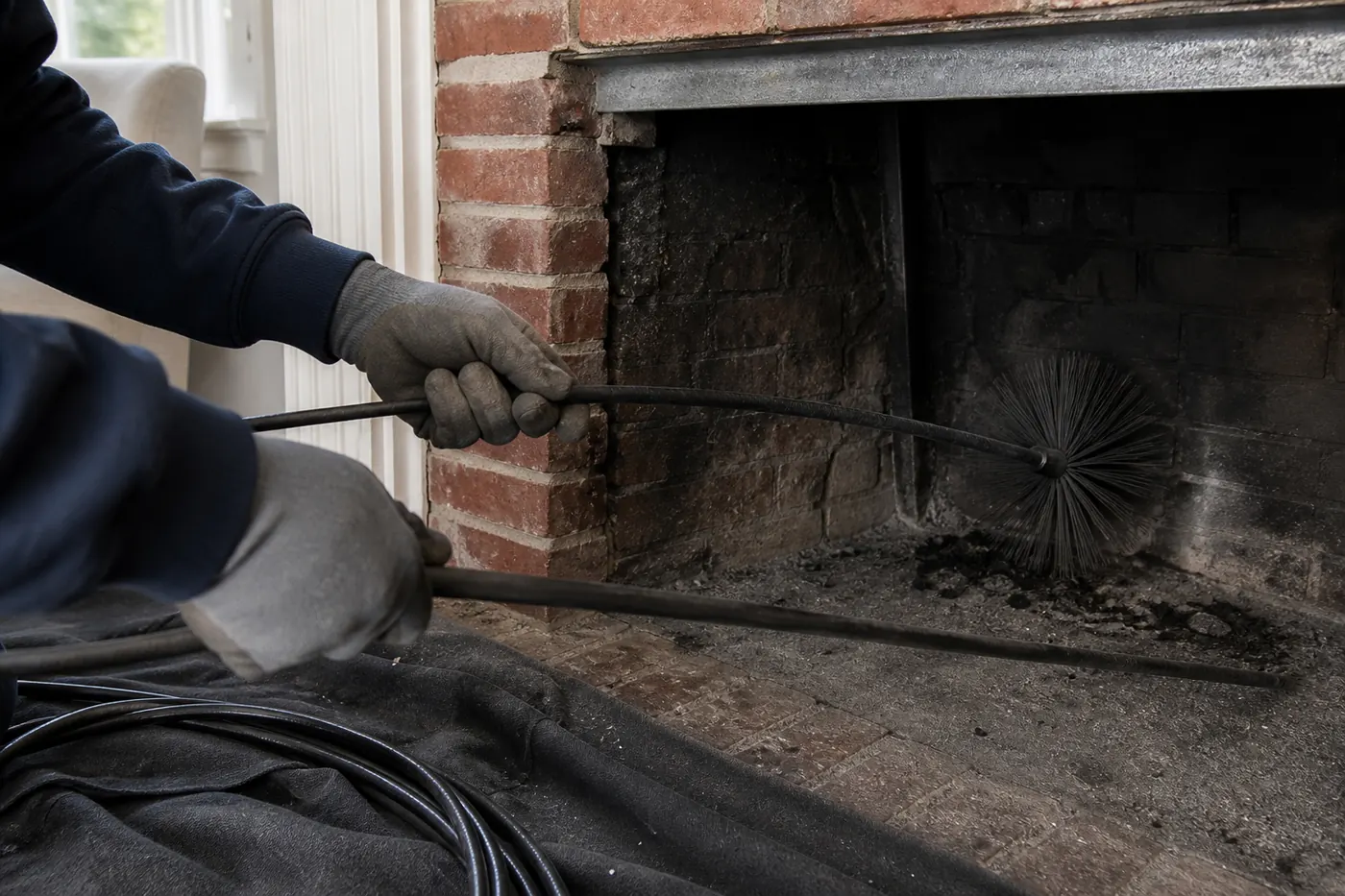
Often, yes. Masonry, crowns, flashing and sealers all need dry weather and moderate temperatures to set properly, and summer gives you longer stretches of both. Basic masonry repair is $300 to $700 and standard work is $700 to $2,500, so a summer inspection helps you plan the work before the heating season.
Why weather matters so much for masonry
Repair materials are not like paint. Mortar, crown coatings and sealants are chemical products that need the right conditions to cure. Water, cold and freezing can ruin them before they set.
- Cold: many products have a minimum temperature, and mortar that freezes before it sets stays weak.
- Rain: fresh mortar can wash out, and water trapped under a new crown cannot escape.
- Humidity and damp masonry: a sealer applied over a wet wall locks the moisture in.
- High heat: in very hot conditions some products dry too fast and need extra care.
Summer in Greater Boston usually offers the most days that meet these needs. Even so, the technician decides day by day, and a rainy week can still delay a job. No schedule is guaranteed.
Repairs that fit the season
Most exterior chimney jobs benefit from dry weather. Here are common ones with Boston price ranges.
| Repair | Boston price |
|---|---|
| Basic masonry repair | $300 to $700 |
| Repointing, partial or full | $300 to $700 or $700 to $2,500 |
| Crown repair | $300 to $900 |
| Crown rebuild | $900 to $2,500 |
| Flashing repair | $200 to $400 |
| Chimney cap, standard | $300 to $700 |
| Waterproofing, standard | $300 to $500 |
| Partial rebuild | $2,000 to $4,500 |
The chimney repair cost guide explains how the ranges are set. Final pricing depends on what the inspection shows and is given in writing before work begins.
The order of work: repair first, seal second, wait, then burn
Doing jobs in the right sequence is one of the biggest reasons a repair holds.
- Inspect. Define the problem, the materials and how the technician will reach it.
- Repair the structure. Replace failed brick, repoint loose joints, repair or rebuild the crown and fix flashing.
- Let it cure. Follow the cure time for each product. Mortar and crown coatings do not all set at the same speed.
- Seal. Only after repairs have cured, and the wall has dried, a breathable water repellent can go on.
- Restart use. Wait for the technician's go-ahead before the first fire.
Skipping steps is the usual cause of early failure. Sealer over an unrepaired crack hides it for a while. It does not close it. Our guide on a chimney leaking when it rains explains why the source has to be fixed first.
What to do this month
You do not need to wait for a failure. Use the quiet season to find and fix small problems.
- Walk the yard and look up at the chimney in good light. Photograph anything that looks different from last year.
- Check the ceiling and walls near the fireplace for stains left by spring storms.
- Look into the firebox for debris, rust or water marks.
- Book the $49 inspection, which is credited toward approved repair work.
- Ask for photos and a written price for each recommended repair.
Do not go on the roof to look. Wet or hot roofs are dangerous, and the technician has the right equipment.
If you have more than one chimney, such as on a triple-decker or a larger older home, make a note of which one is which, and tell the technician. Each stack can have a different problem, and a list of priorities saves money by putting the worst one first.
An inspection in summer also catches problems that started during winter freeze-thaw cycles. Our article on freeze-thaw damage in Boston explains how that happens.
Why finishing before fall helps
When temperatures drop, many homeowners remember the fireplace at the same moment. They light a first fire, notice smoke or damage and call for help. A chimney that was repaired and checked in summer is ready for that first cold night.
- There is time to wait for materials and cure times without cold weather pressing.
- A complex repair can be scheduled in stages, if the weather interrupts.
- You are not forced to decide quickly while the house is cold.
- You can test the finished work in the lower-stakes months before winter loads it.
Autumn can still work, and some repairs are done in cool, dry spells. But the schedule gets tighter and the weather gets less predictable. If a repair is not finished by the first hard freeze, the technician may recommend waiting until spring rather than risking poor curing.
What a repair day looks like
It helps to know what to expect, so there are no surprises on the day.
- Arrival. You get a 3-hour arrival window and a call ahead. Someone should be home to let the technician in and talk through the plan.
- Protection. Floors and furniture near the fireplace are covered, and the technician sets up access safely.
- The work. Exterior masonry jobs happen at the top of the chimney, so you may hear tools and see debris dropped inside a safety zone. Interior steps, such as damper work, happen at the fireplace.
- Photos. The technician takes photos of what is found and what is done, so you can see the before and after.
- Cure instructions. You are told when it is safe to light a fire and how long to avoid wetting the new work.
Weather can change the plan. If rain is forecast, a good technician would rather move the job than set mortar in a downpour.
Keep the written proposal and photos after the job. They are a record of exactly what was done, which is useful for a future sale or an insurance question. For insurance, check with your insurer or agent.
Repairs that should not wait for the calendar
Some problems should be dealt with right away, no matter the season.
- A leak that is soaking walls or ceilings.
- A loose, leaning or falling chimney section.
- Smoke entering the living space, or a carbon monoxide alarm. If it sounds, leave and call 911.
- Signs of a past chimney fire, such as cracked tiles or warped metal.
- Animals living in the flue.
For anything that threatens safety, stop using the fireplace and book an inspection. Standard chimney repair is scoped in writing before work starts, so you can see what is urgent and what can wait for the right weather.
Choosing a plan and booking
A sensible summer plan has three parts: an inspection, a prioritized list of repairs and a schedule that respects cure times. Ask the technician which repairs are urgent, which can be monitored and which are optional upgrades.
Costs outside the table above, such as unusual access or hidden damage behind brick, are quoted in writing after the $49 inspection. You get photos of what is found, a 3-hour arrival window with a call ahead and no work without your approval.
Book the $49 inspection at /contact/ or call (617) 404-9587.
Questions homeowners ask
Can chimney repairs be done in winter?
Some can, such as emergency fixes and interior work. Mortar, crowns and sealers need suitable temperatures and dry conditions, so exterior masonry is often delayed until the weather allows.
How long should I wait after repair before using the fireplace?
It depends on the materials used. The technician will tell you when it is safe to light a fire, and you should follow that guidance.
Is water repellent a substitute for repair?
No. Water repellent helps sound masonry shed water. It does not close cracks, fix flashing or replace damaged brick.
What if it rains the day my repair is scheduled?
Wet weather can delay exterior work, and the technician may reschedule to protect the repair. That is better than applying materials in the rain.
Do I need to be home during the work?
Plan for someone to be there during the arrival window to let the technician in and discuss the plan. Ask about access to the fireplace and any areas the technician needs.