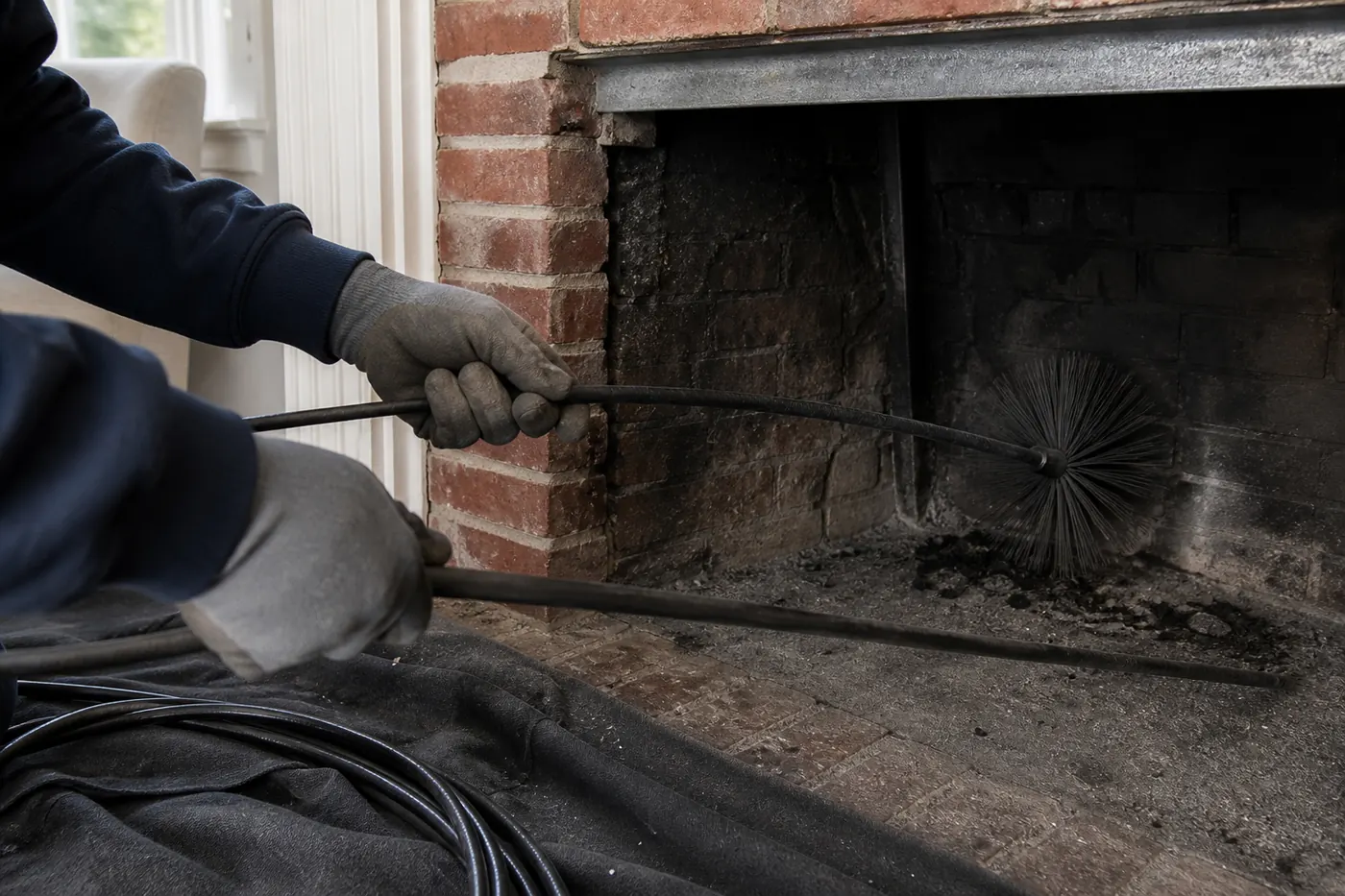
In general, a landlord is expected to keep the parts of a rental that affect safety in working order, and a chimney is one of them. The exact duties come from state and local law, your lease and the condition of the property, so confirm them with an attorney or your local building department. This guide covers the practical side: what to inspect, document and fix.
Why a chimney is a landlord issue
A chimney is a safety system, not a decoration. It carries smoke, heat and combustion gases out of the building. If it fails, tenants can be exposed to smoke or carbon monoxide, and a flue fire can spread into walls and the attic. Tenants usually cannot see the inside of a flue, and they cannot repair masonry on the roof. That gap is one reason owners are often the ones asked to arrange the work.
Think of it from a risk angle too. A neglected chimney can turn into water damage, a smoke complaint or a hazard that affects every unit in the building. The cost of a yearly look is small next to those outcomes, and an inspection report shows you acted early.
The question is rarely whether a chimney matters. It is who looks after it, how often, and what record exists. Laws and codes about rental housing vary by town and change over time, and a lease can add duties or limits. We do not state what any specific rule says. Ask your attorney, your municipality or the state's official housing resources what applies to your building.
Is the fireplace in use, or sealed off?
The first practical question is whether anyone uses the chimney. There are three common situations in Greater Boston rentals:
- A working fireplace tenants are allowed to use. This needs regular inspection and cleaning, and the lease should say what fuel is allowed.
- A decorative fireplace not meant for fires. The opening is often blocked, but the chimney above still needs to shed water and stay sound.
- A flue serving a boiler or furnace. Heating equipment may vent into the same stack, so the tenant may not even know it exists.
Write down which of these applies for each unit. If a fireplace is not safe to use, say so in writing and make sure tenants know. A note in the lease is better than an assumption.
If you inherit a building, do not guess about its flues. A chimney that has been sealed, capped or abandoned over the years may still be connected to something. An inspection can map which flues are active, which are dead and which have been blocked, and that tells you what the building actually needs.
Inspection and cleaning schedule for a rental
The NFPA 211 standard recommends that chimneys and vents be inspected at least once a year. For a rental, a yearly visit is a sensible baseline, with more frequent checks if tenants burn often. A chimney inspection is $49 and credited toward approved repair work, and a cleaning with a Level 1 visual check is $299.
Triple-deckers and other multifamily buildings can have several flues in one stack, each serving a different unit or appliance. Make sure every flue is inspected, not only the one you know about. Our post on chimney care for multifamily buildings goes into this.
Schedule service before heating season, when tenants start using appliances. Late summer and early fall leave time for repairs.
What to document and keep
Good records protect you and your tenants. Keep a file for each property with:
- Each inspection or cleaning report, with the date and photos.
- Written quotes and invoices for any repairs.
- Notices you sent to tenants about use, access or shutdowns.
- Messages from tenants about smoke, smells, leaks or damage, and when you answered.
- Dates of any alarm checks you carried out.
Our inspection comes with photos of what the technician finds and a written price before work, so you can drop them straight into the file. A paper trail helps if an insurer asks questions later. Ask your insurance agent what they want to see for a rental property.
When a tenant reports a problem
Treat any chimney-related complaint as urgent until it is checked. The usual ones are:
- Smoke coming into a room when the fireplace is lit.
- A sharp or burnt smell from the fireplace.
- Water stains on a ceiling or wall near the chimney.
- Loose brick or mortar visible from the yard or roof.
- A carbon monoxide alarm sounding.
Tell tenants what to do. If a CO alarm sounds, everyone leaves and calls 911. For smoke or a fire, leave and call 911. For a fireplace that is smoking or damaged, stop using it until a technician has looked. Read our guide on carbon monoxide chimney warning signs and share the key points with tenants.
Repairs and who arranges them
Most chimney problems in rentals fall into familiar groups. Water entry points like the crown, cap and flashing need attention before they damage walls. Masonry wear needs repointing or brick work. Flue damage may need a liner.
- Chimney repair: ranges are on our chimney repair cost page.
- Crown repair: $300 to $900, rebuild $900 to $2,500.
- Cap: $300 to $700 for a standard one.
- Flashing repair: $200 to $400.
These are planning ranges only. You receive a written price after the inspection. If the unit is not safe to use, shut it down in writing while the repair is arranged, and give tenants notice about access for the work. Ask your attorney how notice and entry should be handled in your situation.
One more tip: do not put off a repair because the unit is empty or the tenant says they never use the fireplace. Water getting in through a failed crown or flashing damages the building whether or not anyone lights a fire, and a small repair now stays small. A chimney leak repair can cost $400 to $3,000, so catching the source early matters.
Coordinating owners, tenants and contractors
Many disputes come from unclear roles. Settle these points before a problem comes up:
- Who books inspection and cleaning, and who pays for it.
- Whether tenants may burn wood, and what type of wood.
- How tenants report problems, and how fast you respond.
- How access is arranged, and what notice you give.
Put the answers in the lease or a written notice. Tenants who burn wet or unseasoned fuel create more buildup, so a short fuel guideline is helpful. Our post on the best firewood for New England can be shared with them.
If you are buying or selling a rental with a chimney, a $99 inspection gives a written record of condition for the deal.
Where to confirm the actual rules
Because we cannot tell you what the law requires for your building, check with the right source:
- An attorney who handles landlord and tenant matters.
- Your local building or inspectional services department.
- The state's official website for housing and landlord information.
- Your insurance agent, about coverage and records.
Bring your inspection report and photos to those conversations. They make the discussion concrete. We handle the chimney itself: the inspection, the written price and the repair.
Book a $49 inspection at /contact/ or call (617) 404-9587.
Questions homeowners ask
Who is responsible if a tenant causes a chimney fire?
That is a legal question that depends on the lease, the facts and local law, so ask an attorney. For prevention, a recent inspection report and clear written fuel and use rules help everyone.
Can I forbid tenants from using the fireplace?
Many landlords do, especially when a fireplace has not been inspected. Put it in writing in the lease or a notice, and confirm with an attorney how it should be handled.
How often should a rental chimney be inspected?
NFPA 211 recommends at least a yearly inspection. A rental with heavy use or several flues may need more attention. The $49 inspection is credited toward approved repair work.
Do I need to inspect a chimney that tenants never use?
Yes, it is still wise. Water, animals and failing masonry can cause damage and risk even when no fire is lit, and a flue may serve heating equipment tenants do not think about.
What should I do if a tenant reports smoke inside the unit?
Tell them to stop using the fireplace and ventilate. If there is a fire, a CO alarm or heavy smoke, they leave and call 911. Then arrange an inspection and keep the written report.