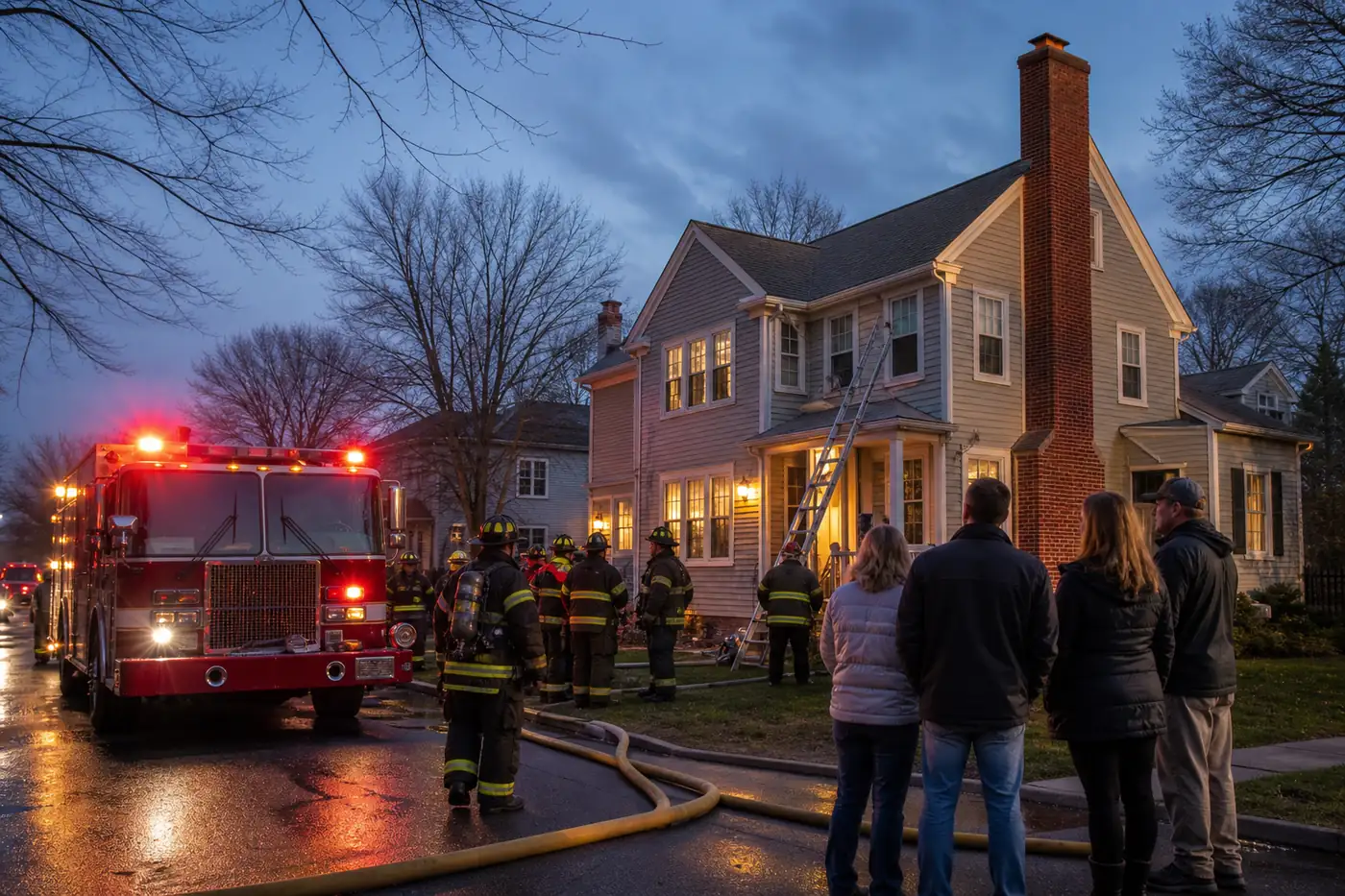
Get everyone out of the house and call 911 from outside. Do not try to put the fire out yourself, and do not go onto the roof. Once the fire department says the building is safe, the fireplace stays off until a qualified technician has inspected the whole flue, which starts with a $49 general inspection.
The first minute: get out, then call 911
A chimney fire can spread into the walls, attic and roof framing without you seeing flames inside the room. Treat every suspected chimney fire as a house fire.
- Get everyone out. Children, older relatives, tenants on other floors and pets. Do not stop to collect belongings.
- Call 911 from outside. Tell the dispatcher you think the chimney is on fire and give the street address.
- Meet at a spot away from the house. Count heads so you can tell the firefighters if anyone is missing.
- Close doors behind you if you can do it in one second. Do not go back for it.
- Stay outside until firefighters say you can return.
That is the whole job for a homeowner. Everything else on this page is for the minutes, days and weeks after the emergency is handled.
What a chimney fire sounds and looks like
Some chimney fires are loud and obvious. Others burn slowly inside the flue and only reveal themselves afterward. Knowing the signs helps you act early.
The loud kind
- A roaring or rumbling noise, often compared to a freight train or a low-flying aircraft
- Dense smoke pouring into the room or out of the top of the chimney
- Flames or sparks shooting out of the chimney top
- The chimney walls or the wall around it feeling hot to the touch
- A strong, harsh smell of burning
The quiet kind
Slow-burning fires may not make much noise. Afterward you might notice puffed-up, flaky creosote that looks like honeycomb, warped or cracked metal parts, melted rain cap pieces, or roof shingles near the chimney with burn marks or bits of debris on them. You may also see cracked flue tiles inside the firebox, or pieces of tile and black flakes in the ashes.
If you notice any of these after a fire, even a small one that went out by itself, call the fire department and then book an inspection. A quiet fire can still damage the liner.
What not to do while it is happening
Instinct pushes people to do the wrong thing here. Please do not:
- Fight the fire yourself. This is a job for firefighters. Your job is to get out and stay out.
- Throw water into the firebox. Water on a hot flue can crack the tile and create a cloud of steam and ash.
- Climb onto the roof. Heat, smoke, a wet roof and a ladder are a dangerous mix, and falls are real.
- Keep burning more wood. More fuel feeds the problem.
- Assume it is over because the noise stopped. Fire can keep burning inside walls or the attic after the roar quiets down.
Anything that makes you think about staying to deal with it is a sign you should be outside already. Leave, and call.
Why chimney fires start in the first place
Nearly all chimney fires come from creosote, the sticky, tar-like residue that smoke leaves on the flue walls each time you burn wood. It builds in layers. Early on it is a dusty soot. Later it hardens into a shiny, dripping glaze that ignites easily when the flue gets hot. Our guide to the stages of creosote and why they matter shows what each layer looks like.
Several conditions speed up buildup:
- Burning wet or unseasoned wood
- Slow, smoldering fires with the damper partly closed
- An oversized flue that lets smoke cool before it exits
- A cracked or missing liner that traps residue in rough surfaces
- Years without cleaning
When creosote gets hot enough, a single strong draft can light it. The flue then burns hotter than it was ever designed to, and tile, mortar and metal parts can fail.
After the fire trucks leave: first 48 hours
Even if the damage looks small, do not relight the fireplace or stove. Here is a sensible order of operations once the fire department clears the house:
- Document what you can. Take dated photos of the room, the firebox, any soot, and any damage firefighters point out. Write down what time it happened and what you were burning.
- Call your insurance agent or insurer. Ask what they need from you and whether they require a written inspection report. Coverage depends on your policy, so confirm the details with them rather than assuming.
- Keep the fireplace off. Put a note on it if other people live in the house.
- Ask about smoke and soot cleanup. Some of that may be a separate trade from the chimney work.
- Book a chimney inspection. This is the step that tells you whether the flue is safe to use again.
If your building has several units, tell your neighbors and your landlord or condo association. A shared wall or a shared flue means the damage may not stop at your door.
What the inspection checks and what it can cost
A chimney inspection after a fire is about one question: is the flue still sound enough to hold heat and keep it away from the wood frame? The technician looks at the liner for cracks and gaps, the mortar joints, the smoke chamber, the damper and the cap, and takes photos of what is found.
The general inspection is $49 and is credited toward approved repair work. If the job needs removal of heavy buildup before anything else, creosote removal is priced by stage: $299 to $450 for stage 1, $450 to $700 for stage 2, and from $700 for stage 3. Our creosote removal page explains how stages are graded.
Repairs depend entirely on what the fire did. Liner repair is $1,200 to $2,500 and liner replacement is $1,500 to $4,500. Smoke chamber repair is $500 to $1,500 and firebox repair is $350 to $900. Anything beyond that is quoted in writing after the inspection, so you approve a clear number before work starts.
Ask the technician to show you each problem in a photo, say which part it affects, and explain what happens if you leave it alone. A good report separates what is urgent from what can wait, so you are not pushed into a full rebuild when a smaller repair would do.
Lowering the odds of a repeat
The national fire safety standard NFPA 211 recommends that chimneys be inspected at least once a year. A yearly look catches creosote buildup, small cracks and a damaged cap before they turn into an emergency.
- Have the flue cleaned and checked before heating season. A chimney sweep visit with inspection is $299.
- Burn dry, seasoned wood and keep fires hot enough to draw cleanly.
- Keep a smoke alarm and a carbon monoxide alarm on every level, and test them each month.
- Keep a clear space around the hearth and never leave a fire unattended.
Triple-deckers, rowhouses and brownstones across Greater Boston often have more than one flue in a shared stack. Make sure every household using any of those flues knows the plan: get out, call 911, and wait for firefighters.
When you are ready, book your $49 inspection at /contact/ or call (617) 404-9587, and we will give you photos and a written price before any work begins.
Questions homeowners ask
How can I tell whether a chimney fire is happening or my fire is just burning hard?
A roaring or rumbling noise, thick smoke, flames at the top, or a hot chimney wall are signs of a chimney fire. If you are unsure, do not wait to find out. Get everyone outside and call 911.
Can I use my fireplace again if the fire went out on its own?
Not until the flue has been inspected. A chimney fire can crack tile and weaken mortar even if it looks minor from the room. Keep the fireplace off and book an inspection.
Should I call my insurance company even for a small chimney fire?
It is a good idea to tell your insurer or agent about it and ask what they need. Take dated photos and keep any paperwork from the fire department. Coverage depends on your policy, so check the details with them directly.
Will a chimney cleaning right after the fire fix everything?
Cleaning removes buildup, but it does not repair cracked tile or damaged mortar. After a fire, the inspection comes first so the technician can see what the fire did and recommend the right repair.
Does a gas fireplace or wood stove ever cause a chimney fire?
Chimney fires are mostly tied to creosote from burning wood, so wood fireplaces and stoves are the main concern. Gas units can still have venting problems, so any smoke, soot or odor deserves a professional inspection.