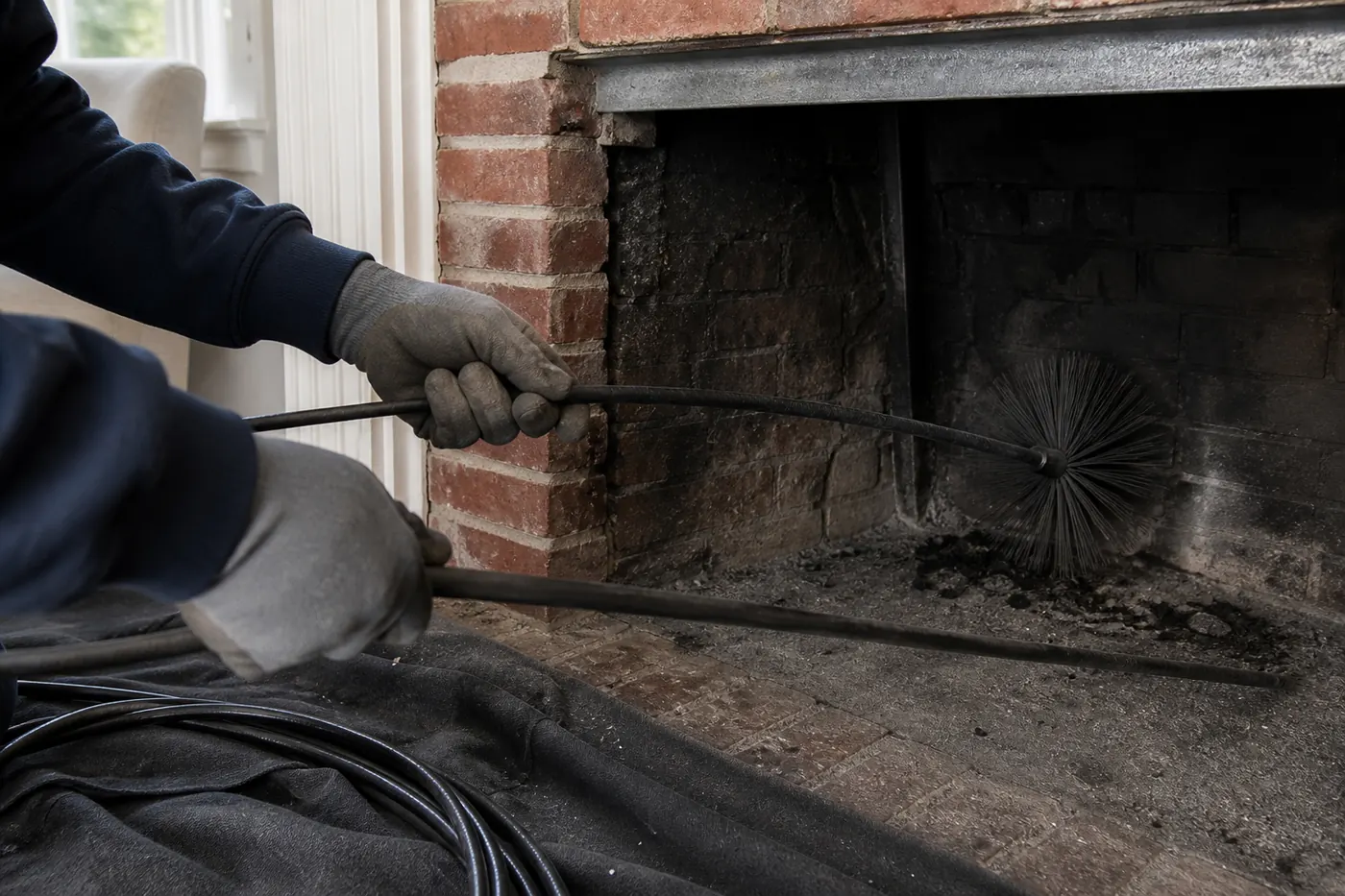
Make the house safe, take photos before anything is moved, and call your insurer or agent to ask how to proceed. Whether a claim is covered depends on your policy and on what caused the damage, and only the insurer decides that. A chimney contractor can document what is physically wrong and write a clear estimate, which is a $49 inspection credited toward approved work.
Step one: safety before paperwork
If there is a fire or you smell smoke you cannot explain, get everyone out and call 911. If you smell gas, leave and call the gas utility or 911. If a carbon monoxide alarm sounds, leave and call 911. Paperwork can wait for all of these.
For damage that is visible but not an emergency, such as a leaning stack after a nor'easter or bricks on the lawn, keep people and pets away from the area under the chimney. Do not light fires in a fireplace you suspect is damaged. Do not go on the roof to look. You can see most of what matters from the ground, and a technician has the equipment to see the rest.
Once everyone is safe, the next job is to keep the damage from growing. That is an ordinary part of owning a home, and it is also what insurers commonly ask homeowners to do. Ask your own insurer what they expect so you do not guess.
Photograph first, repair second
Documentation is the most useful thing you control. Take pictures and video before a contractor removes loose brick or a tarp goes up. Include wide shots that show where the chimney sits on the house, and close shots of each damaged spot.
- The chimney from at least two sides, from the ground.
- Fallen brick, mortar, or cap pieces where they landed.
- Ceiling or wall stains inside, with something in frame for scale.
- The firebox and damper, if smoke or water came down.
- Roof shingles or flashing near the chimney.
Write down the date, the weather, and when you first noticed the problem. If wind, ice, or heavy rain came through, note it. A short timeline in your own words is easy to hand to an adjuster and hard to reconstruct later.
Keep every receipt for temporary protection too, such as tarps or boards, in a single folder.
Who decides what is covered
The insurer or your agent decides whether any given damage is covered. Policies differ in what they include, what they exclude, what the deductible is, and how they treat the cause of a loss. A chimney contractor cannot promise a claim will be approved and should not tell you it will be. Be cautious of anyone who does.
What a chimney company can honestly provide is physical evidence:
- Where the damage is and what it looks like.
- Whether it appears to be a single sudden break or a long wear pattern. This is an observation, not a coverage ruling.
- Photos that match the written description.
- An itemized estimate for the repair.
Call your agent early and ask plain questions. How do you want me to report this? Do you send your own adjuster? Do you want to see the estimate before work starts? If you are unsure about anything in your policy, an attorney or a public adjuster can explain how your particular policy reads. The Massachusetts Division of Insurance, through mass.gov, publishes consumer information if you want to read more before you call.
Emergency stabilization versus permanent repair
Insurers and contractors often talk about two different jobs, and mixing them up causes confusion.
Stabilization
This is the short-term work that keeps the house dry and safe: a tarp over an open chimney top, a temporary cap, or taking down a few loose bricks that could fall. It is not a finished repair. Take photos before and after it is done.
Permanent repair
This is the actual fix, such as rebuilding a damaged section, replacing a crown, or repairing flashing. It should be quoted in writing so that you and your insurer see the same scope. Ranges in Boston, for reference, include crown repair at $300 to $900, flashing repair at $200 to $400 for a small fix, and a partial chimney rebuild at $2,000 to $4,500. Your actual price depends on the inspection findings.
If your insurer wants to see the damage before permanent work begins, wait for their word on timing, unless the situation is unsafe. If you are not sure, ask your agent which to do first.
What a useful chimney estimate looks like for a claim
Insurers and adjusters read estimates for a living. A vague one slows everything down. Ask the chimney company for a written scope that includes these things:
- A plain description of each damaged component and its location, such as "north face, top six courses."
- Photos of the condition tied to each line item.
- The repair method and materials, so someone else can understand it.
- A separate line for any emergency work already done.
- A note of anything that could not be seen safely and may change the price.
That level of detail also helps you. It stops a line like "repair chimney" from growing into a surprise later. For general repair pricing, our chimney repair cost page gives the ranges, and the chimney repair service page explains how the work is done.
Damage that looks like storm damage but is not always
Not every cracked chimney came from last night's weather. In Greater Boston, freeze-thaw cycles slowly wear mortar and brick, salt air corrodes metal near the coast, and ice dams push water into joints at the roofline. These all look dramatic after a storm because that is when the water finally shows up inside.
A technician can often tell from the pattern of cracks, staining, and mortar loss whether the damage looks recent or long in the making. That is useful for a repair plan. Whether it matters to your policy is for your insurer to say, so do not try to argue the cause with the adjuster yourself on the contractor's behalf. Describe what you saw and when, and let the facts go in the file.
For a closer look at one common culprit, see crumbling chimney mortar.
Your short checklist
- Make everyone safe first. Fire, gas, or a carbon monoxide alarm means leave and call 911.
- Keep people away from the chimney. Stay off the roof.
- Photograph and video the damage before it is moved.
- Call your insurer or agent and ask how to report it.
- Keep receipts for any temporary protection.
- Get a written, itemized estimate with photos.
- Do not sign anything promising a claim will be approved.
A chimney inspection is the quickest way to get the damage described in writing, with photos of what the technician finds, and the technician will tell you the price in writing before any work starts. When you are ready, book the $49 inspection at our contact page or call (617) 404-9587.
Questions homeowners ask
Will my homeowners policy pay for a chimney repair?
That depends on your policy and what caused the damage. Your insurer or agent is the one who decides, so call them and ask. A chimney company cannot confirm coverage for you.
Should I wait for the adjuster before I tarp the chimney?
If water is entering the house, protecting it is usually the sensible move. Take photos first and keep your receipts. Ask your insurer what they want, since they know how your claim will be handled.
Can the chimney company file the claim for me?
The claim is between you and your insurer. A contractor can supply photos and a written estimate to support what you report, but you or your agent make the filing.
What if the damage turns out to be old wear and not storm damage?
You still need the repair. Your insurer will decide how the cause affects coverage. The chimney inspection tells you what is physically wrong and what it will cost to fix.
How long can I wait before repairing a damaged chimney?
Do not use a fireplace you think is damaged. Water entering a cracked stack tends to make masonry worse with each freeze. Get the inspection scheduled promptly and keep the house protected in the meantime.