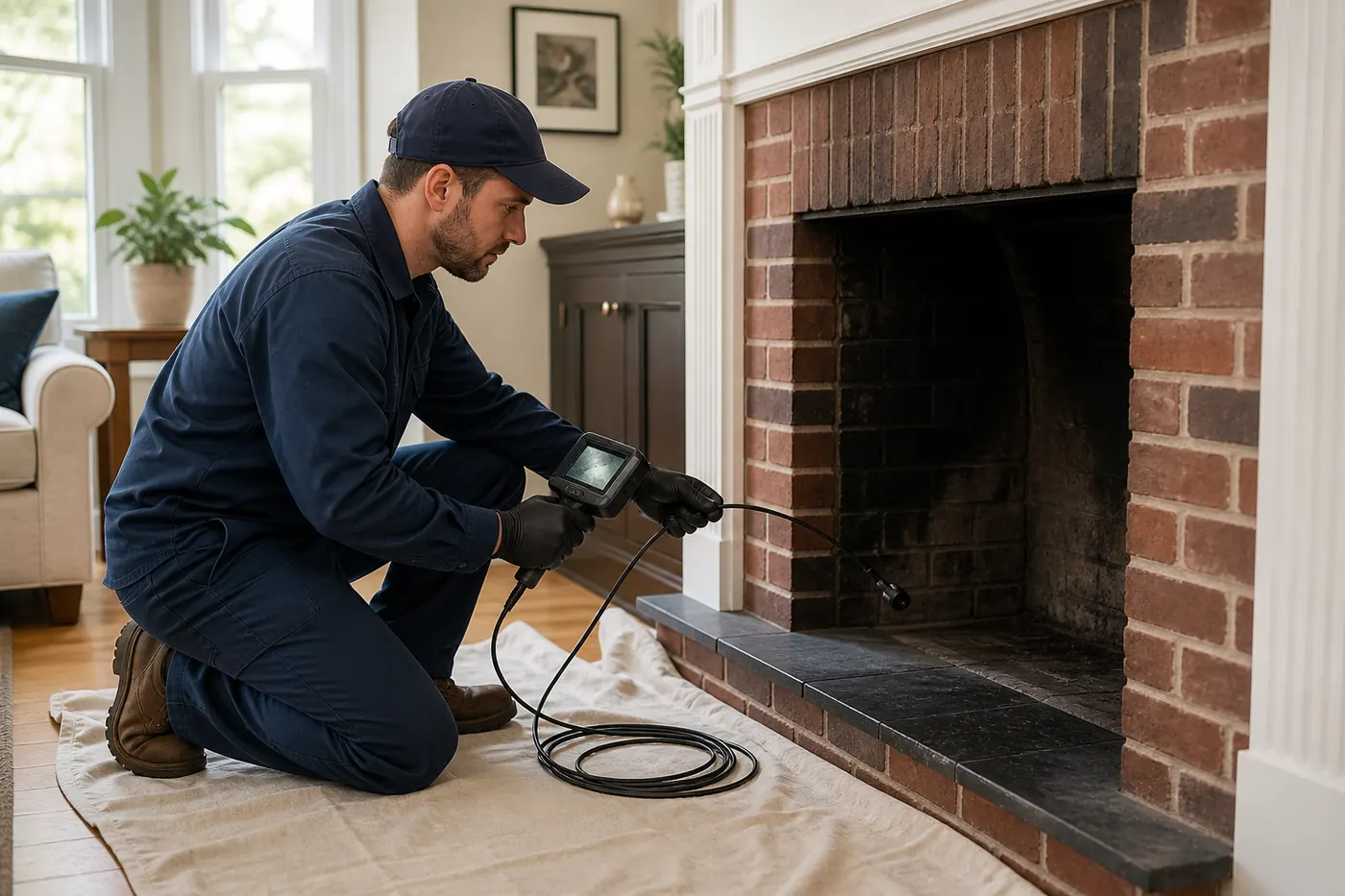
Chimney inspections are grouped into three levels, and each one looks at more of the system than the one before. Level 1 is a routine look at what can be reached. Level 2 adds a camera scan of the flue. Level 3 is a deeper investigation that can mean opening up parts of the chimney. A general chimney inspection in Boston is $49, credited toward approved repair work.
Level 1: the routine check
Level 1 is for a chimney you use the same way, year after year, with no changes and no events. The inspector looks at the parts that can be reached without tools or taking anything apart: the firebox, the damper you can see, the flue as far as light reaches, the smoke chamber opening, and the visible outside of the chimney.
The point is to confirm that the chimney is sound and free of obvious blockage or buildup. Most annual visits are Level 1 in nature, and national fire-safety guidance (NFPA 211) recommends an inspection of this kind every year for chimneys, fireplaces and vents in regular use.
In practice, a Level 1 visit usually covers:
- The firebox walls and floor, checking for cracked or missing firebrick and open joints.
- The damper, to see that it opens, closes and seals.
- Soot and creosote levels, to decide whether a cleaning is due.
- The outside of the chimney, including the crown, cap and mortar joints, from where they can be seen safely.
- Signs of water entry, such as stains, rust or efflorescence.
What it cannot do is see around corners or inside areas that need to be opened. A Level 1 look at a flue with an offset, for example, only shows what the light can reach.
Level 2: camera scan and a closer look
Level 2 includes everything in Level 1 and adds a video scan of the flue interior with a camera on a rod or cable. It also covers accessible spaces such as an attic, crawl space or basement where the chimney passes through.
This is the level used when something about the situation has changed or when a decision hangs on the result. Common triggers:
- Selling or buying a house with a chimney.
- Adding or swapping an appliance, such as a wood insert or stove.
- Changing the fuel type, for example going from oil to gas or wood.
- After a chimney fire, a lightning strike or a major storm.
A sale-related inspection is priced at $99 for a buyer or seller. Anything else at this level is quoted in writing after the $49 inspection, because the scope depends on what the chimney is and how it is reached.
Level 3: when something is suspected but cannot be seen
Level 3 is the rarest. It is used when a serious hazard is suspected and the cause cannot be found any other way. It includes everything in Levels 1 and 2 and may require removing a part of the chimney or the building to reach a hidden area, such as a section of wall, a hearth, or a stretch of masonry.
You will not need this for a routine tune-up. It makes sense after a serious event with signs of hidden damage, or when a camera shows a defect and the inspector needs to see what is behind it. Because opening finished surfaces is invasive, an inspector should explain what will be opened, why, and what it will cost before starting. Cost is quoted in writing, not guessed.
Which level fits your situation?
| Your situation | Level usually called for |
|---|---|
| Annual check on an unchanged fireplace you use | Level 1 |
| Buying a home or selling one | Level 2 |
| Adding an insert, stove or changing fuel | Level 2 |
| After a chimney fire or severe storm | Level 2, sometimes Level 3 |
| Hidden damage suspected but not reachable | Level 3 |
If you are unsure, say what happened and why you want the inspection when you book. The reason for the visit tells the technician where to look hardest. Our post on chimney sweep vs inspection explains how this differs from a cleaning.
What a camera shows, and what it cannot
A flue camera is the clearest way to see inside a liner. It can show cracked or missing tile joints, gaps, tar glaze, a bird's nest, a collapsed section or a liner that does not run the full height. It records images you can look at yourself.
It has limits too. A heavily sooted flue can hide defects until it is cleaned. A flue with a sharp offset may block the camera from passing through. And cameras do not see the outside of the liner or the masonry behind it. A good report says what was and was not visible, in plain words, instead of implying a perfect result.
How to get ready for the visit
A little preparation makes any level of inspection go faster and gives you a more useful answer.
- Let the fireplace sit unused for a day so it is cool and the technician can work inside it.
- Clear furniture and rugs from the hearth so there is room to lay down protection.
- Write down anything you have noticed: smells after rain, smoke in the room, a stiff damper, rust stains, drips, or noises in the flue.
- Gather any older reports, receipts or photos from past work, plus the age and type of any appliance connected to the flue.
- Tell the booking line why you want the inspection, whether that is a sale, a new appliance or a storm.
You get a three-hour arrival window and a call ahead, so plan to have an adult at home to point out what you have seen.
What your written report should contain
- The reason for the inspection and the level performed.
- Photos or video clips with the location labeled, such as "smoke chamber, left wall" and not just "inside".
- A list of problems found, with what each could lead to if left alone.
- A list of areas that could not be seen and why.
- Recommendations for each problem, with a written price for the repair.
Keep the full report and the pictures. They help if you later sell the house, make an insurance claim or compare another company's findings. If a company tells you something is wrong but cannot show it, ask for the photo.
From report to repair, and the next step
Not every defect needs work right away. A technician should sort findings into things that are unsafe now, things that will get worse if ignored, and things to watch. Our chimney inspection page and chimney inspection cost page show how the visit is set up and what is included.
When an inspection does turn up work, the $49 is credited toward approved chimney repair. Ask for a written price for each fix, and take your time. If you already have a report from another reputable local chimney company, we will give a second opinion free with that written report.
To schedule, go to /contact/ or call (617) 404-9587 and book the $49 inspection.
Questions homeowners ask
Does a Level 1 inspection include cleaning the chimney?
No. An inspection is about what is wrong or at risk. A sweep removes soot and creosote. The two are often done together, and a sweep with inspection in Boston is $299, but you should confirm which one a quote covers.
Can I ask for Level 3 right away?
Usually it is not the starting point. Level 3 follows from findings in a lower level that cannot be explained without opening something up. Start with the level that matches your situation.
Why would a buyer need a different inspection than a regular owner?
A buyer has no history with the chimney and a sale is a decision point, so a closer look with a camera is standard. The buyer or seller inspection is $99 and comes with a written report and photos.
Do I need a new inspection when I install a gas insert?
Yes, a change in the fuel or appliance connected to a chimney is a reason for a closer inspection first. The flue has to suit the new appliance, and a camera scan checks the liner before you spend money on the unit.
How long should the report take to reach me?
It depends on the visit, so ask when you book. What matters more is that it arrives in writing with labeled photos, so you are not relying on a verbal summary.