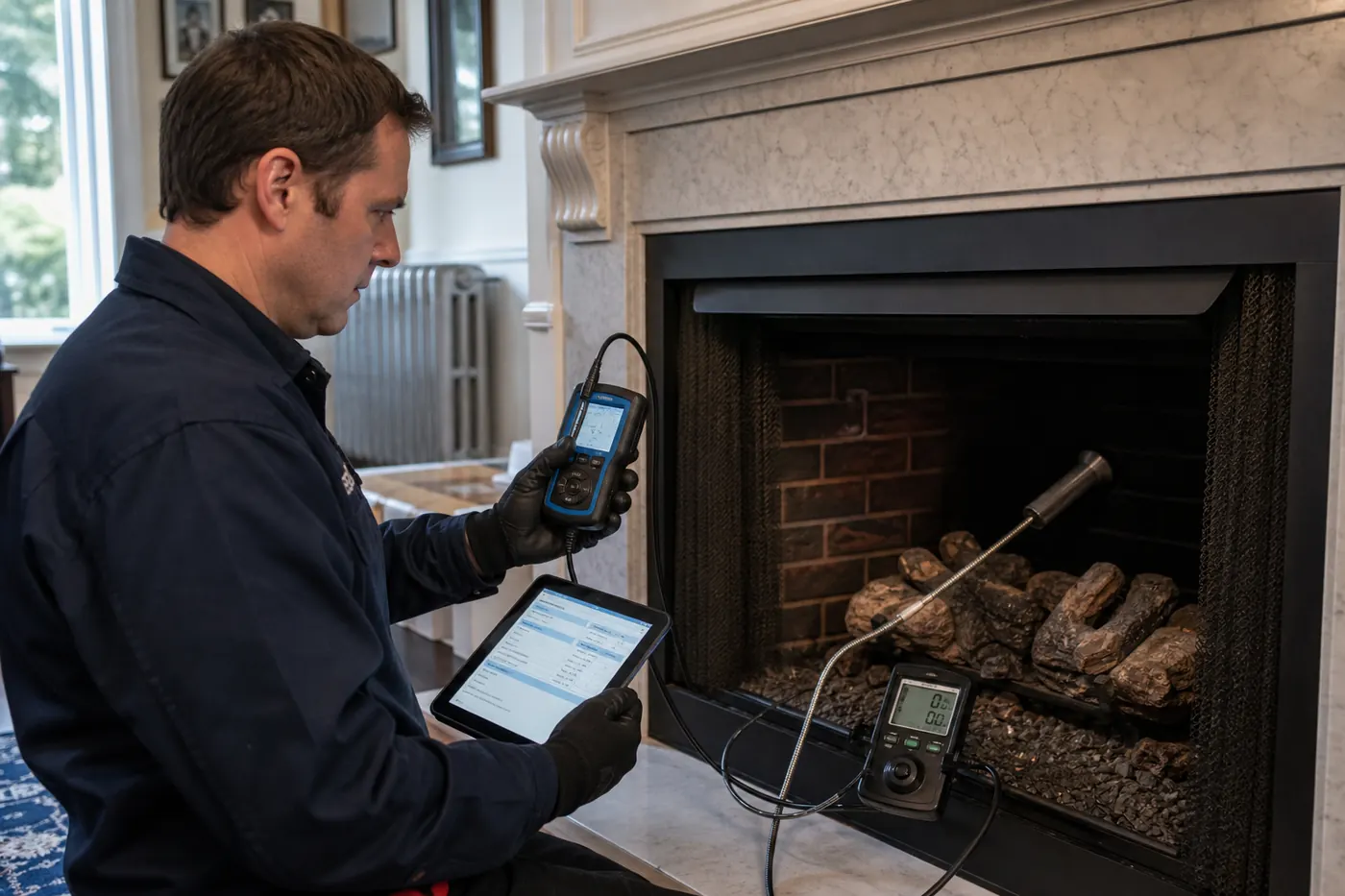
A general gas fireplace inspection in Boston is $49, and it includes findings and recommendations. If the unit also needs cleaning, a cleaning with inspection is $299 fixed. The $49 is credited toward approved repair work, and a second opinion is free when you bring a written report from a reputable local chimney company.
What each visit costs
Gas units come in many designs, but the visit prices are simple. You pay for the visit that matches your goal, and repairs are quoted separately in writing.
| Service | Boston price |
|---|---|
| General gas fireplace inspection | $49, credited toward approved repair work |
| Cleaning with inspection | $299 fixed |
| Gas fireplace repair | $299 to $900 |
| Full gas kit | $900 to $1,500 |
| Second opinion | Free with a written report from a reputable local chimney company |
If you are comparing the inspection with a cleaning, the main difference is that the $299 visit includes taking the unit apart enough to clean the burner area and glass. The $49 visit tells you what is wrong and what it would cost to fix. Read more about gas fireplace cleaning costs if you want to see the cleaning scope.
What moves the repair price within its range is mostly the part itself. A pilot assembly or igniter sits at the low end. A burner, a control valve or a replacement glass front sits higher, and parts for older models can take longer to find. The technician names the part and the labor in the written quote, so you can see where the number comes from.
What the technician looks at
A gas fireplace has fewer moving parts than a wood one, but every part has to work together. During the inspection the technician identifies the appliance and then goes through the visible and accessible components.
- Appliance label. Make, model and fuel type tell the technician what to check and which parts match.
- Burner and logs. Dust, warped logs or misplaced pieces can make flames burn yellow and sooty.
- Ignition. The pilot or electronic igniter should light the burner promptly and evenly.
- Controls. Switches, remote and wall controls, and any thermostat.
- Glass and enclosure. Cracks, haze and seals around the front panel.
- Vent connection. The visible pipe or collar where exhaust leaves the unit.
You get photos of what is found. Anything hidden behind panels or inside a wall is outside what a visual visit can promise, and the report says so.
The gas supply line and the shutoff valve are part of the picture, but work on the gas line itself is a job for the gas utility or a licensed gas fitter. If the technician sees something that falls outside chimney and fireplace work, the report points you to the right trade instead of guessing.
Why gas units still need a checkup
Gas burns cleaner than wood, so many owners assume nothing builds up. In fact, a gas unit can sit unused for months, and that is when it collects trouble.
Dust, lint and pet hair
Fine debris settles on the burner and in the pilot area. When it burns off in the fall, it can cause odor and uneven flames.
Insects and nests
Spiders and small insects can block pilot openings. Birds and animals can get into a vent that has no proper cover.
Moisture
Condensation can rust metal parts and cloud the glass. Water entering through the vent termination or the chimney is a separate issue, and an inspection helps tell the two apart.
Worn parts
Igniters, thermocouples and gaskets wear out over time. Catching a weak part early costs less than waiting for it to fail on the first cold night.
Venting type changes what is checked
The place where exhaust goes matters as much as the burner. Gas fireplaces in Greater Boston homes are typically vented in one of a few ways, and the inspection follows the setup you have.
- Direct vent. A sealed unit with a pipe through a wall or roof. The technician checks the pipe, the termination outside and the glass seal.
- Existing masonry chimney with a gas insert or log set. Here the old flue needs to be checked for liner condition, blockage and the damper position. See gas versus wood fireplaces if you are weighing a change.
- Other vent arrangements. Older or unusual setups are identified by the technician on the visit.
If you do not know what you have, say so when booking. Giving the make and model, if it is on the label, helps the technician arrive prepared. Whether a particular type is allowed in your home depends on local rules and the unit's listing, so ask your building department if you have questions.
Signs to book sooner
Some symptoms mean you should not wait for the next maintenance season. Book soon if you notice:
- Yellow, floppy flames where you used to see blue and steady ones.
- Black marks or soot on the glass, logs or wall above the unit.
- The pilot goes out or the unit takes several tries to light.
- A delayed puff or whoosh when the burner ignites.
- A smell in the room while the fireplace runs, or a damp or rusty look inside.
- Water or stains around the vent outside or near the fireplace.
Safety comes first. If you smell gas, leave the house and call the gas utility or 911 from outside. If a carbon monoxide alarm sounds, leave and call 911. Do not restart a unit that triggered either one until it has been checked.
What happens after the inspection
The report is written in plain language. It lists what was seen, what the technician recommends and what it costs. There are three usual outcomes:
- No action needed. You keep the report and photos, and the $49 is spent on peace of mind.
- Cleaning. The technician recommends it and you book the $299 cleaning with inspection.
- Repair. Typical gas fireplace repair is $299 to $900, and replacing the full gas kit, such as the burner and log set together, runs $900 to $1,500.
The written price comes before any work, and the $49 inspection is credited toward approved repair work. Our fireplace repair cost guide and the fireplace repair service page give you the detail.
If the price is higher than you expected, take advantage of the free second opinion by bringing a written report from another reputable local company.
When to schedule
The best time is before you need the heat. Late summer and early fall give you time to order a part and fit a repair before the first cold week. If you are buying or selling a home with a gas fireplace, the buyer or seller inspection is $99.
Technicians arrive in a three-hour window and call ahead. Keep the area around the fireplace clear and note the make and model if you can. It also helps to write down what you have noticed, such as when the flame changes, how long ignition takes and whether the glass clouds after an hour or a day. Those small details help the technician narrow the cause faster.
To book a $49 gas fireplace inspection, or the $299 cleaning with inspection, go to /contact/ or call (617) 404-9587.
Questions homeowners ask
Does the $49 inspection cover cleaning the gas logs?
No. The $49 visit is an inspection with findings and recommendations. Cleaning the burner area and glass is part of the $299 cleaning with inspection.
How often should a gas fireplace be inspected?
A yearly check is a sound habit, and NFPA 211 recommends annual inspection of venting systems. Units used heavily or moved from storage may need a look sooner.
My gas fireplace works fine. Why pay for an inspection?
A unit can light and still have a weak igniter, a partly blocked vent or a worn seal. At $49, credited toward approved repair work, it is a cheap way to find those problems early.
Why does my glass turn white or cloudy?
A film can come from the burner, the logs or the glass sealant heating up, and moisture can add to it. Cleaning removes most of it. If it returns quickly, the technician should look at the flame pattern and venting.
Do I need an inspection before converting a wood fireplace to gas?
Yes. The existing flue and firebox have to suit the gas appliance. The technician checks the flue, the firebox and the way the new appliance would vent before any conversion is priced.