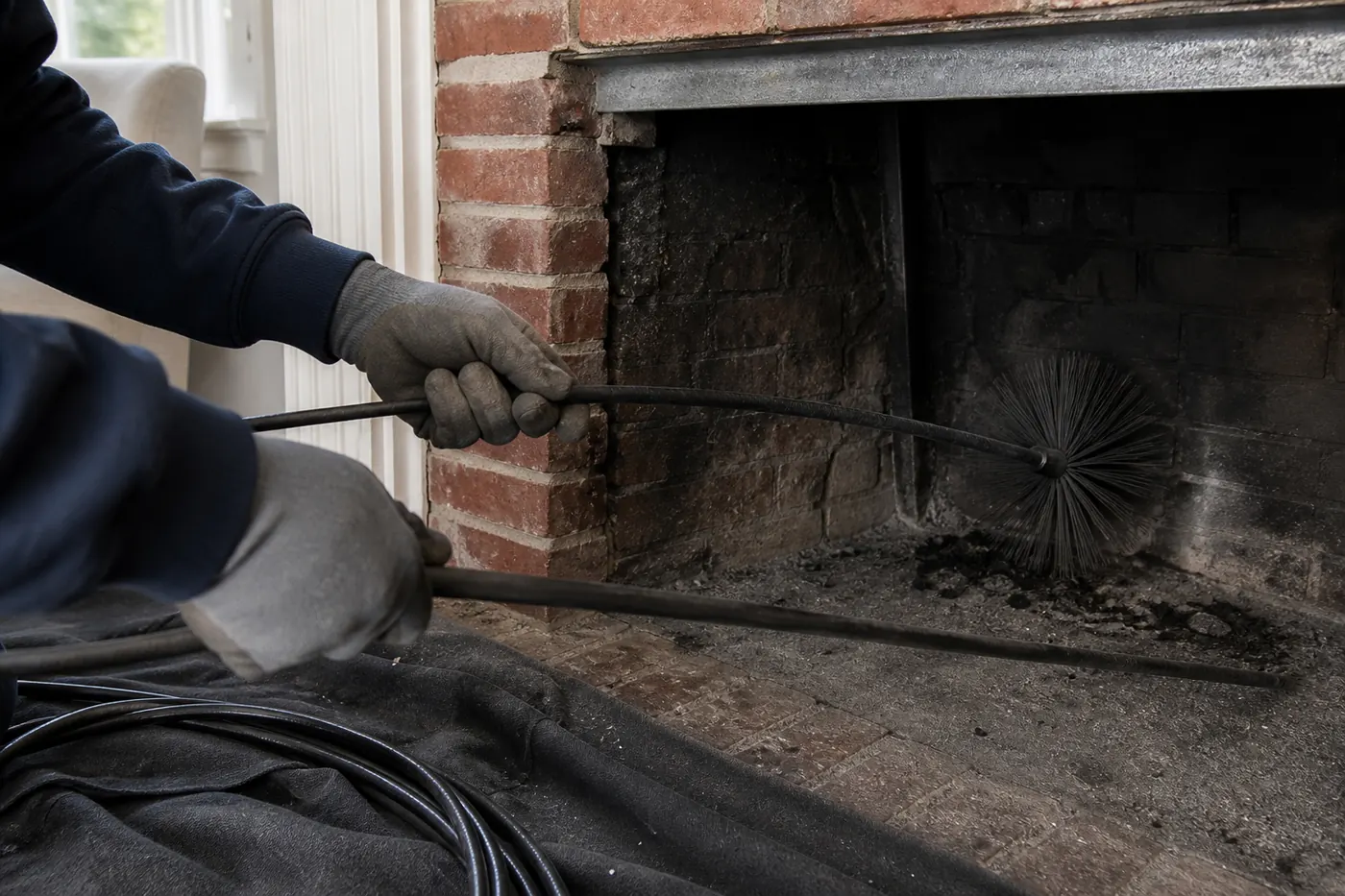
Start by finding out how many flues the chimney holds and what each one serves. A triple-decker usually has one tall brick stack that carries several units' heating or fireplace flues, so a single problem can affect everyone in the house. A $49 inspection, credited toward approved repair work, maps what is there. A standard single-flue cleaning with inspection is $299.
One stack, many jobs
Greater Boston has a large stock of triple-deckers, three-story wood-frame homes with a unit on each floor. Many were built with brick chimneys that rise through the house, and the stack often serves more than one apartment. Over the years heating systems changed, fireplaces were closed off, and appliances were swapped. The chimney you see on the roof may not match the plans anyone remembers.
That history is why care here is different from a single-family house. You are not looking after one flue. You are looking after a group of them that share walls, a roof penetration and a crown. Weather, age and neglect hit the whole stack together, and a failing top affects every unit below it. That shared exposure is also an advantage. One well-planned visit can cover every flue, and one set of exterior repairs protects all of them at once.
The best first step is simple and free: a list of what each unit has. Ask the tenants or check each apartment for a fireplace, a stove connection, a boiler or furnace vent or a capped opening in the wall.
Map every flue, connected or abandoned
Before any repair, build a map. The stack should be understood flue by flue, including the ones nobody uses. Make a simple table for each floor with these columns:
- Which unit and room the opening is in.
- What is connected: fireplace, stove, furnace, boiler, water heater or nothing.
- Whether the opening is sealed, capped or open.
- The last known date it was cleaned or checked.
- Photos of the opening and, from the outside, the matching flue at the top.
Abandoned flues deserve attention. An open, unused flue is a pathway for rain, birds and animals, and a blocked or sealed flue can trap moisture. Equally, a flue connected to a heating appliance needs to be clear and sound. A technician with a camera can trace which opening leads to which flue at the top. Our chimney inspection page explains the visit.
What tends to fail on tall, narrow stacks
Triple-decker chimneys rise high above the roofline, so they take the full force of Boston wind, rain and freeze-thaw cycles. The same few problems show up again and again.
Joints near the top
The top several feet of brick are the most exposed. Mortar there erodes first and lets water into the wall.
The crown and caps
A single wide crown often covers several flues. Cracks let water in, and an uncapped flue lets in birds and animals. A standard cap runs $300 to $700 and a crown repair $300 to $900.
Flashing
Where the stack meets the roof, lifted flashing sends water into the top-floor ceiling. Repair is typically $200 to $400.
Leaning or bulging
A tall stack that leans or bows needs prompt attention. A partial rebuild runs $2,000 to $4,500, and the inspection determines whether that is warranted.
Interior clues
On the upper floors, watch the plaster or drywall beside the chimney breast. Water that enters at the top tends to appear first on the third floor, where tenants may not report it for weeks.
Shared work and unit-level service
It helps to separate two kinds of work. Common work is the exterior of the stack: brick, mortar, crown, flashing and cap. It affects the whole building and usually falls to the owner. Unit-level work is anything tied to one apartment's appliance, such as a fireplace in one unit or the vent for one boiler.
Who is responsible for what depends on ownership, the lease, any condo or co-op documents and state and local rules. We cannot give legal advice, so check with an attorney, your landlord-tenant resources or your local housing office if you are unsure. Our post on landlord chimney responsibilities explains the kinds of duties involved without telling you what your lease says.
For multi-owner buildings, agree on how costs will be split before the work is ordered, and put the agreement in writing. A written scope that lists work by flue and by location makes that conversation much simpler.
Working around tenants
Chimney work in an occupied building takes coordination. Tenants need to know when technicians are coming and what to expect.
- Give notice early. Tell each unit when work is planned and whether anyone needs to be home. Check your lease and local rules about how much notice is required, and confirm with your local housing office or an attorney if unsure.
- Plan access. A technician may need to see inside a unit's fireplace, closet or utility space.
- Protect floors and belongings. Ask the contractor to use drop cloths and to seal openings.
- Communicate about noise and dust. A short message avoids complaints.
- Ask tenants to report problems. Smoke smell, stains and fallen debris are signs to pass on.
We provide a three-hour arrival window and call ahead, which makes it easier to tell tenants when to expect us.
Keep a record by location
A triple-decker chimney is easy to forget between visits, because nobody owns it day to day. A simple log fixes that. Keep a single folder, paper or digital, with:
- The flue map you built earlier.
- The date and photos from each inspection or cleaning, listed by flue.
- Written repair scopes and prices, with before and after photos.
- Notes on anything to monitor, such as a hairline crown crack.
When you sell, refinance or insure the building, those records answer questions quickly. A buyer or seller inspection is $99. Ask your insurance agent whether they want proof of inspection or maintenance, and keep copies of what you send.
Compare each year's photos to the last. Changes in the same spot, such as a joint that is wider than it was, tell you where to act first. See chimney inspection costs for pricing detail.
Costs and a plan for this fall
Here is a simple order of work that spreads the cost and keeps each unit safe:
- Book the $49 general inspection of the whole stack. The fee is credited toward approved repair work, and you receive photos and written recommendations.
- Clean the flues that serve active appliances. A standard single-flue cleaning with inspection is $299, and additional or unusual flues are quoted in writing after the visit.
- Fix exterior problems first: crown, cap, flashing and mortar, since they let water into every flue.
- Cap or seal abandoned flues so animals and rain stay out.
- Schedule work on unit appliances after the exterior is sound.
If anyone smells gas or a carbon monoxide alarm sounds, everyone should leave and call 911, and for gas, the gas utility. For a chimney fire, leave and call 911. Do not go on the roof to check.
To have your stack mapped and get a written price, book the $49 inspection at /contact/ or call (617) 404-9587. For more on repair options, see chimney repair.
Questions homeowners ask
Does every apartment in a triple-decker have its own flue?
Not always. Some stacks hold several flues side by side, and some serve more than one unit over time. A camera inspection traces each opening to its flue so you know what you have.
Who pays when the chimney needs repair?
It depends on ownership, the lease and any building agreements. Common exterior work typically falls to the owner, but check with an attorney or your local housing office for your situation.
Do I need to clean flues that no one uses?
Unused flues do not need brushing, but they should be capped or sealed and checked. An open flue invites rain and animals.
Can I schedule the inspection while tenants are away?
Often the exterior and roof-level checks can be done without entering units. Interior checks need access, so plan with your tenants and follow your lease and local notice rules.
How do I find out if the stack is leaning?
Look from across the street, comparing the stack to the vertical lines of the building. A visible lean, bulge or wide cracks means you should book an inspection promptly.