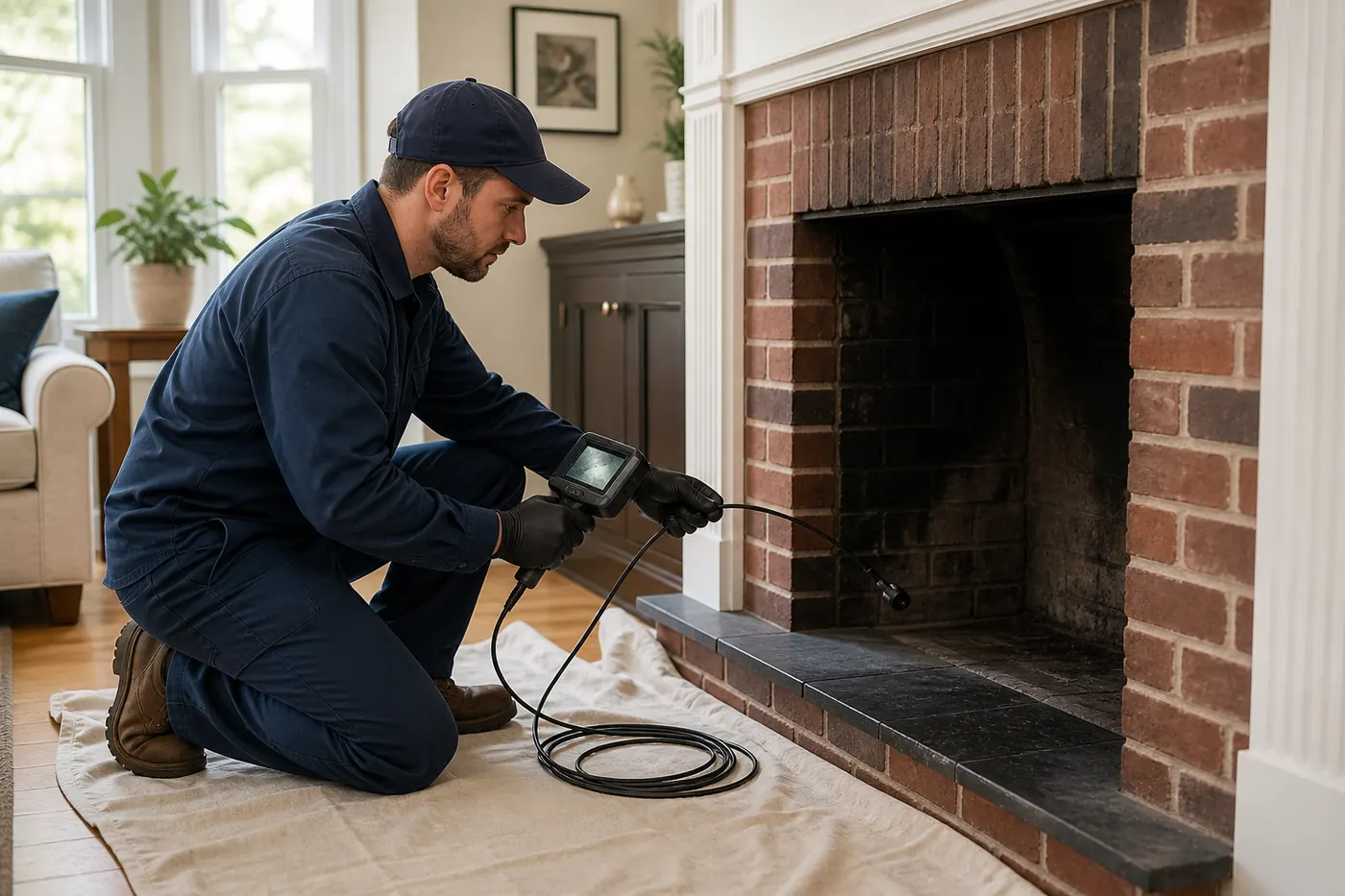
A chimney cap in Boston costs $300 to $700 for a standard cap and $800 to $1,300 for a premium one. The difference comes down to size, how many flues need covering, and whether a stock cap fits at all. Every job begins with a $49 inspection that is credited toward approved work. Our chimney cap installation guide covers what the job involves.
- A standard chimney cap costs $300 to $700 and a premium cap costs $800 to $1,300.
- Price rises with the number of flues, the size of the opening, and how much metal the cap needs.
- A cap that does not fit stock sizes is made to measure, and that sits in the premium tier.
- Missing caps cost far more than the cap itself once rain and animals get into the flue.
Chimney cap prices in Boston at a glance
Caps are priced in two bands. The standard band covers caps that come in common sizes and mount in a straightforward way. The premium band covers larger, heavier or made-to-fit caps.
| Cap tier | Boston price | Typical fit |
|---|---|---|
| Inspection | $49, credited if you approve the work | Find out whether a cap is missing, loose or the wrong size |
| Standard cap | $300 to $700 | One flue, common dimensions, solid mounting surface |
| Premium cap | $800 to $1,300 | Several flues, oversized openings, or a cap made to fit |
These figures cover the cap and putting it on. Anything else you might find on the same visit, such as a damaged crown or loose top brick, is quoted on its own after the inspection, in writing, before work starts.
What the standard tier of $300 to $700 covers
Most homes with a simple chimney end up in this band. It suits a single flue with a regular rectangular or round tile and a crown that is in decent shape.
A standard job normally includes the cap itself, a mesh screen sized to keep out birds and animals, and the fasteners that hold it down. If you are replacing an old cap, the price also covers taking the old one off.
Where in the band you land depends on a few things. A larger flue needs a larger cap and more metal. A tall, awkward or steep-roof chimney adds labor. A plainer cap costs less than one with a heavier lid. You should see the size and style named in the quote, not just the word cap.
If the existing cap is only loose, for example a lid with worn fasteners, replacing the parts can come in near the bottom of this band. A cap that is rusted through is usually replaced whole, because new fasteners on rotted metal do not last.
What the premium tier of $800 to $1,300 covers
Premium covers the jobs where a stock cap either will not fit or will not do the job. It also covers upgraded options for homeowners who want a sturdier cap and a better finish.
- Multi-flue chimneys. A single large cover over several flues is a bigger piece of metal than a single cap, and it needs more mounting points.
- Odd sizes. If the chimney top is wider than stock caps allow, the cap is built from measurements taken on site.
- Heavier-duty materials. A thicker or more corrosion-resistant metal costs more than a thin galvanized one.
- Fit to the specific system. Some chimneys, such as factory-built ones, need a cap that matches the manufacturer parts, which narrows the options.
If you are quoted a premium price, the quote should say which of these reasons applies to your chimney. Ask for it. A premium price with no reason attached is a question worth raising.
What moves a cap quote up or down
The tier gives you the range, and the details of your chimney set the figure inside it. These are the usual factors.
Number of flues
One flue is the baseline. Each additional flue enlarges the covering and the mounting work, which is why a wide rowhouse stack is often priced above a small single-flue chimney.
Material choice
Stainless steel resists rust better than galvanized steel, and the salt air near Boston and wet winters are hard on thin metal. Stainless costs more up front. Ask the quote to name the metal so you know what you are paying for.
Condition of the top of the chimney
A cap needs something solid to hold on to. If the flue tile at the top is cracked or the crown is crumbling, the cap job grows or the other repairs come first. That part is priced separately.
Access
A low roof is quicker to work than a tall, steep one. The quote reflects the working height, and a call ahead plus a 3-hour arrival window keeps the visit predictable.
What a written cap quote should list
A cap quote should be short and specific. If any of the points below is missing, ask for it before you agree.
- Single-flue cap or multi-flue cover, and the number of flues covered.
- The material, named plainly, such as stainless or galvanized steel.
- The screen opening size and style, since the mesh is what stops birds and small animals.
- Whether the cap is stock, or made to measure for your chimney.
- Whether removal of the old cap is included.
- The full price, written down before anything is started.
You also get photos of what the technician finds, so a loose lid or a rusted screen is something you can see rather than take on trust.
Wind is worth asking about too. A cap that is only pressed on and not fastened can lift in a nor-easter, and the replacement costs you a second time. The quote should say how the cap is attached, not only what it is made of.
How to compare two cap quotes
Cap quotes are among the easiest to compare, because the specifics are few. Put them side by side and check three things.
First, the material. A cheap cap in thin metal and a stainless one are not the same product, even if both are called a chimney cap. Second, the flue count. A quote for one flue on a two-flue chimney leaves a flue open to rain. Third, the fit. A cap that sits loose on the tile will rattle and let wind pull it off.
If one quote is far below the other, find out why before you accept it. The gap is often a missing screen, a thin cap, or an old cap left in place. A second opinion is free when it comes with a written report from a reputable local chimney company, so you can bring another report to us or take ours elsewhere.
Which tier your type of chimney usually falls into
Boston has a mix of chimney styles, and each one tends to point to a tier. This is a guide, not a promise. The written quote after inspection is what counts.
- Single brick flue on a detached or two-family house. Usually a standard cap, with the price set by flue size and roof height.
- Rowhouse or brownstone with a wide stack. Often several flues under one crown, which points toward a multi-flue cover and the premium band.
- Triple-decker. Can be either, depending on how many flues rise through the stack and how hard it is to reach.
- Factory-built metal chimney. Needs a cap that matches that system, so fit rules the tier more than size does.
- Framed chase with a metal top. The covering is a chase cover, not a cap, and has its own price.
If you are not sure which of these describes your chimney, say so when you book. A technician can tell on arrival, and the quote will name it.
Why skipping a cap costs more than buying one
A cap is one of the cheapest pieces of protection a chimney has. Without one, rain falls straight down the flue, birds and squirrels can nest inside, and debris builds up where it blocks the exhaust path.
Those problems then cost real money. Animal removal runs $299 to $900. Water that gets into the flue rusts the damper and stains the firebox, and the damper work alone is priced at $199 to $1,200. A chimney sweep, which is $299 fixed, also takes longer when nests and leaves have to come out first, which is worth knowing when you read the chimney sweep cost page.
If the cap is the only thing wrong, a standard cap in the $300 to $700 band is often the whole fix. See the crown repair cost page if the top of the chimney is cracked too. Most chimneys on Boston homes are old enough that both are worth checking at the same visit.
What is not in the price, and how the $49 credit works
The cap price covers the cap. Items that are not part of it get their own written quote after inspection: crown repair, flue tile repair, brick repair at the top of the chimney, and any work on the roof. If your house has a framed chase rather than a masonry stack, the metal pan on top is a different part, priced on the chase cover cost page.
The $49 inspection counts toward the job when you approve repairs. Go ahead with the cap and the $49 comes off the total. Decide against it and you keep a written finding with photos, having paid for the inspection alone.
To get a cap price for your own chimney, call (617) 404-9587 or book on the contact page.
Questions homeowners ask
What is the cheapest way to get a chimney cap in Boston?
A standard cap at $300 to $700 is the lowest tier, and it fits one flue with common dimensions. The price rises if the chimney has several flues, an oversized opening, or needs a cap made to fit.
Why is a multi-flue cover priced higher than a single cap?
It is a bigger piece of metal that has to be fitted across more openings and mounted at more points. Multi-flue and custom-fit covers belong in the $800 to $1,300 premium tier.
Is a stainless steel cap worth the extra cost?
Stainless resists rust better than galvanized steel, which matters in a climate with wet winters and coastal air. It costs more up front, so ask your quote to name the metal and decide whether the trade suits you.
Can I replace just the screen or the lid instead of the whole cap?
Sometimes. If the cap body is sound and only a screen or fastener has failed, parts can be replaced for less than a new cap. If the metal is rusted through, replacing the whole cap is the more reliable choice.
Does the $49 inspection get credited if I buy a cap?
Yes. The $49 is credited toward approved repair work, so if you approve the cap, the inspection comes off the total. You see the written price before anything is done.
How do I know the quote is for the right cap size?
The quote should list the number of flues covered, the material, and the screen style. If it does not, ask for those details. A cap that is too small leaves flue area open to rain and animals.
Related Boston chimney guides
- Chimney Cap vs Chase Cover: Boston Homeowner Guide
- Chimney Cap Installation Cost in Boston (2026)
- Chimney Leaking When It Rains in Boston: Causes and Fixes
Review Chimney Cap Installation Options Book the $49 Inspection