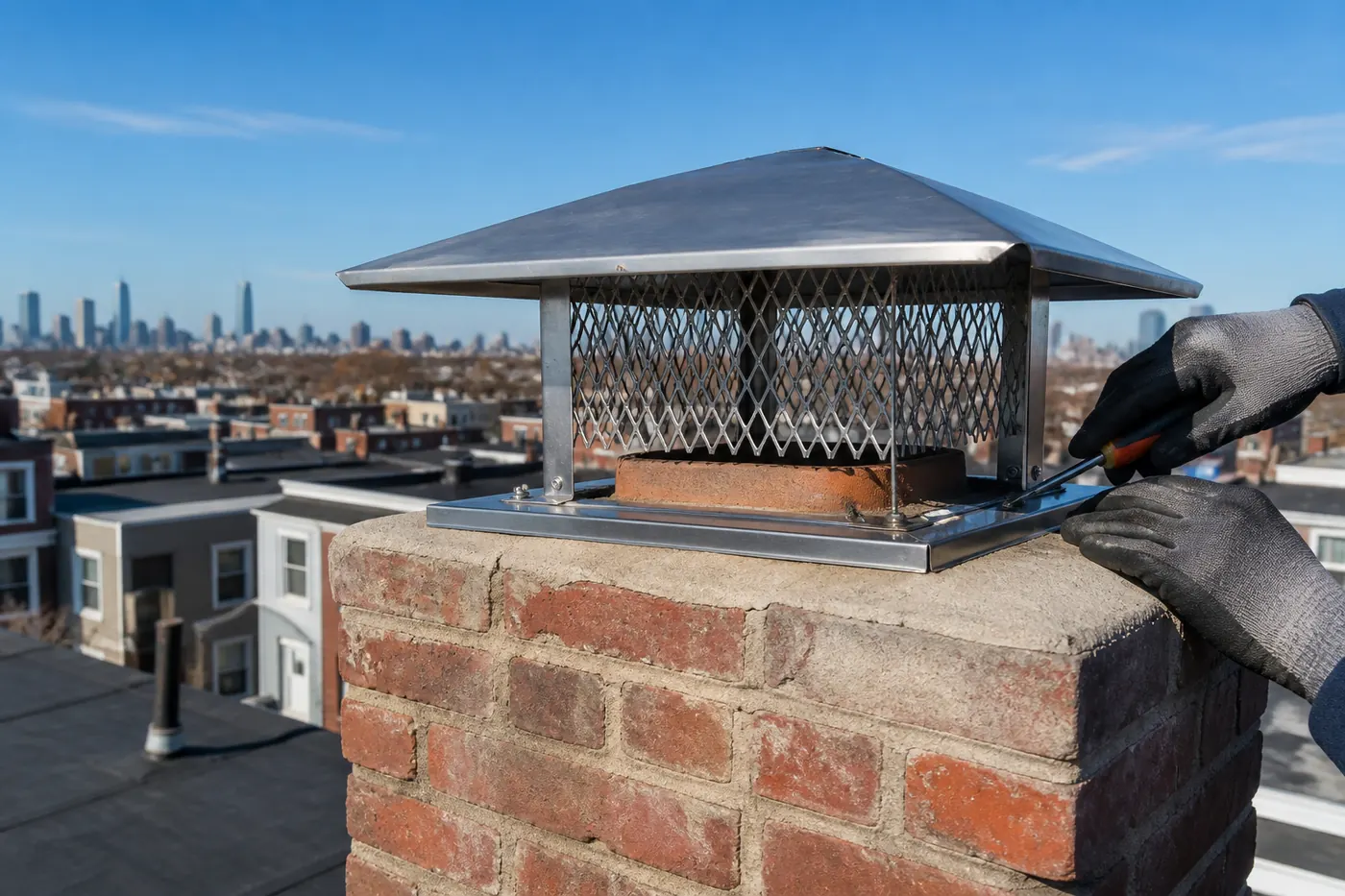
A standard chimney cap in Boston runs $300 to $700, and a premium cap runs $800 to $1,300. A custom chase cover for a prefab or framed chimney is priced separately, at $800 to $1,500. Where your job lands depends on how many flues you have, the size, the metal, and whether the top of the chimney is sound enough to hold the new cap.
Cap prices at a glance
| Option | Typical Boston price | Usually fits |
|---|---|---|
| Standard cap | $300 to $700 | One flue, ordinary size, easy mounting |
| Premium cap | $800 to $1,300 | Heavier-gauge or decorative metal, larger or multi-flue tops |
| Custom chase cover | $800 to $1,500 | Framed or prefab chimney chases that need a full lid |
These are planning ranges. You get a fixed price in writing before any work begins, and the technician photographs what is found on top so you can see why the number is what it is. For the full breakdown, see our chimney cap cost page.
What a cap does and what it does not do
A cap sits over the flue opening. Its job is to keep rain, snow, leaves and animals out, and to knock down flying embers before they land on the roof. A mesh screen around the sides does the animal and spark work, and the lid does the rain work.
It is not a repair for other problems. A cap will not seal a cracked crown, replace failed flashing, or fix a leaning stack. If the top of the chimney is broken, the cap can look fine for a season and then loosen as the masonry beneath it crumbles. That is why installers look at the whole top, not only the opening.
The cap also protects the parts below it. Rain that runs down an open flue wets the damper and the firebox floor, and in winter it freezes inside the flue lining. Birds and squirrels use an uncovered flue as a nesting spot, and a blocked flue can push smoke and carbon monoxide into the house. Covering the opening is one of the cheapest forms of protection a chimney can have.
What moves the price inside the range
- Number of flues. Each flue needs its own cap, or one large cover over a multi-flue crown.
- Size. Flues are not all the same size. Square and rectangular tiles, round liners and oversized openings all call for different caps.
- Metal. Stainless steel and copper cost more than galvanized or aluminum, and they last longer outdoors. Thicker gauge costs more than thin.
- How it mounts. A cap that clamps to a liner, bolts to a crown or fits over the outside of the flue tile uses different hardware and labor.
- Height and access. A tall chimney on a steep roof takes more time and more protection for the roof surface.
- Condition of the top. If the crown or the top bricks need fixing first, that is a separate line on the quote.
Boston wind, salt air and the nor'easter test
Greater Boston gets hard coastal wind, wet snow and freeze-thaw cycles. A cap that fits loosely can rattle, tilt or lift off in a storm, and a cap made of thin metal can rust at the seams after a few salty winters. Houses near the water see more of this, but inland homes get plenty of wind too.
So fit and anchoring matter more than looks. Ask how the cap will be fastened and whether the screws go into sound material. A snug, well-anchored cap in stainless steel usually outlasts a cheaper one that needs replacing in a few seasons.
When the crown needs attention first
The crown is the sloped slab, usually mortar or concrete, across the top of the chimney. It sheds water away from the flue. If it is cracked or missing chunks, water soaks into the bricks beneath and the cap has little solid material to hold on to.
Crown repair runs $300 to $900, and a rebuild runs $900 to $2,500. Doing the crown first, or in the same visit, is usually cheaper than coming back later. You can read more on chimney crown repair, or see our post on signs of a cracked chimney crown.
Cap or chase cover?
The two are often confused. A cap covers a flue opening on a masonry chimney. A chase cover is a larger metal lid that spans the whole top of a framed chase, the box built around a prefab fireplace flue. Many Boston homes with a factory-built fireplace have a chase cover, and it is the one that rusts and lets water into the framing.
If your chimney is a metal pipe inside a wooden or siding-covered box, you probably need a chase cover rather than a cap alone. The comparison is explained in cap vs chase cover, and the cost of the second option is on our chase cover cost page.
Reading a cap quote line by line
Two quotes for "a chimney cap" can describe very different jobs. A useful written price names each of these:
- The opening being covered. Flue size and shape, and how many flues are on the stack.
- The product. Metal type, gauge or thickness, and whether the screen is part of the cap or added on.
- The attachment. Clamped to the liner, fastened to the crown, or sleeved over the tile, and what hardware is used.
- Any prep work. Cleaning the top, removing an old cap, sealing small hairline cracks, or replacing a few loose bricks.
- What is not included. A cracked crown, failed flashing or a damaged liner should be listed as separate items with their own price, not buried in the cap line.
If the quote only says "install cap" with a single number, ask for the details. A clear price lets you compare the same work from company to company, and it protects you from surprise add-ons once a crew is already on the roof.
Why the cap is a small price against the damage it prevents
Water that gets down a flue wets the damper, rusts the firebox parts and soaks the smoke chamber. Animals that get in leave nests that block the draft. A cap costs a fraction of what those problems cost to repair.
Signs your cap is missing or failing
- Rain stains on the damper or a damp smell after storms.
- Leaves, twigs or nesting material in the firebox, or scratching sounds in the flue.
- Rust streaks down the side of the chimney or a visibly crooked or lifted cap.
- Smoke that puffs back into the room on windy days.
Look from the ground with binoculars if you like, but do not climb onto the roof. A technician can see the top and photograph it safely.
For a written quote, ask for the size and metal of the cap, how it will be fastened, and what is included if the crown is in poor shape. The chimney cap installation page shows how a visit works. To book, use /contact/ or call (617) 404-9587 and ask for the $49 inspection, which is credited toward approved repair work.
Questions homeowners ask
Why are two cap quotes so far apart?
Look at the metal, the gauge, the way it is fastened and whether the top of the chimney is being repaired first. A thin galvanized lid and a heavy stainless cap are not the same product. Ask each company to list the size and material in writing.
Do I need a cap if my chimney already has a screen?
A screen alone keeps out animals but not rain. A proper cap has a lid that sheds water and a mesh that blocks animals and embers. If you see only a small wire cone or nothing at all, it is worth having the top checked.
Can a cap stop a chimney from leaking?
Only if rain coming straight down the flue is the cause. Many leaks come from the crown, flashing or open mortar joints. A technician should trace the source before pricing a cap as the fix.
How long does a cap installation take?
A simple replacement is often quick, but the time depends on the roof, the access and what else is found on top. We give a three-hour arrival window and call ahead, then confirm the job length once the top is inspected.
Do I need a separate cap for each flue?
Often yes, if each flue has its own opening. A single large cover over a multi-flue crown is sometimes used instead. Either way, the quote should say how many openings are being covered.