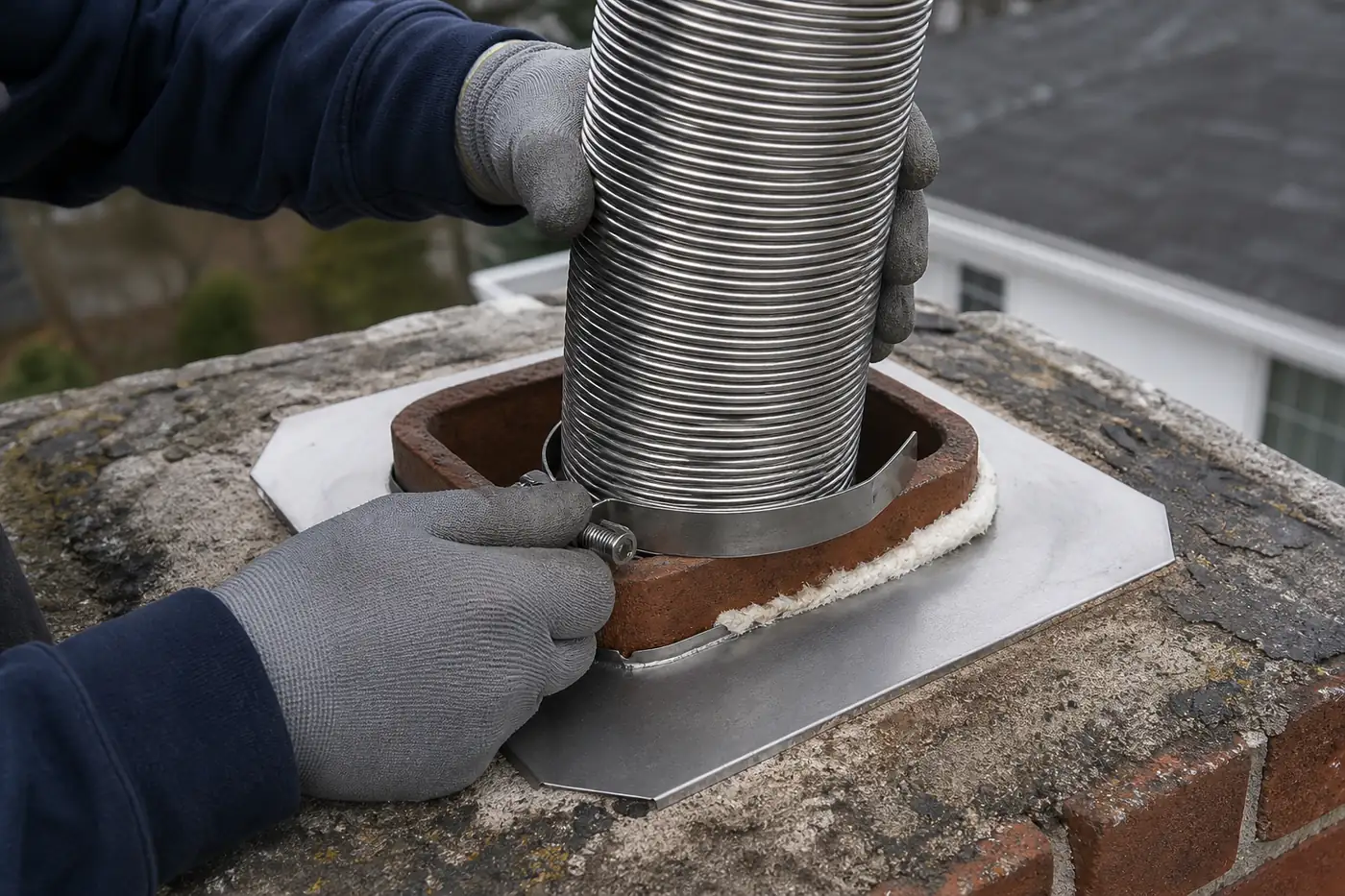
Chimney relining in Boston costs $1,200 to $4,500 for most jobs: a liner repair runs $1,200 to $2,500, a full replacement runs $1,500 to $4,500, and new venting for a changed appliance starts at $2,000. Where you land depends on the flue itself, not on which neighborhood you live in. This page explains each tier, what pushes a quote up, and what to ask for in writing. For the work itself, read the chimney relining service guide.
- A liner repair costs $1,200 to $2,500 and a full replacement costs $1,500 to $4,500.
- Venting for a new heating appliance starts at $2,000 and is quoted in writing after inspection.
- Flue length, flue count, shape and liner material move the price more than anything else.
- The $49 inspection is credited toward approved relining work.
Chimney relining price tiers in Boston
Three tiers cover nearly every liner job. Find the row that fits your situation, then read on to see what moves a quote inside it.
| Tier | Boston price | Usually applies when |
|---|---|---|
| Liner repair | $1,200 to $2,500 | Most of the liner is sound and one stretch is damaged |
| Liner replacement | $1,500 to $4,500 | The damage runs the length of the flue |
| Venting for a changed appliance | from $2,000 | A new furnace, boiler, water heater or insert needs its own venting path |
| Inspection | $49 | Credited toward approved repair work |
The ranges overlap on purpose. A large repair can cost more than a small replacement, and only an inspection shows which side of the line your flue is on. Venting is shown as a starting figure because the final number depends on the appliance and the flue, and it is quoted in writing after the $49 inspection.
What each relining tier pays for
Liner repair, $1,200 to $2,500
This tier fits a flue that can stay in service once a defined section is fixed. A good quote names that section, for example cracked tiles or open joints between tiles, and states what will be done there. You pay for the problem area and not for the whole flue.
Liner replacement, $1,500 to $4,500
This tier fits a flue where the damage is too widespread to patch. The price covers a new liner for the full run. Metal venting that has rusted through, or a clay liner with trouble along its length, tends to land here. The wide gap between $1,500 and $4,500 is mostly flue size and length.
Venting from $2,000
When the appliance changes, the old flue often no longer suits it. This price covers a liner matched to that appliance, plus the top termination and the connection to the appliance. The final figure follows the appliance maker's venting instructions, so have the model and fuel type ready.
Why the tiers overlap
Prices are shown as ranges because the same label can describe very different flues. A short flue with one bad stretch sits near the bottom of a tier. A long flue with a bend and a hard-to-reach top sits near the top. The written quote should tell you which end you are on and why, so you are never left guessing what pushed the number.
What moves a relining quote up or down
Two chimneys that both need a new liner can cost very different amounts. These are the factors a written quote should account for.
- Flue length. A tall stack needs more liner and more labor than a short one. A three-storey stack sits higher in the range than a one-storey rear chimney.
- Flue shape and bends. A straight round flue is simpler than one with offsets, a rectangular opening or a changing width.
- Number of flues. Each flue is priced separately, so a chimney serving a fireplace and a boiler costs more than a single-flue chimney.
- Liner material. Stainless steel, clay tile and cast-in-place systems are priced differently. The quote should name the material and say why it was chosen.
- Insulation. Some liner systems include insulation and some do not. Ask which applies.
- Access. Tight lots, shared walls in triple-deckers and rowhouses, and steep roofs add setup time.
- How much has failed. A few missing joints is a repair. Corrosion or perforation along the length is a replacement.
Ask what the quote assumes about each of these. A price built on a short, straight flue will not hold if the flue turns out to be longer or to have a bend. Good quotes state their assumptions, and they say what happens to the price if something found during the work is different.
Why a new appliance changes what you pay
Many older Boston homes have a chimney built for a heating system that has since been swapped out. A new boiler, furnace or water heater can vent differently from the one it replaced, and the old flue may be too large, too rough or not rated for the new exhaust.
That is why appliance work has its own tier. The liner has to match the appliance, so the quote depends on the unit you are installing and the fuel it burns. Staining or damp patches that appear after an appliance change are a common sign that the flue no longer fits it.
Gas piping and appliance connections belong to the gas utility or a licensed gas fitter, and they are not part of a liner price. Ask your installer who is handling that side so the two jobs are scheduled together.
It is also worth asking whether the appliance maker requires a particular liner size or material. When it does, the written quote should say so, because that requirement can limit which options are on the table and which tier you end up in.
What a written relining quote should list
You should be able to read the quote and know exactly what is going into the chimney. Look for these lines.
- Which flue or flues are being lined, and the length of each.
- The liner material and size, and the appliance it will serve.
- Whether insulation is part of the system.
- The top termination and how the liner connects at the bottom.
- What is being removed or left in place.
- Photos of the damage the technician found.
- One total price, agreed before work starts.
If a line is missing, ask for it before you sign. A vague quote is where surprise charges begin.
How to compare two relining quotes
Compare scope first and price second. Lay the quotes side by side and check that both cover the same number of flues, the same length, the same material and the same finish at the top and bottom. A lower figure that lines only part of the flue is a different job.
If one quote says repair and the other says replace, ask each company to show you the photos behind the decision. The reason should be visible in the images, not just in the paperwork.
A second opinion is free if you bring a written report from a reputable local chimney company. We read it, check it against our own findings and tell you where we agree or differ.
What sits outside a relining price
A liner price covers the liner. Other parts of the chimney are quoted on their own, and it helps to know which ones.
- A cracked crown or a missing cap at the top, covered in the chimney crown repair cost and chimney cap cost guides.
- A rough or damaged smoke chamber, priced in the smoke chamber repair cost guide.
- Buildup that has to be cleaned out first, which is a separate chimney sweep visit.
- Masonry repair, flashing and permits. Check with your local building department about permits.
Anything not on our published list is quoted in writing after the $49 inspection, so you see the number before agreeing to it.
How the $49 inspection credit works on a relining job
The inspection is the step that tells you whether you need a repair, a replacement or new venting. You pay $49 for it, and if you approve relining work afterward, that $49 comes off the job. If you decide not to go ahead, you keep the written findings and the photos.
The technician sets out the problem, the tier it falls into and the price in writing. Nothing starts until you say yes.
Approval is yours alone. You can take the written quote home, show it to a family member, or compare it with another company before deciding. The credit stays attached to approved work, and it does not expire because you took time to think.
When waiting on a damaged liner costs more
A cracked or open liner lets hot gases and moisture reach the masonry around it. Over a few winters of freeze-thaw cycles, a stretch that could have been a repair can turn into a full replacement, and brick damage can be added on top.
If you ever see flames or heavy smoke from the chimney itself, leave the house and call 911. A carbon monoxide alarm that sounds also means leave and call 911. Do not try to fix either one yourself.
Staying on top of a small issue is usually the cheaper path. A quote written now lets you plan the work for a time that suits you, rather than facing a rushed decision in the middle of a cold snap with the heat down.
For a quiet problem, such as staining or a new appliance that does not vent well, book the $49 inspection at our contact page or call (617) 404-9587.
Questions homeowners ask
Why is my relining quote so much higher than my neighbor's?
Flue length, number of flues, liner material and access all change the price. A neighbor with a short single flue and an easy roof will pay less than a tall stack with two flues. Ask for both quotes to list length and material so you can compare like with like.
Is a liner repair always cheaper than a replacement?
Not always. Repairs run $1,200 to $2,500 and replacements run $1,500 to $4,500, so the ranges overlap. A large repair can cost more than a small replacement. The inspection shows how far the damage runs.
Does a new boiler or furnace mean I have to reline?
Often, but not always. A different appliance can need a flue of a different size or rating. That is why venting for a changed appliance starts at $2,000 and is quoted after the inspection, using the maker's instructions for your unit.
Can I get a price over the phone?
You can get the tiers on this page, but a firm price needs a look at the flue. Call (617) 404-9587 to book the $49 inspection, and you will receive the written price before any work begins.
What if I already have a written report from another company?
Bring it. A second opinion is free with a written report from a reputable local chimney company. We compare it with what we find and explain any difference in scope or price.
Is the $49 inspection lost if I do not hire you?
You still keep the written findings and photos. The $49 is credited only toward approved repair work, so if you go ahead with relining it comes off the total.
Related Boston chimney guides
- Wood Stove Rules in Massachusetts: Boston Homeowner Guide
- Chimney Liner Types Compared: Clay, Steel, Cast
- Pellet Stove vs Wood Stove for Boston Homes (2026)
- Wood-to-Gas Fireplace Conversion Cost in Boston, 2026
Review Chimney Liners & Relining Options Book the $49 Inspection