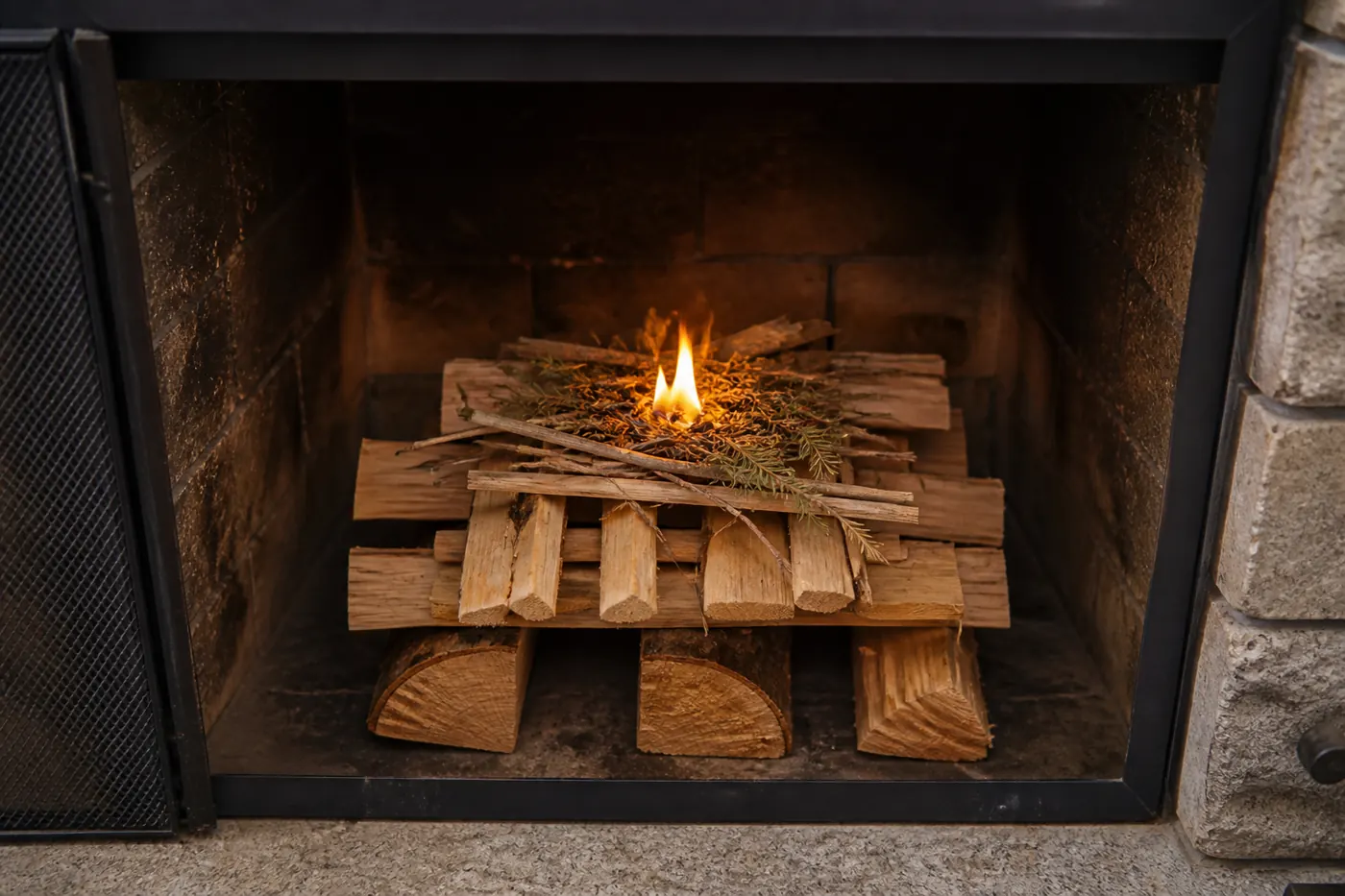
Stack the largest dry logs on the bottom, smaller splits above them, kindling on top, and light the fire at the top. It burns downward, warms the flue gradually and produces less startup smoke than a pile lit from below. It only works in a sound, inspected, wood-burning fireplace, and a $299 cleaning with a Level 1 inspection is the usual first step.
What a top-down fire is
Most people build a fire the way they learned as kids: crumpled paper and kindling at the bottom, logs on top, light from below. A top-down fire reverses the order. The flame begins above the logs and works its way down as each layer ignites the one beneath.
The idea is that the fire starts small and builds heat steadily. You do not have to reach in, add logs and rearrange a struggling fire, and the flame is less likely to be smothered by a heavy pile. Many people find it easier to start and cleaner burning.
It is a technique, not a repair. It does nothing for a flue that is blocked, cracked or poorly drafting, and it does not apply to gas fireplaces.
People sometimes call it the upside-down fire, and the logic is simple physics. Heat rises, so a flame at the top warms the air above it and the flue, while the burning pieces drop gently onto the layer below. The result is a longer, calmer start. In an older Boston house with a tall brick chimney, that calm start can mean the difference between a clean first fire and a smoky living room.
Why smoke is worse in the first minutes
A cold chimney holds a heavy column of cold air. When you light a fire, that air resists moving up, so smoke can drift into the room until the flue warms and a steady draft begins. This is common in tall exterior chimneys on a freezing Boston night, and in houses that are tightly sealed.
A conventional fire often makes the problem worse. A big pile on top of the kindling can burn poorly at first, sending thick smoke up a flue that is not ready for it. Poor early burning also leaves more creosote on the flue walls.
A top-down fire heats the flue in smaller steps, which can help the draft establish itself. It does not guarantee it, so be ready to put the fire out if smoke spills into the room.
Building it step by step
- Check the fireplace. Make sure it is cool, empty of old ash beyond a thin bed, and that the damper is fully open. Look up with a flashlight to confirm nothing is blocking it.
- Warm the flue. Hold a rolled sheet of newspaper, lit, near the damper for a minute so the air starts to rise.
- Lay the base. Put 2 or 3 of the largest dry logs across the grate, side by side with small gaps between.
- Add a second layer. Lay medium splits across the first layer at right angles.
- Add kindling. Place thin dry sticks across the top in a loose grid.
- Add fire starter. Put a natural fire starter or a few twisted sheets of paper on top.
- Light the top. The fire should catch the kindling, then work down.
Leave the fireplace screen or doors as the manufacturer recommends and stay with the fire.
Once the top layer is burning well, do not poke or rearrange it. Let the fire work down on its own. When the first layer has burned to a good bed of coals, you can add one or two dry logs, laid gently on the coals, to keep it going. Keep the fire moderate rather than large, and watch where the smoke goes. If it stays in the flue, the draft is working.
A common mistake is to pack the stack too tightly. Gaps between logs let air reach each layer, which is what makes the top-down method burn cleanly. If the stack looks like a solid block, rebuild it with a little more space.
Which wood works best
Wood quality decides whether any fire method works. Wet or green wood burns poorly and smokes whichever way you stack it. Use wood that is split, dried and stored under cover. It should look gray at the ends, show cracks, feel light and make a sharp sound when knocked together.
- Hardwoods like oak, maple or ash burn long and hot once seasoned.
- Softwoods burn quickly and are good as kindling.
- Kindling should be dry and thin, not damp scraps from the yard.
Never burn trash, treated lumber or glossy paper. Our post on the best firewood for New England goes deeper, and the guide on chimney cleaning logs explains what those store-bought products can and cannot do.
When the method will not help
A top-down fire is a way to light a fire. It cannot make a damaged system safe. Skip it, and have the chimney checked, if any of these apply:
- Smoke keeps entering the room even after the flue should be warm.
- The damper is stuck, rusted or does not open fully. See our guide to a stuck fireplace damper.
- You hear animals or find nesting material in the firebox.
- The fireplace has not been cleaned or inspected in a long time.
- You see cracked firebrick, loose mortar or gaps in the hearth.
If you smell smoke in other rooms or a carbon monoxide alarm sounds, leave the house and call 911. If you suspect a fire inside the chimney, do the same.
Check the chimney before the first fire of the season
A fresh season is a sensible time to look at the whole system. Soot and creosote left from last winter add fuel, and damage from a hard freeze may have opened gaps. A chimney sweep at $299 cleans the flue and includes a Level 1 visual inspection with photos of what the technician finds.
If you rarely burn, or you just want to know the condition before cleaning, a general inspection is $49 and credited toward approved repair work. The NFPA 211 standard recommends a yearly inspection for chimneys, fireplaces and vents.
Written results help you decide. We give a written price before any repair, so you can take your time, ask questions and compare a second opinion, which is free with a written report from a reputable local chimney company.
Safe burning habits that go with the method
The stacking order is one piece of safe burning. Pair it with these habits:
- Burn moderate fires. Roaring ones stress the flue.
- Do not leave a fire unattended or go to sleep with one burning.
- Keep rugs, furniture, curtains and decorations well back from the opening.
- Use a metal ash bucket with a lid and keep it outside, away from the house.
- Keep smoke and carbon monoxide alarms working.
For the full list of habits that cut risk, read how to prevent a chimney fire in Boston. Never try to inspect the top of the chimney yourself, since that means going on the roof.
Book your $299 cleaning or a $49 inspection at /contact/ or call (617) 404-9587.
Questions homeowners ask
Does a top-down fire use less wood?
It can, since a steady fire needs less rebuilding and fewer added logs at the start. Results depend on your fireplace and fuel, so treat it as a technique to try.
Can I use a top-down fire in a wood stove?
Many stove owners use a similar method, but follow your stove's manual first. Stoves have different airflow controls and clearances, and the manufacturer's directions come first.
Why does my fireplace smoke when I light it but not later?
A cold flue resists draft until it warms. A top-down fire can help, and so can warming the flue first. If it keeps smoking, a blockage, closed damper or cracked flue may be the cause, and an inspection will show.
Do I need a grate for this method?
A grate helps by lifting the logs so air moves underneath. If you have no grate, keep a thin ash bed and leave gaps between logs. Ask the technician whether your firebox suits the method.
Is it safe to burn paper as a fire starter?
A few sheets are fine, but heavy amounts of paper flare up and throw sparks. Use a small amount of plain newsprint or a natural fire starter. Never burn glossy paper or trash.