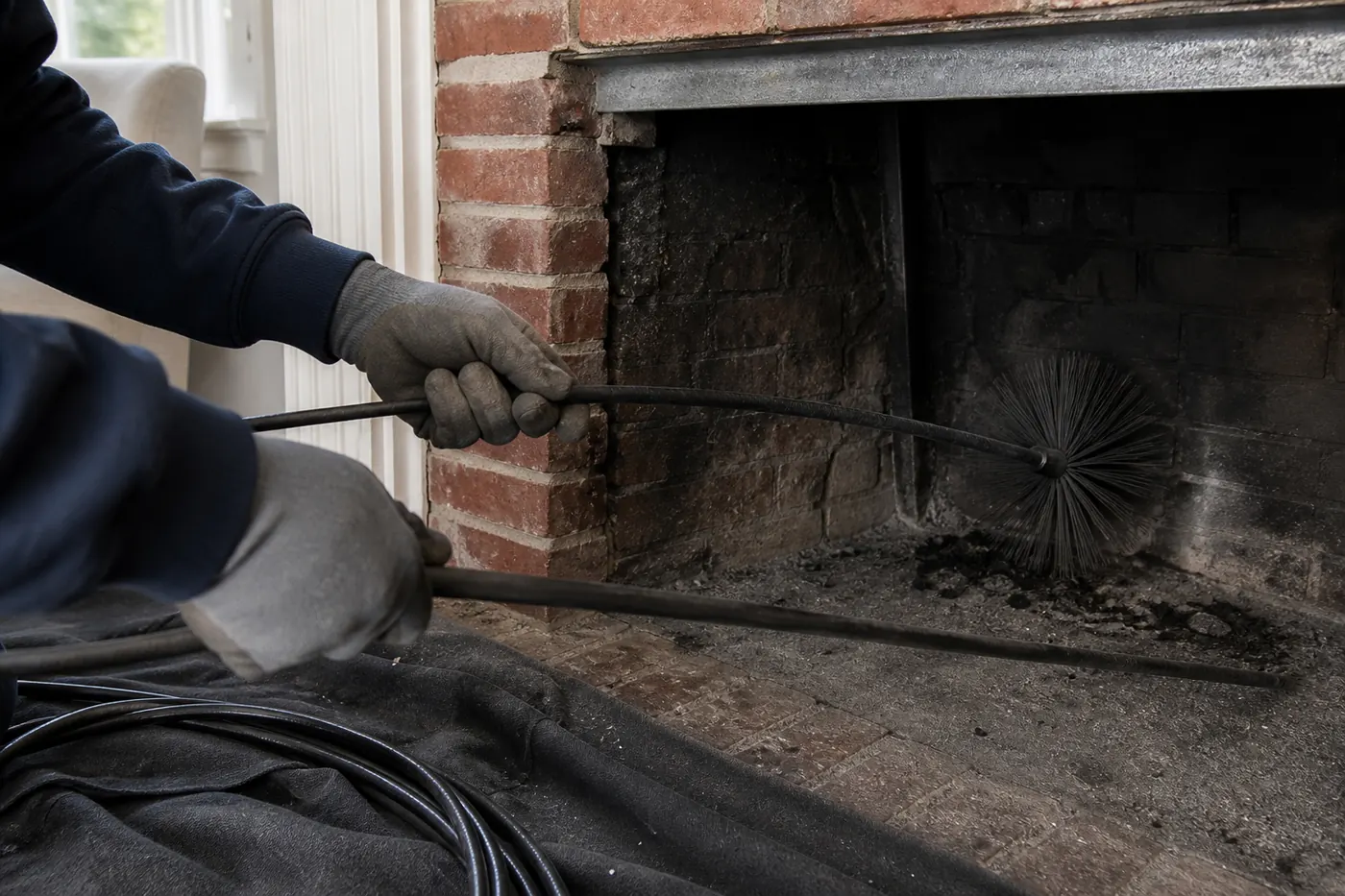
Boston chimneys wear out quickly because they sit in the harshest spot on the house and take on water all year. Rain and snowmelt soak the brick, winter freezing breaks it from the inside, and salt, wind and old repairs add to the damage. Most failures start at the top, where a small gap lets water in. A $49 inspection, credited toward approved repair work, finds those gaps early.
Water is the real culprit
A chimney is a tall, thin stack of brick and mortar standing above the roof with nothing to shelter it. Every storm hits it from the top and all four sides. Brick and mortar are porous, which means they take on water like a hard sponge.
One wet day does little harm. The trouble is repetition. A chimney that gets soaked, dries, gets soaked and dries again for years slowly loses mortar, surface brick and strength. Almost every chimney problem in Greater Boston, from leaks to loose bricks to white stains, traces back to water finding a way in.
Even the inside of the chimney is affected. Water that enters the top runs down the flue and the smoke chamber, mixes with soot and forms acidic moisture that eats at mortar and metal. A leaking top can therefore damage parts you never see from the yard.
That also makes the fixes straightforward in principle: keep water out at the top, let moisture escape from the sides, and repair damage before it spreads.
Freeze-thaw: how winter breaks brick from the inside
Water expands when it freezes. If it is inside the brick or in a mortar joint when the temperature drops, the expanding ice pushes the material apart. When it thaws, the water moves deeper into the new cracks, and the next freeze widens them.
Boston winters swing across freezing again and again, which gives this cycle plenty of chances. The result shows up as:
- Face-flaking brick, called spalling.
- Mortar that turns sandy and falls out.
- Cracks that grow a little each season.
- Bricks that loosen and shift.
Our guide on freeze-thaw damage in Boston explains the process in more depth. The key point is that the damage compounds, so a small, early repair is far cheaper than a late one.
Which side of the chimney takes the beating
A chimney does not age evenly. Compare the sides.
The weather-facing side
The side that faces the prevailing wind and storms gets driven rain and the heaviest soaking. Mortar here often erodes first, and the brick faces may flake sooner.
The sheltered side
The side protected by the house, trees or neighboring buildings stays drier but also gets less sun and dries slowly, so moss and dark staining can appear.
The top
The crown and cap take direct rain and snow. A cracked crown or missing cap sends water straight down into the brick.
That is why a good inspection looks at each side separately and photographs them, instead of describing the chimney as one object. Where one side is much worse than another, the cause is often wind exposure or a drainage problem above it.
Salt, snow and ice on the roofline
Boston-area weather brings extra stress. Coastal air carries salt that speeds up rust on caps, flashing and fasteners, and leaves mineral crusts on brick. Nor'easters drive rain sideways into joints. Snow that melts against a chimney and refreezes can force water under flashing and into seams.
On a roof, ice dams can push water backward under shingles and along the chimney base. Our guide to ice dams and your chimney covers how that works. Water that gets in this way may not appear in your ceiling for weeks.
Thaw periods in the middle of winter can be especially hard on masonry. A warm afternoon melts snow on the roof and lets water run into every opening, and the freeze that follows overnight locks it in place. Several of those cycles in a single week can do more harm than a long, steady cold spell.
Metal parts here have a shorter life than in milder climates, so checking caps and flashing each year is a good habit.
Old brick, old mortar and repairs that backfire
Many homes in Greater Boston are older, with brick chimneys that have been repaired more than once. Old repairs are a major reason chimneys fail faster than they should.
- Mortar that is too hard. A hard patch on soft brick forces moisture out through the brick, and the faces flake.
- Surface patches. Smearing cement over a crack hides it without fixing the cause, and the patch often pops off.
- Trapped-moisture coatings. Paint or a non-breathable sealer can lock water inside. Brick should be able to release moisture as vapor.
- Mismatched brick. A replaced section that is harder or denser than the rest wears unevenly.
If a repair keeps failing, the next step is not another patch. It is to work out why the first one failed. The chimney repair service describes how that diagnosis fits into the work.
Check the drainage above the first damage
When a technician finds one damaged area, a useful question is: what is happening above it? Water usually enters higher than where the damage shows. Look at these in order, from the top down.
- The cap: is it in place, solid and covering the flue?
- The crown: is it cracked, crumbling or pooling water?
- The upper mortar joints: are they open?
- Flashing at the roof: is it sealed and sound?
Fixing the lower brick without fixing a failed crown above it is wasted money. The water keeps coming, and the new work starts to fail the same way. This top-down habit is the single most reliable way to make a repair last, though we do not promise any particular lifespan.
A maintenance plan that matches your exposure
Plan around your chimney's actual materials and exposure, not a generic schedule. Typical Boston prices for the protective work look like this.
| Protective work | Boston price |
|---|---|
| Chimney inspection | $49, credited toward approved repairs |
| Standard chimney cap | $300 to $700 |
| Crown repair | $300 to $900 |
| Partial repointing | $300 to $700 |
| Standard waterproofing | $300 to $500 |
| Waterproofing with crown seal | $500 to $800 |
Waterproofing should be a breathable product applied to sound masonry, not a coating over damage. Anything not listed here is quoted in writing after the inspection, and the chimney repair cost page shows the wider picture.
Keep the dated photos together. Seeing the same spot across several springs shows whether damage is slowing, steady or speeding up, and that history helps a technician advise you without guessing.
Timing matters. Spring is a good moment to look at what winter did, and late summer is a good time to fix it before the next freeze. Work done in dry weather also cures better than work squeezed in during a cold snap.
A simple routine: inspect every year, photograph each side, fix small issues early and keep the top sealed. To get a baseline for your chimney, book the $49 inspection at our contact page or call (617) 404-9587.
Questions homeowners ask
How can I tell if freeze-thaw damage has started on my chimney?
Look for flaking brick faces, sandy or missing mortar, hairline cracks and small piles of grit or brick chips at the base. Photograph them each spring and compare year to year.
Should I paint or seal my brick chimney to protect it?
Only with a breathable product on sound masonry. A coating that traps moisture can cause flaking from the inside. Have a technician check the brick first, since sealing over damage hides it without fixing it.
Why is one side of my chimney in worse shape than the others?
The side facing wind and storms gets more driven rain, and a drainage problem above that spot can focus water on one area. An inspection that photographs each side tells you which it is.
Does a chimney cap really slow the wear?
A cap keeps rain, snow, birds and animals out of the flue, which protects the liner and the masonry below. It does not replace a good crown, but it is a low-cost part of keeping water out.
Is the damage worse on older Boston homes?
Older brick and mortar are often softer, and older chimneys usually carry more past repairs, some of which cause trouble. Age alone does not mean failure, but older chimneys deserve a yearly check.